multiflora rose Care (Rosa multiflora)

Also known as: Baby Rose, Rambler Rose, seven sisters rose, many-flowered rose
multiflora rose

About multiflora rose

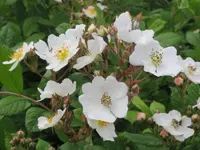
Rosa multiflora, commonly called multiflora rose, is a vigorous deciduous shrub known for its arching canes and clusters of small white flowers. It often forms dense, tangled thickets with many prickles along the stems. Native to East Asia, it has become naturalized and invasive in many parts of North America, especially in pastures, roadsides, and disturbed areas. The plant grows quickly, spreads by seed and rooting canes, and tolerates a wide range of soils, which makes it hardy but sometimes difficult to control. It generally prefers full sun to light shade and moderately moist, well-drained soil. Anyone wanting to know how to care for multiflora rose should first consider its aggressive growth and potential to spread beyond garden boundaries.

Main Plant Requirements

Care Difficulty

Easy Care

Light Preference

Full Sun

Water Requirements

Moderate Water

Temperature Preference

Cold Hardy

Hardiness Zone

4–8

Soil Texture

Sandy, Loamy, Clay

Soil pH

Acidic (5.5–6.5), Slightly acidic (6.5–7.0)

Soil Drainage

Well-drained

Fertilization

Minimal (feed rarely)

Get Personalized Care Plan

Scan your plant to receive care tips personalized for your specific plant

Available on iOS and Android

How to Care for the multiflora rose

This vigorous shrub thrives in open, sunny sites but tolerates some shade.

  • Provide 6–8 hours of direct sun daily for best flowering and dense growth in multiflora rose.
  • Allow light afternoon shade in hotter regions to limit leaf scorch and reduced bloom quality from intense late-day sun.
  • In partial shade (3–4 hours direct sun plus bright open sky), expect fewer flowers and more leggy canes; avoid dense shade, which leads to weak, disease-prone growth.

This species prefers consistent soil moisture but dislikes waterlogged conditions.

  • In the ground, allow the top 3–5 cm of soil to dry before deep watering, then moisten the root zone to 20–30 cm depth.
  • Reduce watering frequency in cool, rainy seasons and on clay soils; increase slightly during hot, dry, windy periods for Rosa multiflora.
  • Watch for yellowing, mushy roots or a sour smell as signs of overwatering, and crisp leaves or drooping canes with dry soil as signs of underwatering.

This hardy shrub tolerates a wide temperature range in typical outdoor conditions.

  • Active growth and flowering occur best around 60–80°F (16–27°C), with strongest performance in mild spring and early summer weather.
  • Established plants usually survive down to about -10°F (-23°C) when fully dormant, though young plants benefit from mulch over the root zone in cold winters.
  • Short periods above 90°F (32°C) are tolerated if soil moisture is maintained, but extended extreme heat or hot, dry winds can scorch foliage and reduce bloom size.

This rose tolerates a broad humidity range and usually does not need special humidity management outdoors.

Rosa multiflora grows best in moderately fertile, well‑structured mineral soil with reliable drainage.

  • Aim for a loamy or sandy‑loam soil with 2–4 in of organic matter such as compost or well‑rotted manure mixed into the top layer.
  • Ensure fast drainage by avoiding heavy, compacted clay; if present, amend with coarse sand and fine bark to increase pore space.
  • Target a slightly acidic to neutral pH around 6.0–7.0 and avoid strongly alkaline spots that can limit nutrient uptake.
  • Prevent waterlogging by planting on a slight slope or low mound in areas with slow drainage or frequent heavy rain.

This species can be grown in containers but needs careful support and stability management.

  • Choose a deep, heavy container (at least 40–50 cm tall) to counterbalance vigorous top growth and reduce tipping in wind.
  • Use a wide, stable base rather than a narrow pot so the spreading canes do not pull the container off balance.
  • Install a trellis or sturdy stake inside the pot at planting so canes can be tied early, preventing leverage that loosens the root ball.

This vigorous shrub usually needs little feeding in typical garden soil, but light nutrition can support flowering and recovery after cutting back.

  • Apply a balanced granular or slow-release fertilizer (around 10-10-10) at half label rate once in early spring if growth seems weak.
  • Supplement with a thin layer of compost around the root zone in spring to improve soil structure and micronutrients.
  • Avoid additional fertilizer from mid-summer onward to prevent soft late growth before cold weather.
  • Do not fertilize dormant plants in winter; pause feeding until consistent new growth resumes.

Pruning Rosa multiflora is important for containment, plant health, and safer management of this vigorous species.

  • Carry out main pruning in late winter to very early spring before new growth begins.
  • Remove dead, diseased, crossing, and crowded canes with clean, sharp loppers or a pruning saw.
  • Thin out older canes at the base to reduce density, improve air flow, and limit spread.
  • After flowering, cut back spent flowering stems if shaping or access control is needed.

This species is most often grown in the ground, so management focuses on safe transplanting rather than frequent repotting.

  • Plan transplanting for early spring or early fall when temperatures are mild and soil is workable.
  • Move plants only when necessary, such as crowding, poor site conditions, or unwanted spread into nearby areas.
  • Dig a wide root ball, keep roots shaded and moist, and replant at the same depth in a pre-watered hole.
  • Water deeply after transplanting and keep soil evenly moist for several weeks to limit transplant shock.

Rosa multiflora spreads readily, and propagation is usually straightforward through several methods.

  • Take semi-hardwood stem cuttings in late spring to summer, use rooting hormone, and root in a moist, free-draining medium.
  • Allow naturally arching canes to layer by pegging tips to the soil until well rooted, then detach and transplant.
  • Collect ripe hips, clean seeds, and cold-stratify for 8–12 weeks before sowing in a well-drained seed mix.
  • Control unwanted seedlings and rooted suckers, as this species can become invasive in many regions.

This rose is generally cold hardy in much of the US and usually needs only minimal winter attention.

  • In colder zones, add a 5–8 cm mulch layer over the root zone in late fall to moderate soil temperature.
  • Avoid heavy pruning in late fall; keep main canes intact to reduce winter dieback.
  • For container plants, move pots into an unheated garage or sheltered spot to prevent full soil freeze.

Care Tips

Use sturdy containment

Install strong root barriers or plant in large, heavy-duty containers sunk into the ground to limit root spread and make long-term management more predictable when growing multiflora rose.

Early cane training

While new canes are still flexible, tie them to wires, sturdy posts, or fences in a fan shape to improve airflow, light penetration, and ease of pruning in later years.

Systematic hip removal

Deadhead or cut off fruiting clusters (hips) before seeds mature, collecting and disposing of them in the trash to greatly reduce unwanted self-seeding and spread into nearby areas.

Dedicated inspection zone

Keep a 60–90 cm vegetation-free strip around the base using mulch or landscape fabric so that cane emergence, suckers, and pest activity are easier to see and control.

Sanitized tool routine

Disinfect pruners and saws with 70% isopropyl alcohol between plants and after removing diseased wood to limit the spread of fungal and bacterial problems through the planting.

Everything About multiflora rose

Common Pests and Diseases

Rose rosette disease

This disease is caused by a virus-like pathogen spread mainly by a tiny eriophyid mite. Symptoms include witches’ broom growth, excessive thorniness, reddened distorted shoots, and abnormal clustering of stems and flowers.

Solution

Remove and bag the entire plant including roots as soon as symptoms are confirmed, then destroy plant material and do not replant roses in the same spot for at least 1–2 years. Reduce nearby multiflora rose thickets and volunteer roses that can host the mite, and maintain good spacing and airflow for any remaining ornamental roses in the area.

Black spot

This disease produces round black leaf spots with fringed edges, usually followed by yellowing and early leaf drop, especially in humid conditions. Severe infections can defoliate canes and weaken the plant over time.

Solution

Prune and dispose of infected leaves and stems, keep foliage as dry as possible by watering at soil level, and improve air circulation by thinning dense growth. In high-pressure areas, apply a labeled rose fungicide preventively in spring and after rainy periods, following all product directions carefully as part of broader Rosa multiflora care instructions in landscape settings.

Powdery mildew

This disease appears as a white to gray powdery coating on young leaves, shoots, and flower buds, often causing leaf curling or distortion. Symptoms include reduced vigor and poor flowering when infections are heavy.

Solution

Prune out the most affected shoots, avoid overhead watering, and reduce crowding in thickets to improve airflow and light penetration. Where control is needed near ornamental plantings, use labeled sulfur or other rose-appropriate fungicides applied at early symptom appearance and repeat as directed during dry, mild weather that favors the disease.

Rose leafhopper

These insects are small, pale, wedge-shaped hoppers that feed on leaf undersides, causing fine white stippling and a faded, speckled appearance. Heavy feeding can lead to leaf yellowing, curling, and premature drop.

Solution

Rinse foliage with a strong stream of water to dislodge nymphs and adults, focusing on leaf undersides. Encourage natural predators, avoid broad-spectrum insecticides, and if populations remain high, use targeted products such as insecticidal soap or pyrethrin, applied in the evening to limit impact on beneficial insects.

Rose stem girdler

This pest is a beetle whose larvae tunnel inside rose canes, leading to wilting, breakage, and dieback above the feeding site. Symptoms include swollen, weakened, or discolored sections on young canes and hollow stems when cut open.

Solution

Prune out and destroy infested canes below the damaged area as soon as wilting is noticed to remove larvae before they complete development. Avoid unnecessary mechanical injury to stems, maintain plant vigor to help recovery, and monitor nearby roses for similar cane symptoms so affected material can be removed promptly.

Interesting Facts

Bird-dispersed invasion

The hips of this species are highly attractive to many bird species, which eat the fruits and spread the seeds over long distances, greatly accelerating its invasion in North American landscapes.

Natural rootstock choice

It has historically been used worldwide as a hardy rootstock for grafted garden roses because of its strong root system, cold tolerance, and adaptability to poor soils.

Dense thorny thickets

This species forms very dense, arching, thorny thickets that can exclude livestock and people, and in invaded areas these thickets often outcompete and shade out native shrubs and herbaceous plants.

Botan icon

Did you know?

In the mid‑20th century in the US, conservation and agricultural agencies deliberately promoted and planted this species for living fences, wildlife habitat, and erosion control, and those programs later had to be reversed after it proved to be a serious invasive weed in many states.

FAQs about multiflora rose

Yellowing leaves often come from nutrient-poor soil, root stress, or prolonged waterlogged conditions that limit oxygen. Check drainage, avoid overwatering, and consider a balanced fertilizer if soil is depleted, especially on older, heavily fruiting plants.

Grow Healthy Plants with Botan Care

Keep your plants happy and healthy with plant identification, disease detection, and easy care guidance.

Botan plant care app — identify plants on mobile

Explore More Plants