Carolina horsenettle Care (Solanum carolinense)

Also known as: Horse Nettle
Carolina horsenettle

About Carolina horsenettle

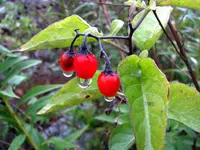
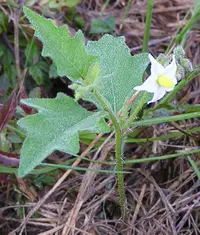
Carolina horsenettle (Solanum carolinense) is a perennial, sprawling herb in the nightshade family, often treated as a tough pasture and garden weed. It has prickly stems, lobed leaves, and small white to pale violet star-shaped flowers that develop into yellow, berry-like fruits.

This species is native to eastern North America and has spread widely in disturbed soils, fields, roadsides, and open sunny sites. Deep, spreading roots and abundant seed production make it persistent and difficult to eradicate once established.

Those who choose to care for Carolina horsenettle should understand that it favors full sun, dry to moderately moist soil, and low-competition settings, but it is not suitable for informal handling or for households with pets or children.

Main Plant Requirements

Care Difficulty

Easy Care

Light Preference

Full Sun

Water Requirements

Low Water

Temperature Preference

Cold Hardy

Hardiness Zone

3–9

Soil Texture

Sandy, Loamy, Clay

Soil pH

Acidic (5.5–6.5), Slightly acidic (6.5–7.0)

Soil Drainage

Well-drained

Fertilization

Minimal (feed rarely)

Get Personalized Care Plan

Scan your plant to receive care tips personalized for your specific plant

Available on iOS and Android

How to Care for the Carolina horsenettle

This sun-loving perennial thrives in open, exposed sites with strong light.

  • Provide 6–8 hours of direct sun daily; full sun promotes compact, sturdy growth and abundant flowering in Solanum carolinense.
  • Plant in locations with morning to early afternoon sun; light afternoon shade in very hot regions reduces leaf scorch and moisture stress.
  • In partial shade with less than 4–5 hours of sun, expect taller, weaker stems and fewer flowers, especially in late summer when days shorten.

This drought-tolerant species prefers infrequent, deeper watering instead of constant moisture.

  • Allow the top 4–6 cm of soil to dry before watering; in the ground, use soil dryness and slight leaf droop as cues rather than a fixed schedule.
  • Ensure sharply draining soil; standing water or heavy clay that stays wet leads to root rot and yellowing, soft foliage, even though Solanum carolinense is tough.
  • During hot, dry spells, occasional deep soaking supports flowering, while in cool or rainy periods, avoid extra water if the soil already feels moist below the surface.

This hardy perennial tolerates a wide temperature range but responds best to moderate warmth.

  • Optimal growth occurs around 70–85°F (21–29°C), with strongest vegetative and flowering performance in consistently warm summer conditions.
  • Established plants survive down to about 0°F (-18°C) in the ground, dying back to roots after hard frost but resprouting in spring when soil warms.
  • Short heat waves above 90–95°F (32–35°C) are tolerated if soil is not waterlogged; prolonged cold, waterlogged soils increase winter root damage risk.

This species tolerates a wide humidity range and rarely needs special humidity management.

This species thrives in dry, open sites and needs lean, well-drained soil.

  • Use sandy or sandy-loam soil with low to moderate organic matter to mimic its natural habitat.
  • Ensure sharp drainage by blending mineral topsoil with coarse sand or fine gravel at roughly 2:1.
  • Maintain soil pH around 6.0–7.5; very acidic or waterlogged sites reduce vigor and root health.
  • Avoid heavy clay or compacted soil; if unavoidable, lighten it with coarse sand and small gravel for better aeration.

This species is technically growable in containers but is usually unsuitable due to its aggressive, deep-rooting, thorny habit.

This tough native perennial usually needs no fertilizer in garden soil, as Carolina horsenettle thrives in lean conditions.

Pruning Solanum carolinense is mainly a management task to limit spread and reduce seed production.

  • Cut back flowering stems in late spring to early summer before berries form to reduce reseeding.
  • Remove dead, damaged, or diseased stems at ground level using sharp hand pruners or long-handled loppers.
  • Mow or shear large patches during active growth to weaken plants and reduce aboveground biomass.

Transplanting this deep-rooted perennial focuses on control rather than long-term container culture.

  • Move plants in early spring or early fall when temperatures are mild and soil is workable.
  • Transplant only small, young plants; mature clumps have extensive roots that resprout if pieces remain.
  • Dig wide and deep to remove as much root system as possible, limiting future suckering and spread.
  • Water thoroughly after transplanting and keep soil evenly moist for 1–2 weeks to reduce transplant shock.

Propagation of this species is common in research or restoration settings but often unwanted in home gardens due to its invasive habit.

  • Start seeds in late winter to early spring; use a well-drained mix and keep at 65–75°F for germination.
  • Collect ripe berries, clean the seeds from pulp, and dry briefly before sowing or storing.
  • Divide small root segments in spring, planting horizontally 2–3 cm deep in loose, moist soil.
  • Provide bright light and moderate moisture; avoid waterlogging to prevent seedling damping-off, a fungal disease.

This hardy perennial tolerates typical winters in much of its range and usually needs minimal winter care outdoors.

  • Plants die back to the ground after hard frost while root systems remain alive and dormant.
  • In colder regions, a 3–5 cm mulch layer over the root zone reduces freeze–thaw heaving of soil.
  • Container-grown plants are rare, but if present, overwinter pots in an unheated garage or cold frame to prevent root damage.

Care Tips

Manage Spreading Rhizomes

Install a 20–30 cm deep root barrier or grow in a contained bed to limit underground rhizome spread and make long‑term population control easier.

Use Protective Gear

Always handle plants with sturdy gloves, long sleeves, and closed shoes to avoid skin punctures from spines and accidental contact with toxic sap, especially when removing or cutting back growth.

Timed Mowing Strategy

If managing an established patch, mow or cut plants low to the ground just as flower buds form but before fruit sets, then repeat 2–3 times in the season to steadily weaken root reserves.

Targeted Herbicide Application

For areas where the plant is unwanted, apply a systemic herbicide to fresh regrowth in late summer or early fall when carbohydrates move back to the roots, following local regulations and label directions strictly.

Fruit And Seed Control

Regularly remove and safely dispose of green and ripe berries before they drop to reduce seed spread and improve safety for children, pets, and livestock when caring for Carolina horsenettle.

Common Pests and Diseases

Colorado potato beetle

This pest feeds heavily on leaves, often defoliating plants and reducing vigor. Symptoms include skeletonized foliage, clusters of yellow-orange eggs under leaves, and striped yellow-and-black adult beetles.

Solution

Handpick adults, larvae, and egg masses and destroy them before they hatch, especially on small patches. For larger infestations, use floating row covers to exclude beetles and apply a spinosad-based product to foliage according to label directions, rotating controls to slow resistance.

flea beetles

These insects chew many small round holes in leaves, giving foliage a shot-hole or sieve-like appearance, and young seedlings can be stunted or killed. Damage is often worst in warm, dry weather when beetle activity is high.

Solution

Use lightweight row covers to keep beetles off young plants and reduce stress with consistent watering. If damage is severe, apply a pyrethrin or neem-based spray in the evening when pollinators are less active, repeating as needed based on label guidance.

tomato hornworm

This pest is a large green caterpillar that can remove large sections of foliage and chew on stems and fruits. Symptoms include sudden heavy defoliation, large dark droppings on leaves, and partially eaten flowers or berries.

Solution

Inspect plants regularly and handpick hornworms, crushing or removing them from the area. Encourage natural enemies such as parasitic wasps by leaving hornworms that carry white cocoons in place and avoid broad-spectrum insecticides that kill beneficial insects.

early blight

This disease causes brown to dark-brown leaf spots with concentric ring patterns and yellow halos, starting on lower leaves and moving upward. Symptoms include premature leaf drop and reduced plant vigor, especially in warm, humid conditions.

Solution

Remove and destroy infected leaves to limit spread and avoid overhead watering to keep foliage as dry as possible. Improve spacing and airflow and, where disease pressure is high, apply a copper-based or chlorothalonil fungicide preventively, following the product label for timing and safety.

powdery mildew

This disease appears as white, powdery patches on upper leaf surfaces, which can spread to stems and cause yellowing and early leaf drop. Symptoms include a dusty coating that wipes off on fingers and reduced photosynthesis over time.

Solution

Increase sun exposure and airflow around plants, remove heavily infected leaves, and avoid excess nitrogen fertilization, which promotes soft growth. Treat remaining foliage with a sulfur-based fungicide or a potassium bicarbonate product labeled for powdery mildew, repeating at intervals under high disease pressure according to Solanum carolinense care instructions.

Interesting Facts

Strong alkaloid defenses

The leaves, stems, and unripe berries contain steroidal alkaloids such as solanine and chaconine, which make the plant toxic to most mammals and help protect it from heavy grazing pressure.

Deep, spreading root system

This species forms a deep taproot with extensive horizontal roots that can sprout new shoots, which is why it often reappears even after repeated mowing or pulling.

Specialist insect relationships

Although generally toxic, it serves as a host plant for specialized insects such as the Colorado potato beetle and certain sphinx moth larvae that have evolved to tolerate or detoxify its chemical defenses.

Botan icon

Did you know?

Genetic and chemical studies place Carolina horsenettle close to domesticated potato and eggplant within the nightshade family, and it has been used as a wild relative in research to understand disease resistance and stress tolerance in crop breeding.

FAQs about Carolina horsenettle

This species spreads aggressively through creeping roots and abundant seed. Root fragments can resprout after digging, and berries are widely dispersed by birds. In managed areas, regular removal of new shoots and preventing fruit set are essential.

Grow Healthy Plants with Botan Care

Keep your plants happy and healthy with plant identification, disease detection, and easy care guidance.

Botan plant care app — identify plants on mobile

Explore More Plants