Contain Self-Seeding
Deadhead flower stalks before seed pods dry and shatter, then bag and trash the spent stems to prevent aggressive self-seeding into nearby beds and natural areas.

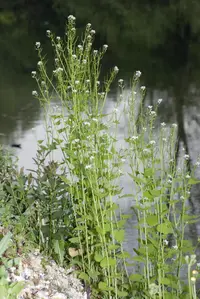
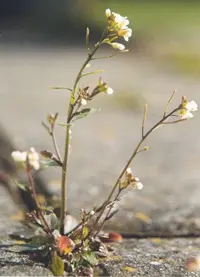
Garlic mustard, Alliaria petiolata, is a biennial herb in the mustard family, known for its strong garlic scent when leaves are crushed. It forms low rosettes in the first year and upright stems with small white flowers in the second year.
The plant typically grows in woodlands, shaded edges, and disturbed habitats across Europe, Asia, and many naturalized areas in North America. It produces many seeds and spreads easily, which makes it persistent once established.
Garlic mustard prefers partial shade, moist but well-drained soil, and can tolerate a range of conditions, so it is generally easy to maintain. Gardeners who choose to care for Garlic Mustard should monitor its spread to prevent it from becoming invasive.

Care Difficulty
Easy Care

Light Preference
Partial Shade

Water Requirements
Moderate Water

Temperature Preference
Cold Hardy

Hardiness Zone
3–8

Soil Texture
Loamy, Silty, Organic-rich

Soil pH
Acidic (5.5–6.5), Slightly acidic (6.5–7.0)

Soil Drainage
Moist but well-drained

Fertilization
Minimal (feed rarely)
Scan your plant to receive care tips personalized for your specific plant
Available on iOS and Android
This woodland biennial prefers cool, lightly shaded conditions with brief direct sun.
This species prefers consistently moist, not saturated, soil that mimics woodland conditions.
This cool-season biennial is hardy and tolerates a wide temperature range in temperate climates.
Humidity is not a significant factor for Alliaria petiolata, which thrives in typical outdoor air conditions.
Alliaria petiolata prefers moist, loose soil that stays aerated but never waterlogged.
This species can be grown in containers outdoors, mainly for controlled cultivation or observation rather than display.
This woodland biennial generally thrives in average soil and needs little added nutrition for healthy growth.
Pruning Alliaria petiolata is mainly used to limit spread and prevent unwanted self-seeding.
This species is usually grown in the ground, so care focuses on transplanting young plants rather than repotting.
Propagation of this biennial is mainly by seed and happens very readily in suitable conditions.
Alliaria petiolata is fully cold hardy in most temperate climates and needs no special winter care.

Plant Health Check
Not sure what's wrong with your plant? Check your plant's health inside the app.
This species forms low, kidney-shaped basal rosettes in its first year, then produces taller stems with triangular, toothed leaves in the second year, allowing it to overwinter and quickly capture light in early spring.
Crushed leaves and stems release a garlic-like odor due to sulfur-containing glucosinolates and their breakdown products, which help deter some herbivores and are typical compounds of the mustard family Brassicaceae.
The plant is chemically similar to native toothworts, so some native swallowtail butterflies mistakenly lay eggs on it, but their larvae often fail to develop properly, disrupting local insect-plant interactions.

In North America this Eurasian biennial is considered one of the most problematic woodland invaders, because it can dominate forest understories, alter soil fungal communities that trees rely on, and reduce diversity of native spring wildflowers over time.
This species is highly invasive in many North American regions. It self-seeds aggressively, forms dense stands, and displaces native woodland plants. Regular removal before seed set is essential to limit spread and protect local ecosystems.
Keep your plants happy and healthy with plant identification, disease detection, and easy care guidance.