Bulb lifting cycle
In heavier or irrigated soils, dig and lift clumps every 3–4 years in late summer dormancy, then immediately replant only the firm, healthy bulbs slightly deeper to prevent overcrowding and decline.

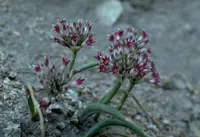
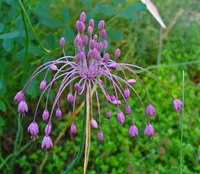
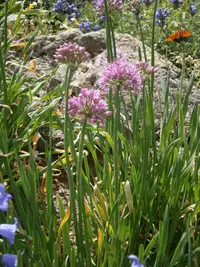
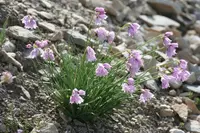
San Bernardino Mountain onion, Allium monticola, is a small perennial bulb native to high elevations of the San Bernardino Mountains in California. It forms clumps of slender, grass-like leaves and upright stems topped with rounded clusters of pink to lavender flowers.
This species grows in open, rocky meadows and slopes, where soils drain quickly and snow cover provides winter moisture. Its alpine origin makes it fairly hardy but sensitive to heavy, wet soils and very hot, humid conditions.
Gardeners who care for San Bernardino Mountain onion should note that it prefers full sun, cool summers, and gritty, low-fertility soil, which keeps bulbs healthy and reduces rot risk.

Care Difficulty
Moderate Care

Light Preference
Full Sun

Water Requirements
Low Water

Temperature Preference
Cold Hardy

Hardiness Zone
5–9

Soil Texture
Sandy, Loamy, Rocky

Soil pH
Slightly acidic (6.5–7.0), Neutral (7.0)

Soil Drainage
Well-drained

Fertilization
Minimal (feed rarely)
Scan your plant to receive care tips personalized for your specific plant
Available on iOS and Android
This mountainous onion prefers bright, open conditions similar to its high-elevation habitat.
This bulb prefers moderate moisture during active growth and drier conditions when dormant.
This species is adapted to cool to warm conditions with pronounced seasonal variation.
This species is adapted to dry mountain air and does not need elevated humidity.
Allium monticola prefers mineral, fast-draining soil that mimics rocky mountain slopes.
This species can be grown in containers if drainage and bulb depth are carefully managed.
Allium monticola usually needs minimal feeding when grown in its native-style, well-drained soil.
Pruning needs for Allium monticola are light and mainly focused on cleanliness and seed control.
Transplanting Allium monticola is infrequent and should be planned around the bulb’s dormant period.
Allium monticola is commonly propagated by bulb division and sometimes by seed in suitable conditions.
Allium monticola is generally cold hardy and needs little special winter care in the ground.

Plant Health Check
Not sure what's wrong with your plant? Check your plant's health inside the app.
This onion is native to high-elevation ranges of southern California, especially the San Bernardino and San Gabriel Mountains, where it grows in open rocky slopes above roughly 2,000 m in relatively cool, dry conditions compared with lowland habitats.
The plant survives mountain winters and summer droughts by retreating into a small underground bulb, allowing it to resprout with leaves and flowers during a relatively short growing season when moisture and temperatures are suitable.
Its flowering head forms a tight cluster of small, pale to pinkish flowers on a short stalk, an adaptation that reduces damage from strong mountain winds and low humidity while still attracting local pollinating insects.
Lack of flowering usually comes from bulbs being too small, overcrowded, or shaded. Nutrient-poor, very dry, or disturbed soil also reduces blooms. Allow foliage to mature fully each season so bulbs can store enough energy for the next year.
Keep your plants happy and healthy with plant identification, disease detection, and easy care guidance.