Staking Tall Stems
In windy or exposed sites, insert slender stakes and loosely tie the flowering stems with soft garden twine to prevent snapping at the base when heads become top-heavy.

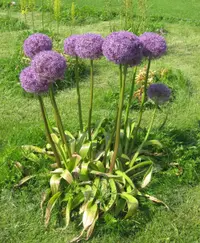
Dutch garlic (Allium hollandicum) is a bulb-forming ornamental onion grown mainly for its tall stems and round, purple flower heads. It is a hardy perennial that dies back after flowering and returns from the bulb each year.
This species originates from regions in Iran and nearby areas, but is now widely used in borders and mixed flower beds in temperate gardens. It offers strong vertical accents and attractive seed heads that extend its visual interest.
Dutch garlic is considered relatively easy to grow when given sun, well-drained soil, and moderate moisture. Gardeners who learn how to care for Dutch Garlic usually find it a reliable, low-maintenance bulb.

Care Difficulty
Easy Care

Light Preference
Full Sun

Water Requirements
Moderate Water

Temperature Preference
Cold Hardy

Hardiness Zone
4–8

Soil Texture
Sandy, Loamy, Rocky

Soil pH
Slightly acidic (6.5–7.0), Neutral (7.0)

Soil Drainage
Well-drained

Fertilization
Minimal (feed rarely)
Scan your plant to receive care tips personalized for your specific plant
Available on iOS and Android
Allium hollandicum performs best in bright, open sites with strong direct sun for reliable flowering.
This bulb prefers on the dry side, with brief moist periods in active growth and drier soil when dormant.
This hardy bulb handles cool winters and mild to warm summers, provided extremes are limited.
Humidity is not a significant factor for Allium hollandicum, which prefers dry, airy conditions.
Allium hollandicum grows best in lean, well-aerated soil that drains quickly after rain or watering.
This species is suitable for container growing outdoors when drainage and pot depth are managed carefully.
Allium hollandicum benefits from light, targeted feeding but tolerates lean soils well.
Allium hollandicum needs only minimal pruning focused on spent flowers and fading foliage.
This bulb is usually grown in beds or borders, so transplanting overcrowded clumps matters more than container repotting.
This species is most often propagated by bulb division, with seed used mainly for longer-term increase.
Established Dutch Garlic bulbs are cold hardy in most temperate climates and usually need minimal winter care.

Plant Health Check
Not sure what's wrong with your plant? Check your plant's health inside the app.
Allium hollandicum is not a wild species but a garden-origin ornamental allium, likely derived from Central Asian parentage and stabilized in cultivation for its reliable flowering and strong stems.
Its flower heads are dense spheres of many small, star-shaped florets in a deep purple tone, typically forming a neatly rounded globe about 8–12 cm across that stays visually intact for several weeks.
After flowering, the spherical heads dry while largely keeping their structure, which makes them valuable in dried flower arrangements and for architectural winter interest in ornamental borders.

The widely grown cultivar Allium hollandicum 'Purple Sensation' became one of the most influential ornamental alliums in modern mixed borders, helping to popularize globe alliums in late-spring garden design across Europe and North America.
Lack of flowering often comes from bulbs being too shaded, planted too shallow, or weakened by previous overcrowding. Allow foliage to fully die back after bloom, avoid excessive nitrogen, and lift and divide congested clumps every few years.
Keep your plants happy and healthy with plant identification, disease detection, and easy care guidance.

-1-200x150.webp)