Mark Bulb Clumps
Place small, durable markers where clumps bloom in spring so you can accurately lift, divide, or replant bulbs in late summer without disturbing other plants or forgetting exact locations.

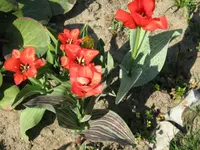
Greig's tulip, Tulipa greigii, is a spring-flowering bulb known for its large, brightly colored blooms and distinctive mottled or striped leaves. It forms low, compact clumps that fit well in borders, rock gardens, and containers.
This species is native to Central Asia, where it grows in open, sunny, often rocky habitats with cold winters and dry summers. It is generally straightforward to grow if given full sun, good drainage, and a relatively dry summer rest.
The bulbs have a strong natural tendency to return and bloom for several years when planted in suitable soil and climate. Understanding these natural conditions helps guide how to care for Greig's tulip in home gardens.

Care Difficulty
Moderate Care

Light Preference
Full Sun

Water Requirements
Moderate Water

Temperature Preference
Cold Hardy

Hardiness Zone
3–8

Soil Texture
Sandy, Loamy, Organic-rich

Soil pH
Acidic (5.5–6.5), Slightly acidic (6.5–7.0)

Soil Drainage
Well-drained

Fertilization
Minimal (feed rarely)
Scan your plant to receive care tips personalized for your specific plant
Available on iOS and Android
This tulip needs strong light to fuel spring growth and flowering.
This bulb prefers moderate moisture in spring and rather dry conditions after flowering.
This tulip is adapted to cool springs, cold winters, and dry, warm summers.
Humidity is not a major factor for Tulipa greigii, which adapts well to typical outdoor levels.
Tulipa greigii grows best in loose, sharply drained soil that never stays waterlogged.
This tulip species is well suited to container growing outdoors.
Light feeding supports strong bulbs and flowering in this compact tulip species.
Tulipa greigii needs only minimal, targeted pruning focused on post-flowering cleanup.
This tulip is usually grown in beds or borders, so transplanting bulbs is more common than container repotting.
Propagation of Tulipa greigii is mainly done by bulb division rather than by seed in home gardens.
Established bulbs are generally cold hardy in much of the US and need only modest winter care in the ground.

Plant Health Check
Not sure what's wrong with your plant? Check your plant's health inside the app.
This species is known for its broad, gray-green leaves marked with maroon or purple blotches, a trait that makes the foliage ornamental even before and after flowering.
In its native Central Asian habitats, it flowers early in spring on rocky slopes and foothills, taking advantage of cool, moist conditions before summer heat dries the soil.
Compared with many hybrid tulips, this species shows relatively stable flower patterns and colors from year to year, which helps gardeners maintain consistent displays when they grow Tulipa greigii from bulbs rather than seed.

Many modern dwarf and mid-height garden tulips have been bred using this species as a parent, passing on its strong stems, early bloom time, and characteristic mottled leaves into numerous popular cultivars.
Lack of flowering usually comes from bulbs that overheated in storage, were planted too shallow, or became depleted from previous years. Dense shade, very mild winters, or heavy, soggy soil also reduce bud formation and flower quality.
Keep your plants happy and healthy with plant identification, disease detection, and easy care guidance.