Bulbophyllum aphanopetalum Care

About Bulbophyllum aphanopetalum

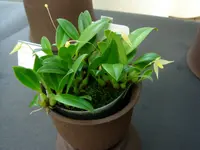
Bulbophyllum aphanopetalum is a small epiphytic orchid, typically growing on trees rather than in soil. It forms compact clumps with slender rhizomes, small pseudobulbs, and narrow leaves. Flowers are usually small and intricate, often appreciated by collectors more than casual growers.

This species is believed to occur in tropical forest habitats, where it experiences warm, humid, and shaded conditions with frequent air movement. Its main challenges in cultivation are the need for constant, gentle moisture at the roots and high humidity without waterlogging. Good air circulation and soft, filtered light are important if you want to care for Bulbophyllum aphanopetalum successfully.

Main Plant Requirements

Care Difficulty

Hard Care

Light Preference

Bright Indirect Light

Water Requirements

Keep Soil Moist

Temperature Preference

Tropical / Frost Sensitive

Hardiness Zone

12–13

Soil Texture

Peaty, Organic-rich, Rocky

Soil pH

Acidic (5.5–6.5)

Soil Drainage

Moist but well-drained

Fertilization

Light (every 4–6 weeks)

Get Personalized Care Plan

Scan your plant to receive care tips personalized for your specific plant

Available on iOS and Android

How to Care for the Bulbophyllum aphanopetalum

This epiphytic orchid prefers bright, filtered light that mimics dappled forest shade.

  • Provide 8–10 hours of bright, indirect light daily, such as morning sun with light shade from late morning to afternoon.
  • Grow Bulbophyllum aphanopetalum under 50–70% shade cloth outdoors or behind a sheer curtain indoors to prevent leaf scorch.
  • Watch foliage color: medium green leaves indicate good light; very dark, soft leaves suggest too little light, while yellow, leathery patches point to excess sun.

This orchid prefers evenly moist conditions around its roots without staying saturated.

  • Water when the surface of the medium feels just barely starting to dry but is still cool and slightly damp 1–2 cm below.
  • Use a loose, fast-draining mix; allow water to run freely through and never leave the plant standing in a tray of water.
  • In warmer months, expect to water more often and watch for wrinkled pseudobulbs as a sign of underwatering, or black, mushy roots as overwatering.

This species grows best in intermediate to warm conditions with stable, frost-free temperatures.

  • Aim for 65–80°F (18–27°C) by day and 60–70°F (16–21°C) at night for steady growth and flowering.
  • Protect from cold; growth slows below 55°F (13°C) and tissue damage can occur near 40°F (4°C), so avoid any frost exposure.
  • In hot spells above 85–90°F (29–32°C), increase air movement and humidity and keep it shaded to prevent heat stress and leaf burn.

This orchid prefers consistently high humidity to maintain healthy growth.

  • Aim for 70–85% humidity; use a hygrometer to monitor levels around Bulbophyllum aphanopetalum.
  • Dry indoor air below 50% leads to limp, pleated leaves and stalled growth.
  • Increase humidity with a nearby cool-mist humidifier rather than misting flowers directly.
  • Provide constant gentle air movement to prevent fungal issues in high-humidity conditions.

This species grows best in a very loose, airy, organic-based medium rather than compact soil.

  • Use a fine to medium orchid mix of bark, chopped sphagnum moss, and perlite to keep roots aerated.
  • Ensure excellent drainage so water runs through within seconds, preventing root rot in this moisture-loving epiphyte.
  • Slightly acidic conditions around pH 5.5–6.5 suit Bulbophyllum aphanopetalum and support nutrient uptake.
  • Avoid dense peat-based potting soil or mixes that stay wet and stagnant around the roots.

This orchid is well suited to container or basket culture when moisture and air flow are balanced.

  • Choose a shallow, wide pot or slatted basket to accommodate creeping rhizomes without crowding new growths.
  • Use plastic pots to retain moisture slightly longer in warm, bright locations, or clay if conditions are very humid.
  • Secure the plant firmly with ties or clips so new pseudobulbs do not wobble and damage fine roots.

Nutrient needs are modest, but targeted feeding supports steady growth and flowering in Bulbophyllum aphanopetalum.

  • Use a balanced orchid fertilizer (for example 20-20-20) diluted to 1/4–1/2 strength in clean, low-mineral water.
  • Feed every 2–3 weeks during active growth in spring and summer, skipping applications if roots or medium look stressed.
  • Reduce feeding to once every 4–6 weeks in fall and winter, or pause if growth is very slow.
  • Flush the pot or mount with plain water monthly to limit salt buildup that can burn fine roots.

Pruning needs are light and mainly focused on hygiene and maintaining good air flow around Bulbophyllum aphanopetalum.

  • Carry out pruning after flowering flushes, avoiding cuts on actively developing growths or spikes.
  • Remove only dead, diseased, or completely dried pseudobulbs, leaves, and spent flower spikes with sterilized scissors or snips.
  • Thin out overcrowded, tangled sections to improve air circulation and reduce fungal problems in humid setups.
  • Disinfect tools before and after use with isopropyl alcohol to prevent spreading pathogens between orchids.

Repotting is infrequent but important to keep roots healthy and medium fresh for Bulbophyllum aphanopetalum.

  • Repot every 2–3 years, or when roots overrun the pot, creep far beyond a mount, or growth slows despite good care.
  • Choose late winter to early spring, just before new root and shoot growth begins, to support quick recovery.
  • Use a small, shallow pot or mount with fine bark, sphagnum, or a similar airy, moisture-retentive orchid mix.
  • Handle roots gently, keep them slightly moist during the process, and shade the plant for 1–2 weeks while it re-establishes.

Propagation is usually done by careful division rather than seed due to the specialized germination needs of this orchid.

  • Divide only mature clumps in late winter or early spring when new growths and roots start.
  • Ensure each division has at least 3–4 healthy pseudobulbs and a good section of rhizome to maintain vigor.
  • Plant divisions in fresh, fine orchid mix, keeping humidity high (60–80%) and air movement steady.
  • Avoid heavy watering at first; lightly moisten and gradually increase water as new roots develop and growth resumes.

Cold sensitivity is high, so winter care focuses on maintaining safe temperatures and stable moisture conditions.

  • Keep plants above 55°F, with an ideal range of 60–70°F during winter nights and slightly warmer days.
  • Move container plants indoors or into a heated greenhouse before outdoor temperatures fall below 60°F.
  • Avoid cold drafts, sudden temperature swings, and contact with cold window glass around foliage and roots.
  • Water sparingly in cooler months, allowing the medium to approach dryness while maintaining ambient humidity around 60–70%.

Care Tips

Mounting choice

Mount plants on cork or hardwood bark with a thin pad of long-fiber sphagnum so roots dry quickly between waterings but still have something to grip and stabilise the rhizome.

Rhizome direction

When dividing or remounting, position the leading rhizome so it can crawl horizontally across the mount, leaving open space in front to allow several years of new pseudobulb growth before needing to remount.

Targeted air movement

Place a small fan to create gentle, indirect air flow across the plants to prevent stagnant pockets around the roots and flowers, but avoid direct drafts that cause excessive drying.

Water-quality management

Use low-mineral water (rain, RO, or distilled) and periodically flush mounts thoroughly to prevent salt buildup on roots, which this species is sensitive to over time.

Flower protection

When buds form, reduce handling and avoid spraying water directly on the developing inflorescences to minimise bud blast and mechanical damage to the delicate flowers while caring for Bulbophyllum aphanopetalum.

Common Pests and Diseases

Spider mites

This pest often appears on plants kept in warm, dry, low‑airflow conditions and feeds on tender leaf and pseudobulb surfaces, causing stippling and loss of vigor.

Solution

Increase humidity and airflow, then rinse foliage and pseudobulbs thoroughly with lukewarm water, repeating several times over 7–10 days; if needed, follow with a horticultural oil or insecticidal soap labeled for orchids, ensuring good coverage on leaf undersides and between pseudobulbs while keeping the medium from becoming waterlogged.

Scale insects

These insects attach to pseudobulbs, leaf bases, and undersides of leaves, sucking sap and leaving sticky honeydew that can attract sooty mold.

Solution

Isolate the plant, manually remove visible scale with a cotton swab dipped in isopropyl alcohol, then treat all plant surfaces with insecticidal soap or a light horticultural oil, repeating every 7–10 days for several cycles while improving airflow and avoiding excess fertilizer stress as part of Bulbophyllum aphanopetalum care instructions.

Mealybugs

This pest hides in tight crevices around rhizomes, roots, and leaf sheaths, producing white cottony masses and causing gradual decline in growth and flowering.

Solution

Inspect the clump carefully, remove or swab visible colonies with isopropyl alcohol, then rinse the plant thoroughly and apply an insecticidal soap; repeat treatments and consider gently unpotting or loosening the mount to flush hidden areas, allowing the plant to dry with strong but indirect airflow afterward.

Bacterial soft rot

This disease causes rapidly spreading, foul‑smelling, water‑soaked areas on pseudobulbs or leaf bases, which collapse quickly under warm, stagnant conditions.

Solution

Immediately cut out all affected tissue with a sterile blade well into healthy tissue, dust the cut surfaces with a bactericidal fungicide or powdered cinnamon, then improve air circulation, reduce overhead wetting of foliage, and avoid water standing in leaf or pseudobulb joints, especially at night.

Leaf spot fungus

Symptoms include small, dark, often sunken spots on leaves that may expand and merge, more common in cool, humid, low‑airflow conditions around mounted or densely potted plants.

Solution

Remove and discard heavily spotted leaves, then treat remaining foliage with a fungicide labeled for orchids while adjusting conditions by increasing airflow, spacing plants, and watering early in the day so leaves dry quickly, keeping moisture focused on the roots and mount rather than the leaf surfaces.

Interesting Facts

Miniature epiphytic habit

This species is a very small epiphyte that naturally grows on tree trunks and branches, forming tight clumps on bark rather than in soil.

Narrow, petal-like segments

The flowers have slender, almost thread-like tepals that give a delicate, spidery appearance compared with the broader segments seen in many related species.

Cool to intermediate native climate

It is native to higher-elevation forests in Papua New Guinea, where temperatures are relatively mild year-round and light is filtered through a dense canopy, which guides practical Bulbophyllum aphanopetalum care instructions.

FAQs about Bulbophyllum aphanopetalum

Lack of blooms often comes from insufficient seasonal temperature drop, low light intensity, or inadequate feeding. Provide a cooler, slightly drier rest period, stable moderate light, and regular but light orchid fertilizer to support flower spike initiation.

Grow Healthy Plants with Botan Care

Keep your plants happy and healthy with plant identification, disease detection, and easy care guidance.

Botan plant care app — identify plants on mobile

Explore More Plants