white bear poppy Care (Arctomecon merriamii)

Also known as: desert bearpoppy
white bear poppy

About white bear poppy

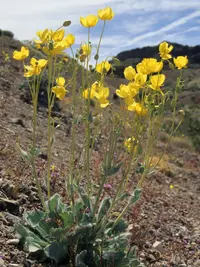
White bear poppy, Arctomecon merriamii, is a compact, long-lived desert perennial native to the Mojave Desert of the southwestern United States. It forms low rosettes of bluish, waxy leaves that help reduce water loss in harsh, dry conditions.

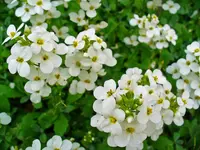
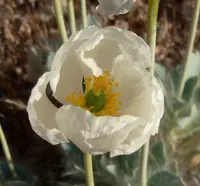
In spring, it produces large, crepe-like white flowers with yellow centers held on short stems above the foliage. The plant grows slowly and resents disturbance, which makes transplanting difficult.

Because it is highly adapted to rocky, fast-draining, limestone or gypsum-rich soils, it can be challenging to establish in typical garden beds. Understanding these strong desert preferences is key to how to care for white bear poppy in cultivation.

Main Plant Requirements

Care Difficulty

Hard Care

Light Preference

Full Sun

Water Requirements

Low Water

Temperature Preference

Warm Climate

Hardiness Zone

8–9

Soil Texture

Sandy, Rocky

Soil pH

Neutral (7.0), Slightly alkaline (7.0–7.5)

Soil Drainage

Well-drained

Fertilization

Minimal (feed rarely)

Get Personalized Care Plan

Scan your plant to receive care tips personalized for your specific plant

Available on iOS and Android

How to Care for the white bear poppy

This desert perennial needs intense light to flower well in typical garden settings.

  • Provide 6–8 hours of direct sun daily, ideally with strong morning sun and some protection from the harshest late-afternoon summer rays in very hot regions.
  • Plant white bear poppy in an open, unshaded site; it tolerates very light, high, filtered shade but flowering and compact growth decrease in anything more.
  • In winter, low sun angles are usually sufficient; in summer, watch for leaf scorch or bleaching as a sign of excessive sun combined with heat stress.

This species is highly drought-adapted and must dry out between waterings.

  • In the ground, water deeply but infrequently, letting the top 5–8 cm of soil dry completely before watering again, especially once plants are established.
  • Use very fast-draining, gritty soil or a rocky slope so water runs off quickly and does not pool around the crown or roots.
  • Reduce or stop supplemental watering in cool seasons; soft, yellowing foliage, crown rot, or a sour soil smell indicate overwatering, while limp, shriveled leaves signal underwatering.

This plant is adapted to hot, dry climates with cold but not extreme winters.

  • Best growth occurs around 65–85°F (18–29°C), with flowering often strongest in spring when days are warm and nights are cooler.
  • Mature plants can tolerate short dips to about 15–20°F (-9 to -6°C) if soil is very well drained, but prolonged frozen, wet conditions increase rot risk.
  • Heat tolerance is high up to 95–100°F (35–38°C) if soil is dryish and air is moving; avoid sites that trap hot, humid air around the plant.

Arctomecon merriamii thrives in very dry air and does not need increased humidity.

This desert perennial needs very fast-draining, mineral, sandy soil to prevent root rot.

  • Use a gritty mix of roughly 60–70% coarse sand or fine gravel with 30–40% low-organic mineral topsoil.
  • Aim for slightly alkaline conditions around pH 7.5–8.0, avoiding peat-heavy or strongly acidic components.
  • Improve aeration by adding extra pumice or small gravel, keeping fine particles and dense compost to a minimum.
  • Avoid compacted, clay-rich, or water-retentive mixes, which quickly cause root decline in Arctomecon merriamii.

This species can be grown in containers if the pot mimics its extremely fast-draining native conditions.

  • Choose a deep, narrow, heavy pot so the long taproot can extend downward and the plant stays stable in wind.
  • Use unglazed terracotta to speed evaporation and prevent moisture from lingering around the sensitive root system.
  • Raise the pot on feet or bricks so drainage holes never sit in a saucer or puddle after heavy watering.

This desert native, often called white bear poppy, needs minimal fertilization in cultivation.

  • Use a very light application of low-rate slow-release fertilizer or dilute balanced liquid feed (around 1/4 strength) if growth seems weak in spring.
  • Apply once at the start of the active growing season only, after plants are established.
  • Avoid compost-rich or high-nitrogen products, which encourage soft, weak growth and root problems.
  • Never fertilize during summer dormancy or winter, as inactive roots are prone to burn.

Arctomecon merriamii needs only light pruning to keep clumps clean and flowering well.

  • Best time for cleanup is late winter to very early spring before new growth extends.
  • Remove only dead, diseased, or badly damaged leaves and spent flower stems at the base.
  • Leave healthy foliage to maintain energy reserves in the thickened roots.
  • Use small, sharp pruning shears or snips, disinfected before use, to limit disease spread.

This species resents root disturbance, so transplant Arctomecon merriamii only when clearly necessary.

  • Transplant in early spring, when new growth starts but heat is low, to reduce stress.
  • Look for roots circling the pot, water running straight through, or declining vigor as signs the plant has outgrown its container.
  • Move up only 1 pot size, handling the root ball very gently and keeping native, gritty soil around the roots.
  • Water lightly after transplanting, shade for several days, and avoid fertilizer until clear new growth appears.

Propagation of this species is usually done from seed and can be challenging for home growers.

  • Collect ripe seed capsules and sow seeds in late fall to mimic natural winter conditions.
  • Provide very well-drained, gritty mix and shallow sowing, as fine seeds need light to germinate.
  • Use cold stratification (cool, moist period) if sowing indoors to improve germination rates.
  • Keep trays barely moist, in bright light and good air movement, to limit damping-off and root rot.

This desert perennial is cold hardy in much of its native range and usually needs little special winter care in the ground.

  • Tolerates light to moderate frost when planted in sharply drained, rocky soil.
  • Avoid organic mulches that hold moisture; use gravel or coarse sand if extra insulation is needed.
  • For container plants, move pots to a cold, bright, frost-free spot where the mix stays mostly dry.

Care Tips

Rocky mulch ring

Place a 5–10 cm wide ring of coarse gravel or small rocks around the plant crown to keep the neck dry, reduce soil splash on leaves, and mimic its natural desert scree habitat.

Summer dormancy protection

If foliage dies back in peak heat, clearly mark the planting spot and avoid watering or disturbing the root zone so the plant can rest and re-emerge from its taproot when conditions improve.

Taproot-safe weeding

Pull weeds by hand and cut them at soil level rather than digging, keeping tools at least 10–15 cm away from the crown to avoid damaging the brittle taproot.

Targeted seed collection

When seed capsules turn tan and begin to rattle, cut them into a paper bag, dry for 1–2 weeks, then clean and store the seed cool and dry for future sowing to support long-term growing white bear poppy.

Simple slope grading

On flat sites, build a slight mound or mini-berm 5–8 cm high under and just downslope of the plant so brief rain drains away from the crown and root collar quickly.

Common Pests and Diseases

Root-boring beetle larvae

This pest damages the deep taproot and feeder roots, causing gradual decline, wilting, and poor flowering, especially in compacted or disturbed desert soils. Symptoms include stunted growth and plants that collapse suddenly despite dry, suitable conditions.

Solution

Carefully excavate soil around the crown to inspect roots; remove and destroy any visible grubs and severely damaged plants. Maintain very well-drained, gritty soil, avoid overwatering, and, if infestation is recurrent, use a soil-applied biological control containing beneficial nematodes labeled for root-feeding beetles, applied in the evening and kept just slightly moist afterward.

Leaf-chewing caterpillars

These insects feed on the thin, blue-gray leaves and can strip foliage in a short time, stressing the plant and reducing flowering. Damage appears as irregular holes or missing leaf sections, often starting at night or in cooler periods.

Solution

Hand-pick caterpillars in the early morning or evening and remove heavily damaged leaves. If chewing persists, spot-treat foliage with a biological product containing Bacillus thuringiensis (Bt), applying only to affected plants and avoiding bloom time to protect pollinators.

Aphids

These insects cluster on young stems, buds, and the undersides of leaves, sucking sap and causing distortion and curling. Sticky honeydew may appear on nearby surfaces and can attract sooty mold in more humid microclimates, even in arid regions if overhead watering is used.

Solution

Rinse colonies off gently with a firm stream of water, focusing on the undersides of leaves and flower stalks. For persistent infestations, apply an insecticidal soap or light horticultural oil in the early morning, repeating as needed and avoiding application during high heat above about 85–90°F.

Powdery mildew

This disease appears as a white to gray, powdery coating on leaves and stems, usually when plants are crowded or overhead watered in warm, dry climates with cool nights. Symptoms include reduced vigor, yellowing, and premature leaf drop.

Solution

Prune to improve airflow around clumps and remove heavily infected leaves, disposing of them away from planting areas. Use drip or low-level irrigation, avoid wetting foliage, and if needed apply a sulfur-based or potassium bicarbonate fungicide labeled for ornamental plants, starting at first sign of infection.

Crown and root crown rot

This disease occurs mainly in poorly drained or frequently irrigated sites, causing blackened, mushy tissue at the base of the rosette and sudden collapse of the plant. Symptoms include yellowing, failure to flower, and easy detachment of the crown from the roots when pulled.

Solution

Remove and discard affected plants, including surrounding wet soil, to reduce pathogen build-up. Replant only into sharply draining, deep mineral soil or a raised, very gritty bed, water sparingly, and avoid mulch against the crown to support long-term Arctomecon merriamii care instructions in cultivation settings.

Interesting Facts

Desert gypsum specialist

This white bear poppy is strongly associated with gypsum-rich desert soils in the Mojave Desert, where few other flowering plants can tolerate the high mineral content and poor structure.

Short-lived but persistent

Individual plants are relatively short-lived perennials, yet populations can persist for long periods because seeds form a durable soil seed bank that germinates only under suitable conditions.

Specialized bee visitors

Its pollen-rich, nectarless flowers are visited primarily by native solitary bees that collect pollen, making the plant an important resource for these desert pollinators in spring.

Botan icon

Did you know?

Arctomecon merriamii is considered a rare and locally endemic species, meaning it occurs naturally in a very restricted range within the Mojave Desert, which makes habitat disturbance in its known sites a significant conservation concern.

FAQs about white bear poppy

Lack of flowering often comes from plants being too young, stressed by transplanting, or grown in soil that is too rich and moist. Overfertilizing, especially with high nitrogen products, also redirects energy into foliage instead of buds.

Grow Healthy Plants with Botan Care

Keep your plants happy and healthy with plant identification, disease detection, and easy care guidance.

Botan plant care app — identify plants on mobile

Explore More Plants