Common Rock-rose Care (Helianthemum nummularium)

Common Rock-rose

About Common Rock-rose

Common rock-rose, Helianthemum nummularium, is a low, spreading evergreen to semi-evergreen shrub often used as a sun-loving groundcover. It forms dense mats of small, rounded leaves and produces many short-lived, papery flowers that open in bright sun.

This species is native to dry, rocky slopes and grasslands across much of Europe, so it is naturally adapted to poor, well-drained soils. It suits rock gardens, slopes, and edging where it can stay in full sun and relatively dry conditions.

Its drought tolerance and modest nutrient needs make it a relatively easy plant for gardeners who can provide sharp drainage. Understanding how to care for Common Rock-rose starts with avoiding heavy, waterlogged soil and deep shade.

Main Plant Requirements

Care Difficulty

Easy Care

Light Preference

Full Sun

Water Requirements

Low Water

Temperature Preference

Cold Hardy

Hardiness Zone

5–7

Soil Texture

Sandy, Loamy, Rocky

Soil pH

Slightly acidic (6.5–7.0), Slightly alkaline (7.0–7.5)

Soil Drainage

Well-drained

Fertilization

Minimal (feed rarely)

Get Personalized Care Plan

Scan your plant to receive care tips personalized for your specific plant

Available on iOS and Android

How to Care for the Common Rock-rose

Helianthemum nummularium thrives in strong sun and is best suited to open, exposed sites.

  • Provide full sun for 6–8 hours per day; flowering is heaviest with unshaded midday light.
  • Plant in a south- or west-facing spot; it tolerates light afternoon shade, but dense shade leads to leggy, sparse growth.
  • In very hot summers, especially in dry climates, slight afternoon shade helps prevent leaf scorch, while winter sun keeps Common Rock-rose compact and floriferous.

This species prefers dry, well-drained conditions and is sensitive to excess moisture.

  • Allow the top 3–5 cm of soil to dry between waterings; the foliage should look firm, not wilted or soft.
  • In established garden plants, rely mostly on rainfall, watering only during prolonged dry spells when leaves start to droop slightly.
  • Use sharply draining, gritty soil to prevent waterlogging; yellowing, mushy stems suggest overwatering, while crisp, browning leaf tips indicate underwatering.

This drought-tolerant subshrub prefers temperate climates with cool to warm conditions.

  • Optimal growth occurs around 60–75°F (16–24°C), with steady flowering in late spring and early summer.
  • Mature plants typically tolerate down to about 0°F (−18°C) with good drainage, though young plants benefit from protection in severe freezes.
  • It handles summer heat to about 90–95°F (32–35°C) if soil is not waterlogged, but prolonged extreme heat or sudden hard frosts can reduce flowering and cause dieback.

Humidity is rarely a concern for this drought-adapted subshrub.

This species prefers lean, very free-draining soil that mimics rocky slopes.

  • Use a sandy or gritty loam with 30–50% sharp sand or fine gravel to prevent waterlogging.
  • Keep soil pH slightly alkaline to neutral (pH 7.0–8.0) by avoiding peat-heavy mixes and using lime if soil is acidic.
  • Mix in a small amount of compost (10–20%) for structure, but avoid rich, high-organic substrates that stay wet.
  • For Helianthemum nummularium plant care, prioritize aeration by loosening compacted soil and avoiding clay-heavy sites.

This species is well suited to container growing, especially in shallow, wide pots.

  • Choose a low, wide container to accommodate its spreading habit and reduce the risk of the plant spilling over and snapping stems in wind.
  • Use a mineral-rich, gritty mix in pots to keep roots dry between waterings and prevent root rot in wet weather.
  • Select terracotta or other porous materials so excess moisture evaporates faster, which suits this drought-tolerant species.

Helianthemum nummularium generally thrives in poor, well-drained soils and needs only modest feeding.

  • Apply a light layer of garden compost or well-rotted manure in early spring to support blooming without excessive leaf growth.
  • If using fertilizer, choose a balanced slow-release NPK (around 5-5-5) at half the label rate, mixed into the root zone.
  • Feed once at the start of the growing season; avoid repeated applications that can reduce flower production.
  • Do not feed in late fall or winter, as the plant is semi-dormant and excess nutrients may stress roots.

Helianthemum nummularium responds well to light pruning that keeps the mound compact and flowering well.

  • Shear back lightly with clean hand shears immediately after the main flowering flush to maintain a low, tidy shape.
  • Remove dead, damaged, or leggy stems at the base to encourage dense new shoots and better flowering next season.
  • Thin crowded interior growth to improve air movement and reduce fungal problems in humid or wet conditions.
  • Avoid cutting into old, woody stems that show no green tissue, as these may not reshoot.

This species is usually grown in the ground, so focus on careful transplanting rather than frequent repotting.

  • Transplant in early spring or early fall when temperatures are mild, avoiding heatwaves or hard frosts.
  • Choose a sunny site with very free-draining soil; add grit or sand if needed to prevent waterlogging around roots.
  • Move plants only when growth seems stalled, roots circle a container, or the clump outgrows its space.
  • Lift with a generous soil ball, replant at the same depth, water once to settle soil, then keep on the dry side to limit root stress.

Helianthemum nummularium is commonly propagated to expand groundcover mats or replace older, woody plants.

  • Take 5–8 cm semi-ripe stem cuttings in late summer, insert into gritty, free-draining mix, and keep just slightly moist until rooted.
  • Sow fresh seeds in late summer or fall in trays outdoors; a cool period improves germination in spring.
  • Divide younger, healthy clumps in early spring, replanting divisions immediately into similar, well-drained soil.
  • Layer low, flexible stems by pegging them into gritty soil; once roots form, sever and move the new plant.

This rock-garden shrub is generally cold hardy, but young or container plants benefit from simple winter care.

  • Established plants tolerate typical temperate frosts if soil drains freely and does not stay saturated.
  • Apply a light, dry mulch of gravel or coarse bark around the crown in late fall to moderate freeze–thaw cycles.
  • For container-grown Common Rock-rose, move pots to a sheltered, unheated spot and keep soil barely moist over winter.

Care Tips

Encourage Compact Mounds

Pinch or lightly shear back the new growth by 2–3 cm immediately after the main spring flowering flush to keep plants dense, reduce flop, and encourage a heavier rebloom rather than letting stems sprawl and open up.

Improve Winter Drainage

In colder or wetter regions, top-dress around the crowns with a 1–2 cm layer of sharp grit or small gravel in autumn to keep the stem bases dry, reduce crown rot, and protect the plant through freeze–thaw cycles.

Use Stone Mulch

Replace organic mulches with a thin, open layer of grit or small rocks around the plant to reflect heat, mimic its natural rocky habitat, and extend flowering by preventing excess moisture at the neck of the plant.

Plan For Renewal

As plants often decline after 3–5 years, take semi-ripe cuttings from non-flowering shoots in late summer to maintain a rolling stock of young plants and avoid bare, woody centers in a mature planting.

Stabilize On Slopes

When growing Common Rock-rose on banks or rockeries, plant slightly above grade and firm soil well around the root ball, then use a few well-placed stones to brace the downhill side and prevent the shallow roots from loosening in heavy rain.

Common Pests and Diseases

Leaf spot

This disease causes small brown, purple, or tan spots on older leaves, which may merge into larger dead patches in humid weather.

Solution

Remove and discard affected leaves, avoid overhead watering, and space plants so air can move freely through the mat. In repeatedly wet climates, a copper- or chlorothalonil-based fungicide can be used preventively according to label directions, especially if you aim to grow Helianthemum nummularium in the same spot for many years.

Downy mildew

This disease produces yellow or pale patches on the upper leaf surface and a grayish, downy growth on the underside, often in cool, damp conditions.

Solution

Improve drainage and air circulation, water at the base early in the day, and promptly remove heavily affected shoots. In persistent cases, apply a labeled downy mildew fungicide and avoid dense groundcover plantings that stay shaded and damp for long periods.

Aphids

These insects cluster on soft shoot tips and flower stems, sucking sap and causing distorted new growth and sticky honeydew deposits that may attract sooty mold.

Solution

Spray colonies off with a strong jet of water, then follow with insecticidal soap or a light horticultural oil, making sure to cover shoot tips and leaf undersides. Encourage natural predators such as lady beetles by avoiding broad-spectrum insecticides in the surrounding planting.

Red spider mites

This pest thrives in hot, dry conditions, causing fine speckling, dull foliage, and in severe cases delicate webbing over leaves and stems.

Solution

Increase humidity around the plants slightly with occasional overhead rinsing in the morning and regularly hose off foliage during dry spells. If damage continues, apply insecticidal soap or a miticide labeled for ornamental groundcovers, repeating at 5–7 day intervals to catch newly hatched mites.

Leaf blight

Symptoms include sudden browning and dieback of shoot tips and individual stems, often starting at the leaf edges and progressing inward in warm, wet periods.

Solution

Cut out and dispose of blighted stems well into healthy tissue, disinfecting pruners between cuts, and keep the plant mat thinned so rain dries quickly. In gardens with recurring problems, rotate planting sites, avoid heavy fertilization that promotes soft, lush growth, and consider a preventive fungicide spray during extended wet weather as part of broader Helianthemum nummularium plant care.

Interesting Facts

Sun‑dependent flowering

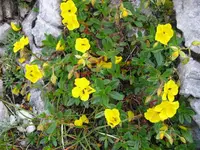
The bright yellow flowers open only in full light and often close by afternoon or on cloudy days, a behavior known as heliotropism that helps protect pollen from moisture and low temperatures.

Calcareous soil specialist

This species is strongly associated with dry, lime-rich grasslands and rocky slopes over chalk or limestone, where its deep root system and small, slightly hairy leaves help it tolerate drought and nutrient-poor conditions.

Host for rare invertebrates

Common rock-rose foliage serves as the sole or main larval food plant for several specialized moth and butterfly species in Europe, including the nationally scarce brown argus in some regions.

Botan icon

Did you know?

In parts of Europe, long-term vegetation studies use the presence and abundance of common rock-rose as an indicator of ancient, traditionally managed calcareous grasslands, helping ecologists trace habitat continuity over centuries.

FAQs about Common Rock-rose

This species is usually semi-evergreen. In mild climates it keeps most foliage year-round, but in colder areas it may lose more leaves over winter. Older leaves are shed regularly as part of normal growth.

Grow Healthy Plants with Botan Care

Keep your plants happy and healthy with plant identification, disease detection, and easy care guidance.

Botan plant care app — identify plants on mobile

Explore More Plants