


Shear After Bloom
Immediately after the main flowering flush, shear back spent stems by 3–5 cm to trigger dense new growth and a lighter second bloom later in the season.

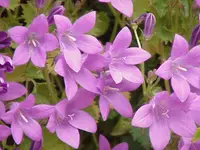
Dalmatian bellflower (Campanula portenschlagiana) is a low-growing, mat-forming perennial often used in rock gardens, edging, and containers. It creates dense cushions of small, rounded leaves covered with starry, violet-blue bell-shaped flowers. Native to rocky slopes and walls in the Dalmatian region of Croatia, it is adapted to crevices and well-drained, mineral soils. This background makes it relatively resilient and cold-hardy, but it dislikes heavy, waterlogged conditions. With adequate light, moderate moisture, and free-draining soil, it can bloom generously over a long season. Once established, it spreads steadily but is usually easy to control, which helps simplify how to care for Dalmatian bellflower in home gardens.

Care Difficulty
Moderate Care

Light Preference
Partial Sun

Water Requirements
Moderate Water

Temperature Preference
Cold Hardy

Hardiness Zone
3–8

Soil Texture
Loamy, Sandy, Organic-rich

Soil pH
Acidic (5.5–6.5), Slightly acidic (6.5–7.0)

Soil Drainage
Moist but well-drained

Fertilization
Light (every 4–6 weeks)
Scan your plant to receive care tips personalized for your specific plant
Available on iOS and Android
This low, mat-forming perennial thrives in bright conditions but is sensitive to extremes of sun and shade.
This shallow-rooted perennial prefers consistently moist but not saturated soil, especially during active growth and flowering.
This hardy perennial tolerates a wide temperature range but flowers and grows best in moderate conditions.
Humidity needs are modest and close to typical indoor levels for Campanula portenschlagiana.
Campanula portenschlagiana prefers airy, moist but fast-draining soil that does not stay waterlogged.
This species is well suited to container growing on patios, balconies, and in window boxes.
Moderate feeding keeps Campanula portenschlagiana flowering well in pots and garden beds.
Light, timely pruning supports compact growth and repeat flowering in this bellflower.
This plant forms dense mats that eventually benefit from division, repotting, or transplanting.
This species is commonly multiplied by division, cuttings, or seed in home gardens.
This hardy perennial usually needs minimal winter attention in temperate climates.

Plant Health Check
Not sure what's wrong with your plant? Check your plant's health inside the app.
This species is naturally confined to rocky limestone cliffs and walls in the Dalmatian region of Croatia, where it anchors itself in narrow crevices with very little soil.
Mature plants develop dense, dome-shaped cushions of foliage that can spill 20–30 cm over walls, an adaptation that helps shade their roots and reduce water loss in exposed sites.
In mild climates it can flower from late spring well into autumn, repeatedly setting new buds along its trailing shoots rather than blooming in a single short flush.

In its native range, this species is a characteristic element of old stone architecture, often colonizing centuries-old walls and fortifications, where genetically persistent clonal patches can occupy the same masonry joints for decades.
This species spreads by short stolons and self-seeding, forming dense mats over time. In most gardens it is not truly invasive, but it can edge into nearby spaces if not occasionally thinned or edged.
Keep your plants happy and healthy with plant identification, disease detection, and easy care guidance.

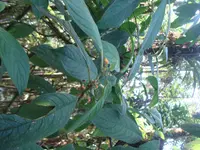
Besleria solanoides
Besleria solanoides
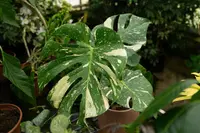
Monstera deliciosa 'Thai Constellation'
Monstera deliciosa 'Thai Constellation'
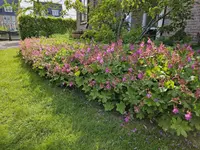
Bigroot geranium
Geranium macrorrhizum
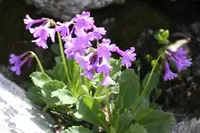
Viscid Primrose
Primula latifolia
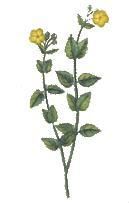
yellow rock rose
Helianthemum marifolium
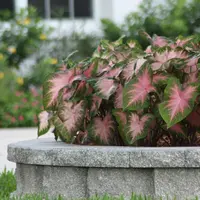
Fancy-leaf Caladium
Caladium 'Kathleen'
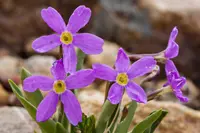
alpine primrose
Primula angustifolia
 POPULAR
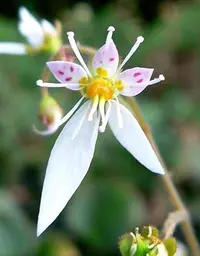
Strawberry saxifrage
Saxifraga stolonifera