parasol whitetop Care (Doellingeria umbellata)

Also known as: flat-top white aster, flat-topped aster, tall flat-top white aster
parasol whitetop

About parasol whitetop

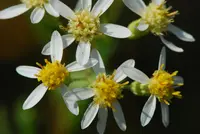
Parasol whitetop, Doellingeria umbellata, is a tall, clump-forming perennial from the aster family. It produces many flat-topped clusters of small white flowers above narrow, lance-shaped leaves. Native to moist meadows, stream banks, and open wetlands across eastern and central North America, it often forms striking drifts in late summer to early fall. The plant attracts bees, butterflies, and other pollinators, which makes it useful in naturalistic and wildlife-friendly plantings. It is generally easy to grow in sun to light shade with consistently moist, well-drained soil, and understanding this helps clarify how to care for parasol whitetop.

Main Plant Requirements

Care Difficulty

Easy Care

Light Preference

Full Sun

Water Requirements

Keep Soil Moist

Temperature Preference

Cold Hardy

Hardiness Zone

3–8

Soil Texture

Loamy, Silty, Organic-rich

Soil pH

Acidic (5.5–6.5), Slightly acidic (6.5–7.0)

Soil Drainage

Moist but well-drained

Fertilization

Minimal (feed rarely)

Get Personalized Care Plan

Scan your plant to receive care tips personalized for your specific plant

Available on iOS and Android

How to Care for the parasol whitetop

This North American native thrives in open, bright conditions typical of moist meadows and sunny woodland edges.

  • Provide 6–8 hours of direct sun daily; in hotter regions, give Doellingeria umbellata morning sun with light afternoon shade to prevent leaf scorch.
  • Plant in an open site that still tolerates light partial shade, though stems may lean or stretch if sun drops below about 4–5 hours per day.
  • Monitor foliage through the season; pale, floppy growth signals too little light, while crisp or bronzed leaf edges indicate excessive intense afternoon sun exposure.

This species prefers consistently moist soil and does not handle prolonged drought well in exposed sites.

  • Water when the top 2–4 cm of soil feels just barely damp rather than dry, aiming to keep deeper soil evenly moist but not saturated.
  • Use soil that drains freely yet holds moisture, such as loamy ground with organic matter, and avoid standing water or compacted heavy clay that stays soggy.
  • In hot, dry periods, increase frequency as leaves begin to lose firmness or wilt by midday; reduce watering in cool, rainy seasons to prevent root rot and yellowing foliage.

This hardy perennial is adapted to cool to warm temperate climates with cold winters and mild to warm summers.

  • Optimal growing temperatures are around 65–80°F (18–27°C) during the active season, supporting sturdy stems and abundant flower clusters.
  • The plant overwinters in the ground and tolerates lows near -20°F (-29°C) once established, with top growth naturally dying back after hard frosts.
  • During summer heat, it handles short periods up to about 90°F (32°C) if soil stays evenly moist; prolonged hotter, dry conditions can cause stress, leaf scorch, and reduced flowering.

Humidity is rarely a concern for Doellingeria umbellata in typical outdoor conditions.

Doellingeria umbellata prefers consistently moist, moderately fertile soil with structure that stays aerated.

  • Use a loamy, organic-rich soil with a mix of garden soil, compost, and fine bark to hold moisture while keeping structure open.
  • Ensure drainage is steady but not fast-draining, as the root zone should remain evenly moist without standing water.
  • Aim for slightly acidic to neutral pH, around 6.0–7.0, avoiding strongly alkaline conditions that can limit nutrient uptake.
  • Avoid compacted clay or pure sand; incorporate compost and coarse material to improve both drainage and root aeration.

This species can be grown in containers, mainly for patios or small gardens.

  • Choose a deep, heavy container to anchor tall, top-heavy stems and reduce the risk of tipping in wind.
  • Use a moisture-retentive but draining mix, such as compost-rich potting soil blended with pine bark fines to prevent waterlogging at the base.
  • Position the container where it is sheltered from strong gusts that could stress tall stems and loosen roots in the pot.

This native perennial generally needs minimal feeding in the ground, but light nutrition can support flowering in lean soils when caring for parasol whitetop.

  • Use a balanced, slow-release granular fertilizer (around 10-10-10) or a thin layer of compost in early spring.
  • Apply once at the start of the growing season; avoid repeated applications on fertile garden soils or naturalized plantings.
  • For container plants, feed every 6–8 weeks with a half-strength balanced liquid fertilizer during active growth.
  • Stop fertilizing in late summer and avoid feeding in fall and winter to prevent soft, frost-tender growth.

Doellingeria umbellata benefits from light, targeted pruning to maintain vigor and encourage strong flowering stems.

  • In late fall or very early spring, cut back dry, spent stems to just above ground level using clean pruners.
  • Remove dead, diseased, or storm-damaged shoots as needed during the growing season to limit stress and pathogen spread.
  • Thin congested stems from the center of the clump to improve air flow and reduce mildew risk.
  • Deadhead faded flower clusters before seeds disperse if self-seeding needs to be limited, or leave some for wildlife.

This species is usually grown in the ground, so care focuses on dividing and transplanting established clumps rather than frequent repotting.

  • Plan division or transplanting in early spring or early fall, when temperatures are mild and soil moisture is steady.
  • Look for signs such as crowded stems, reduced flowering, or bare centers in the clump as indicators that division is due every 3–5 years.
  • Lift the clump carefully with a spade or fork, gently tease or cut apart sections, keeping several healthy shoots and roots per division.
  • Replant divisions at the same depth in well-prepared, moist soil, water thoroughly, and keep evenly moist until new growth establishes.

This perennial is commonly propagated by division and seed, allowing gradual expansion of garden populations of Doellingeria umbellata.

  • Divide mature clumps in early spring or early fall, keeping each division with robust shoots and a good root mass.
  • For seed propagation, collect ripe seed heads in late summer to early fall before they disperse naturally.
  • Sow seeds outdoors in fall or in cold frames so they experience natural cold stratification, which improves germination.
  • Maintain consistently moist, not waterlogged, soil and full sun to light shade for young plants until root systems are well established.

This hardy native perennial tolerates typical winter conditions across much of its range and usually needs little special care.

  • After hard frost, allow stems to stand for wildlife or cut back to near ground level if tidy borders are preferred.
  • In colder regions or exposed sites, apply a 5–7 cm layer of mulch around the crown to moderate freeze–thaw cycles.
  • Container-grown plants are more vulnerable; move pots to a sheltered, unheated but frost-free or minimally freezing location if possible.

Care Tips

Sturdy stem support

Install discreet stakes or a low wire grid early in the season so the tall stems stay upright in wind and heavy rain, which reduces lodging and damage to flower clusters.

Rhizome edge control

Once clumps are established, use a flat spade each spring to slice shallowly around the planting area, limiting spread of underground stems and keeping the stand dense but contained.

Late-season deadheading

Remove most spent flower heads after bloom to reduce self-seeding into nearby beds, but leave a portion for wildlife value and natural regeneration where space allows.

Divide on cool days

Plan clump division for an overcast, cool day in early spring, then replant divisions quickly and water deeply to minimize stress and ensure strong re-establishment.

Monitor for leaf spots

During humid periods, inspect foliage weekly for small brown or purple leaf spots and promptly remove and dispose of affected leaves to slow spread of fungal disease when growing parasol whitetop.

Common Pests and Diseases

Aster yellows

This disease causes yellowing and stunting of shoots, distorted flower heads, and sometimes bushy, witch’s-broom-like growth. Symptoms include small, deformed ray florets and poor seed set.

Solution

Remove and destroy symptomatic plants promptly to limit spread and control leafhopper vectors by reducing tall weeds nearby and using fine mesh row covers in garden settings. Avoid moving apparently healthy plants from infected patches, and encourage natural predators of leafhoppers by maintaining diverse, unsprayed margins.

Powdery mildew

This disease appears as white or gray, powdery patches on leaves and stems, often starting on lower or shaded foliage. Symptoms include dull, chlorotic leaves and reduced vigor late in the season.

Solution

Improve air circulation by thinning crowded stems and avoiding overhead watering in confined plantings. Remove heavily infected leaves, keep surrounding vegetation from pressing tightly around the plant, and if needed use a labeled sulfur or potassium bicarbonate product applied in dry, mild weather according to parasol whitetop care instructions.

Leaf spot

This disease causes small, tan to brown spots on leaves that may merge into larger blotches, sometimes with purple or darker margins. Symptoms include premature yellowing and shedding of lower foliage in dense or damp sites.

Solution

Collect and dispose of fallen, spotted leaves and avoid leaving infected debris around the plant over winter. Space plants to enhance airflow, water at soil level rather than on foliage, and if recurrent problems occur in managed plantings, use a registered copper or chlorothalonil spray early in the season according to label directions.

Aphids

These insects cluster on young stems and the undersides of leaves, sucking sap and excreting sticky honeydew. This pest can cause curled, distorted growth and attract sooty mold fungi on the honeydew.

Solution

Knock aphids off with a firm stream of water and prune heavily infested shoot tips. Encourage lady beetles and lacewings, avoid high nitrogen fertilization that promotes soft growth, and when needed apply insecticidal soap or horticultural oil thoroughly to leaf undersides in cool, overcast conditions.

Leafhoppers

These insects feed by piercing and sucking juices from leaves, causing pale stippling, small white spots, and sometimes a general bleached look to foliage. This pest also acts as a main vector for aster yellows in asters and related species.

Solution

Mow or manage tall grasses and weeds near plantings to reduce leafhopper shelter, and use fine mesh netting over high-value groups during peak leafhopper activity if practical. Support beneficial predators and avoid broad-spectrum insecticides; if pressure is high, use a labeled pyrethrin or insecticidal soap directed at the undersides of leaves and applied in the evening.

Interesting Facts

Late-season pollinator magnet

This tall wetland aster produces abundant small white flower heads in late summer to early fall, providing nectar and pollen for a wide range of native bees, wasps, flies, beetles, and butterflies when many other wildflowers have finished blooming.

Strong affinity for wetlands

The species is naturally associated with moist to wet habitats such as fens, marsh edges, stream banks, and wet meadows, and is often used as an indicator of relatively intact, undisturbed wetland plant communities.

Distinctive branching clusters

Its flower heads are arranged in broad, flat-topped to slightly rounded clusters with many short, ascending branches, a structure that gives a more umbrella-like outline than many other North American asters and helps distinguish it in the field.

Botan icon

Did you know?

Genetic and morphological studies have shown that this species, once treated within the large genus Aster, is distinct enough to be placed in the segregate genus Doellingeria, illustrating how modern plant systematics reshaped the understanding of North American asters.

FAQs about parasol whitetop

This species is highly attractive to pollinators. The flat white flower clusters provide easy landing platforms and abundant nectar and pollen, drawing native bees, honeybees, butterflies, and beneficial wasps during mid to late summer.

Grow Healthy Plants with Botan Care

Keep your plants happy and healthy with plant identification, disease detection, and easy care guidance.

Botan plant care app — identify plants on mobile

Explore More Plants