Cool root zone
Mulch lightly with fine gravel or grit around the crowns to keep roots cool, reduce evaporation, and prevent soil from splashing onto the leaves, which helps limit foliar disease in damp sites.

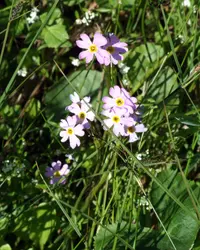
Siberian primrose (Primula nutans) is a small, cold-loving perennial from northern Europe and Arctic regions of Russia. It naturally grows in damp meadows, riverbanks, and coastal areas. The plant forms low rosettes of soft green leaves and sends up delicate stems topped with nodding, bell-like pink to pale purple flowers. Its compact size makes it suitable for cool rock gardens, troughs, and specialized collections. Primula nutans prefers cool summers, steady moisture, and humus-rich, slightly acidic soil, which can be challenging in warmer, dry climates. Understanding how to care for Siberian primrose is important, as it dislikes heat, drought, and heavy, poorly drained substrates.

Care Difficulty
Hard Care

Light Preference
Partial Shade

Water Requirements
Keep Soil Moist

Temperature Preference
Cold Hardy

Hardiness Zone
2–6

Soil Texture
Loamy, Silty, Organic-rich

Soil pH
Acidic (5.5–6.5)

Soil Drainage
Moist but well-drained

Fertilization
Minimal (feed rarely)
Scan your plant to receive care tips personalized for your specific plant
Available on iOS and Android
This high-latitude primrose prefers cool, soft light rather than strong, direct sun.
Moist, cool soil is essential for reliable performance of this species.
This cold-adapted primrose prefers cool conditions and does not thrive in heat.
This plant prefers consistently moist air and reacts quickly to dry indoor conditions.
This species prefers moist, airy, organic-rich soil that never becomes waterlogged.
This species adapts well to container growing when moisture and drainage are carefully managed.
Primula nutans benefits from light, balanced feeding during active growth but reacts poorly to heavy fertilizer use.
Primula nutans needs only light, periodic pruning to maintain tidy rosettes and encourage flowering.
This primula is more often transplanted in the garden than kept long term in containers, and it dislikes frequent disturbance.
Primula nutans is commonly propagated by division or from seed under cool, moist conditions.
This cold-tolerant primula usually overwinters well in-ground with modest protection in colder climates.

Plant Health Check
Not sure what's wrong with your plant? Check your plant's health inside the app.
This species is naturally restricted to cold, open habitats around the Arctic, including northern Fennoscandia and parts of Siberia, where it grows on moist, base-rich shores and tundra soils that remain cool through summer.
The drooping, or nodding, pink-lilac flowers help shield pollen from rain and cold winds in its harsh native climates, while still allowing access to pollinators such as small flies and bees during brief warm periods.
Populations occur in widely separated regions from northern Europe to northeastern Russia and parts of North America, reflecting a fragmented distribution that likely traces back to post-glacial migration and habitat shifts.

Primula nutans is considered regionally threatened or endangered in several parts of its European range, so in some countries it is legally protected and its remaining natural habitats are monitored and managed to prevent further decline.
Lack of flowers usually comes from stress: too-warm conditions, overly dry soil, or heavy feeding that promotes leaves instead of buds. Cool, moist, stable conditions and avoiding high-nitrogen fertilizer are key parts of Primula nutans care for flowering.
Keep your plants happy and healthy with plant identification, disease detection, and easy care guidance.