Strategic bulb spacing
Plant bulbs in small clusters with 5–10 cm between each to encourage a naturalized look and make it easier to lift and divide only the most crowded clumps every few years.

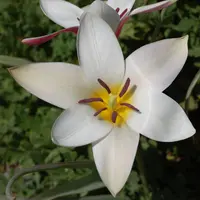
Lady tulip, Tulipa clusiana, is a small, bulb-forming perennial best known for its elegant, star-shaped flowers. The narrow, often bicolored petals open wide in sun and close again in cooler or lower light.
This species comes from dry, rocky areas of the Middle East and Central Asia, so it tends to be more drought-tolerant than many modern garden tulips. Bulbs are usually long-lived where soils drain well and summers are relatively dry.
Lady tulip suits informal borders, rock gardens, and naturalized plantings. It favors full sun, moderately fertile, sharply drained soil, and dry rest in summer, which shapes how to care for lady tulip over time.

Care Difficulty
Moderate Care

Light Preference
Full Sun

Water Requirements
Moderate Water

Temperature Preference
Cold Hardy

Hardiness Zone
3–8

Soil Texture
Sandy, Loamy

Soil pH
Slightly acidic (6.5–7.0), Neutral (7.0)

Soil Drainage
Well-drained

Fertilization
Minimal (feed rarely)
Scan your plant to receive care tips personalized for your specific plant
Available on iOS and Android
This species thrives in bright, open positions with plenty of direct sun for strong flowering.
Water needs change through the year, with active growth requiring modest moisture and dormancy needing dryness.
This bulb prefers cool winters and mild springs, with a distinct cold period before flowering.
Humidity is not a major factor for Tulipa clusiana, which prefers dry, well-ventilated outdoor air.
Tulipa clusiana grows best in light, free-draining mineral soil that prevents water from lingering around the bulbs.
This species is well suited to container growing when drainage and bulb spacing are managed carefully.
Tulipa clusiana benefits from modest feeding that supports flowering without over-enriching the soil.
Tulipa clusiana needs minimal pruning, focused on spent flowers and declining foliage.
Lady tulip is usually grown as a garden bulb, so care focuses on lifting and transplanting rather than frequent repotting.
Tulipa clusiana is most reliably propagated by bulb division rather than by seed in home gardens.
Tulipa clusiana is generally cold hardy in temperate climates and needs little winter care in the ground.

Plant Health Check
Not sure what's wrong with your plant? Check your plant's health inside the app.
This species is naturally adapted to dry, open steppe and rocky slopes from the Middle East to the western Himalayas, tolerating hot, arid summers in a fully dormant bulb state.
Its flowers typically have creamy white inner petals and strong reddish or pinkish outer stripes, creating a clear bicolor effect that is especially visible when the flowers close in low light.
It was introduced to European gardens by the 16th century and became one of the historical wild tulip species valued in early bulb collections for its delicate, star-shaped flowers and slim habit.

In parts of its native range, this species often forms loose naturalized colonies that can persist for many years, with clumps slowly expanding by bulb offsets and self-sown seed under stable, dry-soil conditions.
Lack of flowers usually comes from bulbs that overheated in summer, were planted too shallow, are overcrowded, or did not get enough winter chill. Allow foliage to die back naturally so bulbs can store energy for next spring.
Keep your plants happy and healthy with plant identification, disease detection, and easy care guidance.