Prosthechea fragrans Care

Prosthechea fragrans

About Prosthechea fragrans

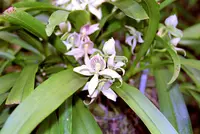
Prosthechea fragrans is a compact epiphytic orchid, usually growing on trees and forming clumps of slender pseudobulbs with narrow, leathery leaves. It produces small, pale flowers that are strongly fragrant, especially in the evening. Native to humid forests of Central and South America, it experiences warm temperatures, good air movement, and bright but filtered light in nature. This species is considered moderately easy for growers who can provide stable warmth, consistent moisture, and a very free-draining orchid medium. Understanding how to care for Prosthechea fragrans starts with recreating its airy, tree-dwelling habitat rather than treating it like a typical potted houseplant.

Main Plant Requirements

Care Difficulty

Moderate Care

Light Preference

Bright Indirect Light

Water Requirements

Moderate Water

Temperature Preference

Tropical / Frost Sensitive

Hardiness Zone

11–12

Soil Texture

Peaty, Organic-rich

Soil pH

Acidic (5.5–6.5)

Soil Drainage

Well-drained

Fertilization

Light (every 4–6 weeks)

Get Personalized Care Plan

Scan your plant to receive care tips personalized for your specific plant

Available on iOS and Android

How to Care for the Prosthechea fragrans

This orchid prefers bright, gentle light that mimics dappled forest conditions.

  • Provide 8–12 hours of bright, filtered light per day, such as under 30–50% shade cloth or behind a sheer curtain with morning sun and shaded afternoons.
  • Tolerates light partial shade but flowering of Prosthechea fragrans declines in deep shade; leaves become dark green and growth slows.
  • Avoid strong midday sun, which causes yellowing, hard leaves, and brown scorch patches; shift plants slightly shadier in summer and brighter in short winter days.

This species prefers consistently lightly moist conditions with brief drying between waterings.

  • Water when the growing medium feels dry in the top 2–3 cm, rather than on a fixed schedule, and allow excess water to drain freely to prevent root suffocation.
  • Use a very free-draining orchid mix; signs of overwatering include black, mushy roots and a sour smell, while wrinkled pseudobulbs and limp leaves suggest underwatering.
  • Reduce watering slightly in cooler months or if light is low, then increase frequency in warm, bright growing periods as Prosthechea fragrans actively produces roots and leaves.

This orchid grows best in warm-intermediate conditions with stable, moderate temperatures.

  • Ideal daytime range is 70–80°F (21–27°C) with nights at 60–65°F (16–18°C), allowing a small day–night drop to support healthy growth and flowering.
  • Protect from cold below 50°F (10°C); brief dips to 45°F (7°C) may be tolerated but repeated exposure or frost can damage leaves and roots.
  • Handles short periods up to 85–90°F (29–32°C) if shaded and well hydrated, but sustained heat above this range stresses the plant, so increase air movement and avoid hot, stagnant spots.

This orchid prefers moderately high humidity to maintain healthy foliage and flowering.

  • Aim for 50–70% humidity, using a hygrometer to monitor levels around Prosthechea fragrans.
  • It tolerates short spells at 40–45% but prolonged dry air causes wrinkled pseudobulbs and crisp leaf tips.
  • Increase humidity with a pebble tray, nearby humidifier, or grouping plants, while keeping foliage dry and air moving.

This epiphytic orchid needs a very airy, fast-draining growing medium rather than traditional garden soil.

  • Use a coarse mix of medium orchid bark with some perlite and a little sphagnum moss for moisture balance.
  • Ensure the mix drains rapidly so roots never sit in water, but still holds slight moisture between waterings.
  • Keep pH slightly acidic to neutral (pH 5.5–6.8), which suits Prosthechea fragrans root chemistry and nutrient uptake.
  • Avoid dense, fine-textured potting soil or any mix that compacts, as this reduces aeration and promotes root rot.

This species is well suited to container growing when mounted or potted in a shallow, free-draining setup.

  • Choose a shallow but broad pot or basket so pseudobulbs can spread horizontally without crowding the center.
  • Use slotted or mesh-sided orchid containers to increase airflow around roots and speed up drying after watering.
  • Opt for heavier clay or ceramic pots if the plant becomes top-heavy, to keep the container stable and upright.

This orchid benefits from light, consistent feeding during active growth, but excess nutrients can damage roots.

  • Use a balanced orchid fertilizer (around 20-20-20) diluted to 1/4–1/2 strength in low-mineral water.
  • Feed Prosthechea fragrans every 2–3 weeks in spring and summer, skipping one feeding if leaf tips brown.
  • Reduce feeding to once a month or stop entirely in fall and winter when growth slows.
  • Avoid slow-release pellets in bark mixes; instead use liquid fertilizer applied after a plain-water pre-rinse.

Pruning is minimal and focuses on cleanliness and maintaining healthy growth.

  • After flowering, remove only completely dried flower spikes at the base with sterilized scissors or pruners.
  • Cut away dead, shriveled pseudobulbs and yellow, damaged leaves to lower disease risk.
  • Leave green pseudobulbs intact, as they store water and nutrients that support new shoots and flowers on Prosthechea fragrans.
  • Disinfect tools with alcohol between cuts to prevent spreading fungal or bacterial problems.

Repotting maintains aeration around the roots and prevents decline in this epiphytic orchid.

  • Repot every 2–3 years or when roots circle tightly, medium breaks down, or growth stalls.
  • Time repotting for late winter to early spring, just as new roots start to emerge.
  • Gently remove old bark, trim dead roots, and place the plant slightly above the new medium in a snug pot or basket.
  • Water lightly for 1–2 weeks after repotting to limit rot, then resume normal watering once new growth is established.

Division is the standard method for increasing plants and maintaining vigor.

  • Divide healthy clumps during late winter or early spring, just before strong new growth begins.
  • Unpot the orchid, remove old medium, and separate sections with at least 3–4 firm pseudobulbs each.
  • Dust cut surfaces with a fungicidal powder or ground cinnamon to limit infection during rooting.
  • Replant divisions in fresh airy orchid mix, keep humidity high, and water sparingly until new roots are visible.

This orchid is frost-sensitive and needs mild, protected conditions in winter.

  • Maintain indoor temperatures around 55–65°F at night and 65–75°F by day for Prosthechea fragrans.
  • Keep plants above 50°F; bring outdoor containers indoors before night temperatures drop near this level.
  • Provide bright, indirect light and slightly drier conditions, avoiding water sitting around the pseudobulb bases.
  • Ensure gentle air movement to reduce fungal issues while the plant is less active.

Care Tips

Mounting choice

Use a medium-rough cork or hardwood slab instead of very smooth wood so roots can anchor securely and dry quickly between waterings, which reduces rot risk when growing Prosthechea fragrans.

Pseudobulb monitoring

Check pseudobulbs every 1–2 weeks; slightly wrinkled bulbs indicate the plant needs a modest increase in watering or humidity, while firm, plump bulbs suggest current moisture levels are adequate.

Targeted air movement

Position a small fan on a low, indirect setting so air moves gently across the root zone and leaves without blowing directly on the plant, which helps prevent fungal spotting and bacterial rot in tight indoor spaces.

Support for spikes

As new flower spikes emerge, insert thin, smooth stakes and secure spikes loosely with soft clips or ties to prevent breakage and keep blooms upright without constricting the stems.

Post-bloom cleanup

After flowering, remove only the spent flower spike at its base and leave healthy pseudobulbs and leaves intact, since they continue to store energy and support next season’s growth.

Common Pests and Diseases

Scale insects

This pest attaches along pseudobulbs, leaf bases, and flower spikes, sucking sap and causing yellowing, shriveling, and sticky honeydew on Prosthechea fragrans.

Solution

Isolate the plant, then wipe pseudobulbs and leaves with cotton pads dipped in 70% isopropyl alcohol, paying attention to leaf sheaths and crevices; repeat weekly until no new scale appears, and improve air movement and light levels to support plant recovery as part of Prosthechea fragrans care instructions.

Spider mites

These insects thrive on Prosthechea fragrans in warm, dry air, causing fine stippling, dull leaves, and sometimes thin webbing on the undersides.

Solution

Increase humidity to 50–70%, rinse foliage and pseudobulbs under a gentle lukewarm shower, and treat undersides of leaves with insecticidal soap or a horticultural oil spray every 7–10 days for several cycles while avoiding direct hot sun after spraying.

Mealybugs

This pest appears as white, cottony clusters around leaf bases, roots, and new growth, weakening the orchid and promoting sooty mold on honeydew deposits.

Solution

Remove visible mealybugs manually with tweezers or cotton swabs dipped in 70% isopropyl alcohol, flush the root zone with lukewarm water to dislodge hidden insects, then follow with repeated applications of insecticidal soap or systemic granules labeled for orchids if infestations persist.

Bacterial brown spot

This disease causes rapidly spreading, water-soaked brown lesions on leaves and sometimes on young pseudobulbs, often starting at a wound or leaf tip.

Solution

Promptly cut out infected tissue with a sterile blade, dust or dab cuts with ground cinnamon or a horticultural bactericide, keep foliage dry, increase air circulation, and avoid overhead watering or splashing between plants to reduce spread.

Fungal leaf spot

Symptoms include small, round to irregular dark spots on leaves that may enlarge and develop yellow halos, especially in cool, humid, low-airflow conditions typical of crowded orchid benches.

Solution

Remove affected leaves or trim spotted areas with sterile tools, improve spacing and airflow around the plant, keep leaves dry overnight, and apply a broad-spectrum fungicide labeled for orchids according to the product directions if new spots continue to appear.

Interesting Facts

Vanilla‑spice fragrance

The flowers release a noticeable vanilla‑like, spicy fragrance, especially during the evening and night, which is thought to attract specific nocturnal moth pollinators in its native forests.

From Encyclia to Prosthechea

This species was long placed in the genus Encyclia and is still often labeled that way in collections; molecular and morphological studies led taxonomists to reclassify it into Prosthechea, reflecting its closer evolutionary relationships.

Pseudobulbs as reservoirs

It forms slightly compressed pseudobulbs that store water and nutrients, an adaptation that allows the plant to withstand short dry periods in its epiphytic habitats in Central and South American forests.

Botan icon

Did you know?

In its native range, this orchid often grows as an epiphyte high in the canopy on mossy tree branches, where its roots anchor into bark and organic debris rather than soil, placing it in brighter, better‑ventilated air layers than many ground‑dwelling forest plants.

FAQs about Prosthechea fragrans

Lack of flowering usually relates to insufficient light, minimal day–night temperature difference, or depleted nutrients. Provide bright, filtered light, a cooler drop at night, and a low-dose orchid fertilizer during active growth to support bud formation.

Grow Healthy Plants with Botan Care

Keep your plants happy and healthy with plant identification, disease detection, and easy care guidance.

Botan plant care app — identify plants on mobile

Explore More Plants