clamshell orchid Care (Prosthechea cochleata)

Also known as: Clamshell Orchid
clamshell orchid

About clamshell orchid

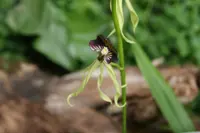
Clamshell orchid, Prosthechea cochleata, is an epiphytic orchid that often grows on tree trunks and branches in tropical forests. It is native to Central America, the Caribbean, and parts of northern South America. This species is known for its unusual upside‑down flowers with a dark central lip that resembles a small shell, blooming repeatedly on long, arching spikes. The plant usually forms compact clumps of pseudobulbs with narrow, upright leaves. Many growers find it relatively forgiving for an orchid, as it tolerates a range of household humidity and intermediate temperatures, which simplifies how to care for clamshell orchid. It prefers bright filtered light, regular moisture, and a very free‑draining orchid substrate.


Main Plant Requirements

Care Difficulty

Moderate Care

Light Preference

Bright Indirect Light

Water Requirements

Moderate Water

Temperature Preference

Tropical / Frost Sensitive

Hardiness Zone

11–12

Soil Texture

Organic-rich, Peaty, Loamy

Soil pH

Acidic (5.5–6.5)

Soil Drainage

Moist but well-drained

Fertilization

Moderate (every 2–4 weeks)

Get Personalized Care Plan

Scan your plant to receive care tips personalized for your specific plant

Available on iOS and Android

How to Care for the clamshell orchid

This orchid prefers bright, filtered light that mimics dappled forest conditions.

  • Provide 8–12 hours of bright, indirect light daily, such as under a sheer curtain or in light shade beneath taller plants.
  • Allow gentle morning sun but protect clamshell orchid from strong midday and afternoon sun, which can scorch leaves and cause yellow patches.
  • In winter, move it closer to the light source or supplement with grow lights so foliage stays medium green, not dark and floppy or very pale.

This species prefers evenly moist conditions with brief drying at the roots between waterings.

  • Water when the top 2–3 cm of the potting mix feel dry, using thorough soaking and letting excess drain completely to avoid standing water.
  • In active growth and warmer months, expect to water more often; reduce frequency in cooler seasons while never allowing roots to stay bone dry for long.
  • Watch for wrinkled pseudobulbs and thin, limp leaves as signs of underwatering, and for black, mushy roots or sour smell as indicators of overwatering in Prosthechea cochleata.

This orchid thrives in intermediate to warm temperatures with mild seasonal shifts.

  • Aim for daytime temperatures of 70–80°F (21–27°C) and nighttime temperatures of 60–65°F (16–18°C) for steady growth.
  • Protect it from cold; growth slows below 55°F (13°C) and tissue damage can occur near 40°F (4°C), so avoid frost and chilly drafts.
  • It tolerates brief heat up to 85–90°F (29–32°C) if humidity is 50–70% and airflow is good, but prolonged hotter conditions can stress leaves and buds.

This orchid prefers moderately high, stable humidity to maintain firm leaves and regular flowering.

  • Aim for 50–70% humidity; clamshell orchid tolerates brief dips to 40% but growth may slow.
  • Dry air causes wrinkled pseudobulbs, crisp leaf tips, and buds that yellow or fail to open.
  • Increase humidity with a pebble tray under the pot, grouped plants, or a room humidifier while keeping air gently moving.

Prosthechea cochleata grows best in a very airy, fast-draining orchid medium rather than dense potting soil.

  • Use a mix of medium orchid bark with some perlite and a little sphagnum moss to hold light moisture without clogging air spaces.
  • Ensure the mix drains completely within seconds after watering; roots should never sit in waterlogged or compacted material.
  • A slightly acidic to neutral range around pH 5.5–7 suits this orchid and helps nutrient uptake without extra adjustments.
  • Avoid peat-heavy, fine, or garden soils that pack tightly; add extra bark or chunky perlite if the mix feels heavy or stays wet for many hours.

This species is well suited to container growing due to its compact, clumping root system.

  • Choose a pot just 2–3 cm wider than the root mass so the medium dries evenly and does not sour in the center.
  • Use a heavier clay or ceramic pot if the plant becomes top-heavy to reduce tipping when spikes elongate.
  • Select slotted or orchid-style containers that increase side aeration and let orchid bark dry predictably between waterings.

This orchid responds well to light, consistent feeding during active growth.

  • Use a balanced orchid fertilizer (around 20-20-20) or similar NPK formula suitable for clamshell orchid.
  • Apply at 1/4–1/2 strength every 2–3 weeks in spring and summer when new roots and leaves develop.
  • Flush the pot with plain water monthly to prevent salt buildup in the medium.
  • Reduce feeding to monthly or stop entirely in late fall and winter, resuming as growth restarts.

Pruning Prosthechea cochleata focuses on hygiene rather than shaping.

  • Perform light pruning after flowering cycles, inspecting canes and leaves carefully.
  • Remove only dead, shriveled pseudobulbs, brown leaf tips, and spent flower spikes with sterile scissors or pruning shears.
  • Avoid cutting plump green pseudobulbs, since these store water and energy that support future flowering.
  • Trimming damaged tissue improves air movement, reduces disease risk, and keeps the plant compact.

Repotting this orchid is done infrequently and only when the plant clearly outgrows its container or medium breaks down.

  • Check for roots circling the pot, pushing the plant upward, or for decomposed, sour-smelling medium as signs to repot.
  • Plan to repot every 2–3 years, ideally in late winter to early spring just before new root growth starts.
  • Gently remove old medium, trim dead roots, and place the plant in a slightly larger pot with fresh, coarse orchid mix.
  • Keep roots shaded, maintain high humidity, and water lightly for 1–2 weeks after repotting to limit stress.

Prosthechea cochleata is usually propagated by division rather than from seed in home collections.

  • Divide only mature clumps in late winter or early spring, just before strong new growth begins.
  • Ensure each division carries at least 3–4 healthy pseudobulbs with active roots for stable recovery.
  • Use a sterile knife or pruning shears, making clean cuts and dusting wounds lightly with powdered sulfur or cinnamon.
  • Pot divisions in fresh orchid mix, keep humidity high, and provide bright, indirect light until new growth establishes.

Winter care for this warm-growing orchid focuses on frost avoidance and slightly cooler, drier conditions.

  • This species is frost-sensitive and should be kept above 55°F, ideally 60–70°F in winter.
  • Move container plants indoors or into a heated greenhouse before night temperatures drop below 55°F.
  • Provide bright, indirect light and good air circulation while slightly reducing watering to prevent root rot.

Care Tips

Mounting versus pots

Decide early whether to keep the plant mounted or potted, because changing systems later can set it back; if roots already grip cork or bark tightly, keep that setup and simply add a shallow pot or basket around the mount filled with fresh orchid bark for extra moisture buffering.

Support tall spikes

As flower spikes elongate, insert thin, smooth stakes into the pot and secure the spikes loosely with soft clips or ties so the blooms display well and the pseudobulbs are not pulled sideways by the weight.

Root health checks

Every 3–4 months, gently lift or tilt the plant to inspect roots, trimming only dead, hollow, or mushy ones with sterilized tools, which helps prevent rot and keeps Prosthechea cochleata plant care focused on active, healthy roots.

Brighten air movement

Place a small oscillating fan several feet away on a low setting aimed past, not directly at, the plant to keep gentle air moving around foliage and roots, which reduces fungal issues on older pseudobulbs and flowers.

Seasonal bloom support

When spikes initiate, avoid any repotting or major disturbance and keep the plant in the same orientation to its light source, since sudden changes during spike development can stall or abort buds.

Common Pests and Diseases

Scale insects

This pest commonly settles on pseudobulbs and leaf bases, feeding on sap and weakening clumps over time. Symptoms include sticky honeydew, yellowing areas, and small brown, tan, or white bumps that do not rub off easily.

Solution

Isolate the plant, then wipe affected areas with cotton pads dipped in 70% isopropyl alcohol, repeating weekly until no new scale appears. Improve air movement around the plant, avoid overfertilizing, and, if needed, use a labeled systemic insecticide suitable for orchids according to manufacturer directions.

Spider mites

These insects thrive on Prosthechea cochleata grown in warm, dry indoor air, especially on the undersides of leaves. Symptoms include fine speckling, dull or silvery patches, and very fine webbing near leaf tips or sheaths.

Solution

Rinse foliage thoroughly under lukewarm water, focusing on the leaf undersides, and increase humidity to 50–70% while maintaining good airflow. For persistent infestations, apply a miticide or insecticidal soap labeled for orchids, repeating at 5–7 day intervals to break the life cycle.

Mealybugs

This pest hides in leaf axils, flower spikes, and around pseudobulb sheaths, sucking sap and distorting new growth. Symptoms include white cottony clusters, sticky honeydew, and sooty mold on nearby surfaces.

Solution

Remove visible insects with cotton swabs dipped in 70% isopropyl alcohol and trim heavily infested sheaths or spikes. Monitor closely and repeat treatments weekly, and if the problem persists, use a systemic insecticide suitable for orchids while checking nearby plants for spread.

Bacterial brown rot

This disease tends to attack tender new growth and pseudobulbs, especially in warm, stagnant, high-moisture conditions. Symptoms include rapidly spreading, water-soaked brown or black lesions with a soft, foul-smelling tissue collapse.

Solution

Immediately remove and discard all affected tissue with sterile tools, cutting at least 1–2 cm into healthy, firm tissue. Afterward, keep water off the leaves, improve air circulation, reduce crowding, and, if disease pressure is high, apply a bactericide labeled for ornamental orchids as a preventive drench or spray.

Fungal leaf spot

This disease appears when foliage stays wet for extended periods, particularly under cool or poorly ventilated conditions. Symptoms include small yellow or translucent spots that enlarge, turning brown or black, sometimes with a distinct halo.

Solution

Remove and discard affected leaves or leaf sections, then adjust watering to keep foliage dry and increase air movement around the plant. Space plants so leaves do not touch, and if new spots continue to form, apply a broad-spectrum fungicide labeled for orchids according to instructions as part of general Prosthechea cochleata care instructions.

Interesting Facts

Upside-down flowers

Its flowers are resupinate in reverse compared with most orchids, so the lip points upward like a small hood instead of downward, giving rise to the name clamshell orchid.

Year-round blooming habit

In suitable conditions this species can flower repeatedly over many months and, in warm climates, is known to produce blooms almost continuously rather than in a single short season.

Wide Caribbean distribution

This orchid is native to a broad range from southern Mexico through Central America and the Caribbean to northern South America, where it grows as an epiphyte on trees in warm, humid forests.

Botan icon

Did you know?

In Belize it has been adopted as the national flower, often called the black orchid there, even though its floral tissues are dark purple rather than truly black.

FAQs about clamshell orchid

Lack of flowers usually comes from insufficient light, no temperature drop at night, or too much nitrogen fertilizer. Provide bright, indirect light, a 10–15°F cooler night period, balanced fertilizer, and a short drier rest after growth matures.

Grow Healthy Plants with Botan Care

Keep your plants happy and healthy with plant identification, disease detection, and easy care guidance.

Botan plant care app — identify plants on mobile

Explore More Plants