Moisture-retentive mulch
Apply a 3–5 cm layer of fine bark or leaf mold around the root zone each spring to stabilize soil moisture and temperature while suppressing weeds without smothering the crown.

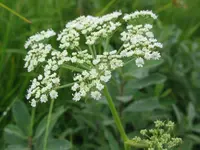
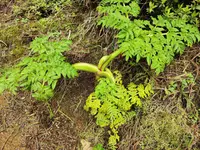
Kneeling angelica (Angelica genuflexa) is a herbaceous perennial from moist meadows and stream edges in the Pacific Northwest of North America. It belongs to the carrot family and forms upright, hollow stems with divided, toothed leaves.
Plants produce umbrella-shaped clusters of small, pale flowers that attract many pollinators and can self-seed in suitable conditions. Growth is relatively fast where soil stays consistently moist and cool.
This species prefers partial sun, damp but not stagnant soil, and protection from strong heat and drying winds. In suitable climates, it is moderately easy to grow once established, and learning how to care for kneeling angelica mainly involves maintaining stable moisture and rich, organic soil.

Care Difficulty
Moderate Care

Light Preference
Partial Shade

Water Requirements
Keep Soil Moist

Temperature Preference
Cold Hardy

Hardiness Zone
4–8

Soil Texture
Loamy, Silty, Organic-rich

Soil pH
Acidic (5.5–6.5), Slightly acidic (6.5–7.0)

Soil Drainage
Moist but well-drained

Fertilization
Minimal (feed rarely)
Scan your plant to receive care tips personalized for your specific plant
Available on iOS and Android
This moisture-loving woodland perennial prefers cool, bright conditions without harsh exposure.
This species favors consistently moist, cool soil and does not tolerate drying out for long.
This plant is adapted to cool, moist climates and tolerates cold better than heat.
Angelica genuflexa prefers consistently moist, cool air but adapts to typical outdoor humidity in temperate regions.
Angelica genuflexa grows best in deep, moist, organic-rich soil that stays evenly damp without becoming stagnant.
This species can be grown in containers if the pot is large and deep enough to support its tall, moisture-loving growth.
This native perennial usually needs minimal feeding in fertile, moist soil, but light supplementation can support lush growth in gardens.
Pruning for Angelica genuflexa is minimal and mainly focused on hygiene and seed control rather than shaping.
This species is usually grown in the ground; transplanting young plants carefully is more important than frequent repotting.
Propagation of Angelica genuflexa is most reliable from fresh seed, as older plants dislike division due to their taproot.
This cold-hardy perennial usually overwinters well in USDA zones where it is native, needing only modest care.

Plant Health Check
Not sure what's wrong with your plant? Check your plant's health inside the app.
The common name kneeling angelica comes from the way its flowering stems bend outward and then upward, so the large, pale green umbels appear to “kneel” over streams and wet ground rather than standing fully upright.
This species is native to cool, wet habitats of the Pacific Northwest and Alaska, where it often grows in saturated soils along streams, seeps, and wet meadows that freeze in winter and stay cool through much of the growing season.
Its broad midsummer umbels provide abundant pollen and nectar for a range of northern insects, including flies, beetles, and native bees, making it a locally significant resource in short-season, high-latitude ecosystems.
Stems, leaves, and roots have traditional uses in some Indigenous and herbal practices, but identification mistakes with toxic lookalikes are easy. For home gardeners, it is safest to treat this species as ornamental rather than a food plant.
Keep your plants happy and healthy with plant identification, disease detection, and easy care guidance.