Angelica lignescens Care

Angelica lignescens

About Angelica lignescens

Angelica lignescens is a perennial herb in the carrot family, forming tall, upright stems with divided leaves and rounded clusters of small flowers. It usually grows in cool, moist habitats such as mountain meadows and stream edges, where soils stay evenly damp but not waterlogged.

The plant has a relatively robust habit but can be short-lived if exposed to hot, dry conditions or poor drainage. Once its moisture and cool-temperature needs are met, it is moderately easy to grow, especially for gardeners familiar with other Angelica species.

In cultivation, it generally prefers partial sun, consistent moisture, and fertile, humus-rich soil. Understanding these natural habitat cues helps gardeners learn how to care for Angelica lignescens in temperate gardens.

Main Plant Requirements

Care Difficulty

Moderate Care

Light Preference

Partial Shade

Water Requirements

Regular Water

Temperature Preference

Cool Climate

Hardiness Zone

Unknown

Soil Texture

Loamy, Silty, Organic-rich

Soil pH

Acidic (5.5–6.5), Slightly acidic (6.5–7.0)

Soil Drainage

Moist but well-drained

Fertilization

Minimal (feed rarely)

Get Personalized Care Plan

Scan your plant to receive care tips personalized for your specific plant

Available on iOS and Android

How to Care for the Angelica lignescens

This species prefers bright, open conditions but not harsh, all-day exposure.

  • Provide 4–6 hours of direct sun, ideally morning sun with light afternoon shade to prevent leaf scorch.
  • Tolerates partial shade, especially in hot climates, but dense shade for most of the day leads to weak, lanky growth and fewer umbels.
  • In summer, protect from intense midday sun; in cooler seasons, ensure an open aspect so Angelica lignescens receives as much low-angle light as possible.

This plant prefers consistently moist but not waterlogged soil.

  • Water when the top 2–4 cm of soil feels slightly dry, aiming for evenly moist soil through the root zone rather than frequent light splashes.
  • In spring and summer, monitor after warm, windy days, as rapid drying can cause wilting; in cooler or rainy periods, delay watering to avoid saturated conditions.
  • Watch for yellowing, soft stems as a sign of overwatering and crisp, drooping foliage as a sign of underwatering, and improve drainage if water pools around the crown.

This species is adapted to cool to mild climates with moderate summer heat.

  • Optimal active growth occurs around 55–75°F (13–24°C), with strongest development in cool, moist conditions rather than hot, dry weather.
  • Plants tolerate light frosts down to about 20–25°F (-6 to -4°C) once established, but prolonged freezes below this can damage crowns and roots.
  • In summer, growth may slow above 85°F (29°C); provide mulch and soil moisture to buffer heat and avoid planting in reflective, heat-trapping sites.

This species prefers moderate humidity but copes with most outdoor conditions in temperate climates.

  • Aim for 40–60% humidity; brief drops lower than this are usually tolerated if soil moisture is stable.
  • Dry air may cause leaf edges to brown and umbels to dry prematurely, especially in hot, windy sites.
  • Increase humidity locally by mulching the soil surface and grouping plants to reduce air movement around foliage.

Angelica lignescens grows best in deep, moist, well-aerated soil with steady drainage.

  • Use a loamy structure with 40–60% mineral soil and plenty of organic matter from compost or leaf mold to retain moisture without becoming sticky.
  • Ensure drainage by avoiding hardpan layers; incorporate coarse sand or fine grit in heavier clay to keep water moving through the profile.
  • Target a slightly acidic to neutral pH around 6.0–7.0, which supports nutrient availability and healthy root activity.
  • Avoid compacted, very dry, or waterlogged substrates, which restrict aeration and encourage root rot and weak, lanky growth.

This species can be grown in containers, but large, deep pots are needed for its strong taproot and tall growth.

  • Choose a container at least 35–45 cm deep so the taproot can extend without curling or circling tightly.
  • Use a heavy, stable pot material such as clay or thick plastic to prevent tipping in wind as the tall stems develop.
  • Raise the pot on feet or bricks so drainage holes clear the ground and excess water escapes rapidly after rain or irrigation.

This species is a woodland perennial that usually needs only modest feeding in garden soil.

  • For poor or sandy soils, use a balanced NPK granular fertilizer or well-rotted compost once in early spring.
  • Apply at 1/2 strength of label rates to avoid soft, weak growth and salt buildup.
  • During the main growing season, a single light top-dressing is enough; do not reapply more than every 6–8 weeks.
  • Stop feeding Angelica lignescens in late summer so stems harden before winter dormancy.

Angelica lignescens needs minimal pruning, mainly to keep the clump tidy and healthy.

  • In late winter or very early spring, remove dead, damaged, or diseased stems at the base with clean pruners.
  • Thin out congested shoots to improve air flow and reduce fungal problems in damp conditions.
  • After flowering, cut spent flower stalks down to the foliage if seed is not required.
  • Disinfect blades before and after use to limit the spread of disease organisms.

This deep-rooted perennial is better transplanted in the ground than kept long-term in containers.

  • Transplant young plants in early spring or early autumn, when weather is cool and soil is moist.
  • Look for signs such as roots circling the pot, water running off quickly, or slowed top growth.
  • Move up only 1 pot size, handling the taproot gently and disturbing the root ball as little as possible.
  • Water thoroughly after transplanting, then keep soil evenly moist and shaded for 7–10 days to reduce stress.

Propagation is usually done from seed, as mature plants dislike disturbance.

  • Collect fresh seed in late summer and sow promptly; viability drops when seed is stored dry for long.
  • Use deep trays or pots with moist, well-drained seed mix and keep at 50–60°F for natural cold stratification.
  • Maintain consistent moisture, not waterlogging, until seedlings are large enough to handle.
  • Transplant seedlings carefully to final positions while still small to maintain strong taproot development.

This hardy perennial typically overwinters well in temperate climates with limited intervention.

  • Tolerates normal ground frost once established, provided soil drains freely and does not stay waterlogged.
  • After top growth dies back, leave basal material as light insulation or cut it away and mulch 5–7 cm deep.
  • In colder areas or exposed sites, add extra mulch over the crown to buffer freeze–thaw cycles.
  • Container plants are more vulnerable; move pots into a sheltered, unheated space and keep soil just barely moist.

Care Tips

Sturdy staking

Install tall, rigid stakes or a low wire cage early in the season and tie young flowering stems loosely with soft ties to prevent wind damage and lodging as the plant rapidly gains height.

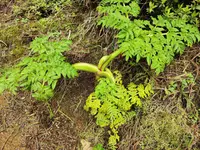
Basal mulching

Apply a 5–7 cm layer of coarse organic mulch around, but not touching, the crown to keep roots cool, suppress weeds, and maintain even soil moisture during active growth.

Self-seeding management

If volunteer seedlings are not desired, cut and remove seed heads just as they turn from green to pale brown, or leave only a few umbels to mature for controlled saving and growing Angelica lignescens from your own seed.

Crown protection

In colder regions, mark the crown location after dieback and cover it lightly with mulch or compost in late fall to reduce frost heave and protect overwintering buds.

Rot and pest monitoring

Inspect lower stems and leaf bases weekly for soft rot, aphids, or leaf miners and remove affected tissue early, improving air flow around plants to lower the risk of fungal and insect problems while caring for Angelica lignescens.

Common Pests and Diseases

Leaf spot

This disease causes dark, water-soaked or tan lesions on leaf blades that may merge into larger dead areas, especially in humid, crowded stands.

Solution

Remove and discard affected leaves, avoid overhead watering, and thin or space plants to improve air circulation; in persistent cases, apply a copper-based or chlorothalonil fungicide labeled for foliar leaf spots on umbellifers, following label directions carefully.

Powdery mildew

This disease appears as a white, powdery coating on the upper leaf surface and stems, often developing late in the season on older foliage.

Solution

Increase spacing and airflow, avoid excess nitrogen fertilization, and remove heavily infected foliage; if needed, apply a sulfur or potassium bicarbonate fungicide at the first sign of symptoms, repeating as conditions favor mildew development.

Aphids

These insects feed on tender stems and undersides of leaves, causing curling, distortion, and sticky honeydew that can lead to sooty mold growth.

Solution

Spray colonies off with a strong stream of water, encourage natural predators such as lady beetles, and use insecticidal soap or horticultural oil, making sure to coat the undersides of leaves and repeating every 5–7 days as needed.

Carrot rust fly larvae

This pest lays eggs at the base of umbellifer stems, and the larvae feed on roots and lower stems, leading to stunting, yellowing foliage, and weak or collapsing plants.

Solution

Use fine mesh row covers from early in the season to prevent egg-laying, rotate plantings away from previous umbellifer beds, and remove plant debris after harvest to reduce overwintering populations.

Celery leaf miner

This pest creates winding, pale tunnels inside leaves where larvae feed between leaf surfaces, reducing photosynthesis and making foliage unattractive and weak.

Solution

Promptly remove and destroy mined leaves to break the life cycle, use lightweight row covers where infestations are recurrent, and place yellow sticky traps nearby to help monitor adult fly activity as part of broader Angelica lignescens care instructions.

Interesting Facts

Woody angelica habit

Angelica lignescens develops a more woody, shrubby base than many other Angelica species, which are typically short-lived and more herbaceous. This partly woody structure supports taller flowering stems and helps the plant persist for several seasons under suitable conditions.

High-altitude distribution

This species is naturally associated with higher elevation habitats in East Asia, where cooler temperatures and strong seasonal changes shape its growth cycle. It is adapted to shorter growing seasons and benefits from a marked winter rest period.

Specialist umbel visitor

The compound umbels of this species attract a characteristic set of small flies, beetles, and solitary bees that can vary with altitude and local climate. This pollinator mix differs from lowland Angelica relatives, reflecting local ecological adaptation rather than broad generalist pollination alone.

FAQs about Angelica lignescens

This species is a short-lived perennial. It usually forms foliage the first year, then flowers and sets seed in following seasons. In some climates it behaves almost biennially, declining after heavy flowering and reseeding nearby.

Grow Healthy Plants with Botan Care

Keep your plants happy and healthy with plant identification, disease detection, and easy care guidance.

Botan plant care app — identify plants on mobile

Explore More Plants