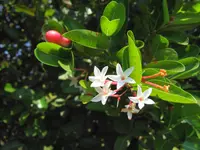
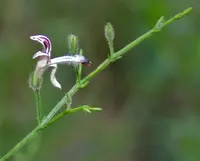
holy basil Care (Ocimum tenuiflorum)

Also known as: Tulsi, Krishna Tulsi
holy basil

About holy basil

Holy basil, or Ocimum tenuiflorum, is a fragrant, short-lived perennial herb usually grown as an annual in home gardens. It forms a leafy, bushy plant with small, aromatic leaves and upright flowering spikes.

This species is native to tropical and subtropical regions of South Asia, where it grows in warm, sunny conditions. It prefers well-drained soil, regular moisture, and good air circulation.

The plant grows fast but can be sensitive to cold, waterlogging, and very low light, which can make it slightly more demanding than common sweet basil. Understanding how to care for holy basil helps maintain healthy growth and strong aroma.

Main Plant Requirements

Care Difficulty

Moderate Care

Light Preference

Full Sun

Water Requirements

Regular Water

Temperature Preference

Tropical / Frost Sensitive

Hardiness Zone

10–11

Soil Texture

Loamy, Sandy, Organic-rich

Soil pH

Acidic (5.5–6.5), Slightly acidic (6.5–7.0)

Soil Drainage

Moist but well-drained

Fertilization

Light (every 4–6 weeks)

Get Personalized Care Plan

Scan your plant to receive care tips personalized for your specific plant

Available on iOS and Android

How to Care for the holy basil

This plant prefers bright sun but benefits from some protection during the hottest hours.

  • Provide 4–6 hours of direct morning sun plus bright, indirect light for the rest of the day to support dense, aromatic holy basil growth.
  • In hot climates, give light shade or filtered light from about 1–4 p.m. to reduce leaf scorch and moisture stress.
  • Tolerates partial shade (3–4 hours direct sun), but stems may stretch and flavor weaken; increase sun exposure in spring and fall when intensity is lower.

This plant needs consistent moisture in fast-draining soil without staying saturated.

  • Water when the top 2–4 cm of soil feels dry, using a slow, deep soak so moisture reaches the full root zone.
  • Ensure sharply draining soil or raised beds to prevent standing water; yellowing, soft stems indicate overwatering and poor aeration.
  • In hot, windy weather, dryness may occur daily, while in cool seasons intervals lengthen; drooping, thin leaves that perk up after watering suggest mild underwatering.

This warm-season herb grows best in stable, frost-free conditions.

  • Aim for 70–90°F (21–32°C) for strong growth; outside this range, Ocimum tenuiflorum slows and becomes more disease-prone.
  • Protect from temperatures below 50°F (10°C); light frost around 32°F (0°C) can kill leaves and stems outright.
  • In hot spells above 95°F (35°C), growth may stall; provide afternoon shade and extra soil moisture, and plant outdoors only after all spring frosts have passed.

This species grows well in typical indoor humidity but responds best to slightly moist air.

  • Aim for 40–60% relative humidity; it copes with brief dips lower if soil moisture is consistent.
  • Dry air can cause leaf edge browning and faster wilting, especially in small pots near heat sources.
  • Increase humidity by grouping pots or placing the container on a pebble tray; avoid misting directly to limit fungal risk for holy basil.

This basil prefers a loose, airy, organically enriched mineral soil that drains quickly yet holds moderate moisture.

  • Use a mix of roughly 50–60% all‑purpose potting soil, 20–30% compost, and 10–20% perlite or coarse sand for structure and drainage.
  • Loamy or sandy-loam texture supports Ocimum tenuiflorum by allowing roots to access oxygen while retaining enough water for steady growth.
  • Aim for slightly acidic to neutral pH, around 6.0–7.0, avoiding very acidic or alkaline mixes that restrict nutrient availability.
  • Avoid heavy clay, peat‑only, or compacted mixes; if water lingers on the surface, amend with more perlite or coarse sand to improve aeration.

This species is very suitable for container growing on patios, balconies, and near sunny doorways.

  • Choose a pot at least 20–25 cm wide so roots can spread laterally, as cramped roots reduce leaf production and aroma intensity.
  • Select a relatively deep, stable container if grown tall, since the bushy top can catch wind and tip light pots.
  • Use breathable clay or fabric pots outdoors to let the mix dry a bit faster, reducing the chance of root issues in rainy spells.

Ocimum tenuiflorum responds well to modest feeding that supports leafy growth without making the plant lush and weak.

  • Use a balanced liquid fertilizer (for example 10-10-10) at 1/4–1/2 strength for potted holy basil.
  • Feed every 2–3 weeks in spring and summer when growth is active.
  • In garden soil, enrich with light compost instead of frequent synthetic feeding.
  • Reduce or stop fertilizer in fall and winter, especially under low light.

Thoughtful pruning keeps Ocimum tenuiflorum compact, leafy, and productive for harvest.

  • Begin light pruning in late spring once plants are well established.
  • Pinch soft shoot tips above a leaf pair to encourage branching and bushy shape.
  • Remove dead, yellowing, or crowded stems with clean scissors or small pruners.
  • Snip off flower spikes early if the goal is more leaves rather than seed production.

Ocimum tenuiflorum in containers or beds benefits from timely transplanting to maintain strong root growth.

  • Check for roots circling the pot, quick drying soil, or slowed growth as signs to move up 1 pot size.
  • Transplant in late spring to early summer once nights stay above 55°F.
  • Use a well-draining mix, handle roots gently, and plant at the same depth as before.
  • Water thoroughly after transplanting and shade for 2–3 days to limit transplant shock.

New Ocimum tenuiflorum plants are most often produced from seed or softwood cuttings during warm months.

  • Sow fresh seed in late spring on moist, well-draining mix at 70–80°F with bright, indirect light.
  • Cover seeds very lightly or just press into the surface for even germination.
  • Take 8–10 cm non-flowering stem cuttings in late spring or summer.
  • Root cuttings in moist, sterile mix or water, maintaining high humidity until new growth appears.

Ocimum tenuiflorum is frost-sensitive and needs active winter protection in most temperate climates.

  • Move container plants indoors before temperatures drop near 50°F, giving bright light and good airflow.
  • Outdoors, treat plants as annuals or overwinter only in frost-free, warm regions.
  • Avoid cold drafts and overwatering indoors, since cool, wet soil favors root problems.
  • Use light mulch around in-ground plants in mild climates to buffer short cool spells.

Care Tips

Regular tip harvest

Pinch 2–3 cm of tender shoot tips weekly during active growth to keep plants compact, delay flowering, and stimulate dense, leafy regrowth for better yields when growing holy basil.

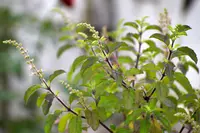
Flower spike management

Remove developing flower spikes as soon as they appear by pinching them off at the base to maintain leaf production and extend the productive life of the plant through the warm season.

Staggered succession planting

Sow or transplant small batches every 3–4 weeks during the warm season so that older, woody plants can be replaced with vigorous young ones before overall growth and flavor decline.

Targeted airflow control

Space plants so mature leaves just avoid touching and, in containers, rotate pots every 1–2 weeks to maintain even airflow around the canopy and reduce risk of foliar disease such as mildew.

Sanitary tool practices

Disinfect scissors or pruners with 70% isopropyl alcohol before and after trimming to minimize the spread of bacterial or fungal problems between plants and successive harvests.

Common Pests and Diseases

Leaf spot

This disease causes tan to dark brown spots on leaves, often with yellow halos, and is common in warm, humid conditions on holy basil.

Solution

Remove and discard affected leaves, avoid overhead watering, and space plants to improve airflow; if the problem persists, apply a copper-based or other labeled organic fungicide and keep foliage as dry as possible, following all label directions.

Downy mildew

This disease shows as pale or yellow patches on the upper leaf surface with grayish-purple fuzzy growth on the underside, often spreading rapidly in cool, humid conditions.

Solution

Promptly remove heavily infected leaves, water at the base in the morning, increase airflow, and if allowed in your area use a labeled downy mildew fungicide; for ongoing Ocimum tenuiflorum plant care, avoid overcrowding and prolonged leaf wetness.

Aphids

These insects cluster on young stems and leaf undersides, sucking sap and causing curling, distortion, and sticky honeydew that can lead to sooty mold.

Solution

Spray plants with a strong stream of water to dislodge colonies, then treat remaining insects with insecticidal soap or neem oil, repeating every 5–7 days as needed and focusing on new growth and leaf undersides.

Spider mites

This pest creates fine webbing on leaves and stems, with tiny yellow stippling and leaf drop more common in hot, dry conditions or on indoor plants.

Solution

Rinse foliage thoroughly, increase humidity around plants, and apply insecticidal soap or neem oil to all leaf surfaces, repeating at short intervals because eggs are resistant to single treatments.

Whiteflies

These insects are small white, moth-like pests that fly up when the plant is disturbed and weaken holy basil by sucking sap and excreting sticky honeydew.

Solution

Use yellow sticky traps to reduce adult numbers, regularly hose down plants to remove nymphs from leaf undersides, and apply insecticidal soap or neem oil in several rounds, ensuring thorough coverage beneath the leaves.

Interesting Facts

C4-like photosynthesis traits

This species shows intermediate features between typical C3 and C4 photosynthesis, which may help it tolerate high light and heat while maintaining efficient carbon use.

Distinct clove-like aroma

Its essential oil is especially rich in eugenol, the same aromatic compound that dominates clove oil, giving the plant its characteristic spicy, clove-like scent.

Strong nectar producer

The small purple-tinted flowers produce abundant nectar that is highly attractive to bees and other pollinators, making the plant valuable in urban and rural pollinator gardens.

Botan icon

Did you know?

Genetic and chemotype studies show that what is commonly called holy basil actually includes several distinct chemotypes and regional forms, meaning different populations of Ocimum tenuiflorum can vary markedly in aroma, growth habit, and essential oil composition even though they belong to the same species.

FAQs about holy basil

Browning leaves usually result from underwatering, hot dry airflow, or sun scorch on stressed foliage. Occasional brown patches can also follow fungal spots or pest feeding. Remove damaged leaves and correct the underlying issue for new, healthy growth.

Grow Healthy Plants with Botan Care

Keep your plants happy and healthy with plant identification, disease detection, and easy care guidance.

Botan plant care app — identify plants on mobile

Explore More Plants