Society garlic Care (Tulbaghia violacea)

Also known as: Violet Garlic
Society garlic

About Society garlic

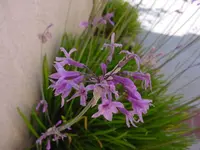
Society garlic, Tulbaghia violacea, is a clump-forming perennial herb grown for its slender blue-green leaves and clusters of soft purple, star-shaped flowers. It resembles a small ornamental allium but stays compact and tidy in garden beds or containers.

This species is native to southern Africa, where it grows in open, sunny areas with well-drained soil. It is valued for its strong garlic scent, long blooming season, and ability to handle heat and light drought, which makes it relatively easy to care for Society garlic.

It generally prefers full sun, moderate watering, and soil that does not stay waterlogged.

Main Plant Requirements

Care Difficulty

Easy Care

Light Preference

Full Sun

Water Requirements

Moderate Water

Temperature Preference

Warm Climate

Hardiness Zone

7–10

Soil Texture

Sandy, Loamy, Organic-rich

Soil pH

Slightly acidic (6.5–7.0), Neutral (7.0)

Soil Drainage

Well-drained

Fertilization

Light (every 4–6 weeks)

Get Personalized Care Plan

Scan your plant to receive care tips personalized for your specific plant

Available on iOS and Android

How to Care for the Society garlic

Tulbaghia violacea performs best in bright, direct sun but tolerates some shade.

  • Provide 6–8 hours of direct sun daily, ideally with morning sun and light afternoon shade in hotter regions.
  • Accepts light or dappled shade for part of the day, but flowering on Society garlic decreases if it receives less than about 4 hours of direct sun.
  • In very hot summers, protect from intense afternoon sun with filtered light to prevent leaf scorch, while in winter maximize sun exposure for stronger growth.

This species prefers even moisture but copes better with brief dryness than with excess water.

  • Outdoors in active growth, water when the top 3–5 cm of soil feels dry, allowing moisture to soak through the root zone, then drain fully.
  • Use well-drained soil or beds; persistent soggy conditions cause root rot, yellowing foliage, and a soft, collapsing crown in Tulbaghia violacea.
  • In cooler seasons or during dormancy, extend the interval between waterings, watching for limp, folding leaves as a cue that the plant is staying dry for too long.

This plant thrives in mild, warm climates and tolerates moderate heat once established.

  • Ideal growing temperatures are 65–80°F (18–27°C), with steady warmth promoting continuous leaf growth and flowering.
  • Mature clumps survive brief drops near 20–25°F (-6 to -4°C), but new foliage and buds are damaged by hard frost, so mulch crowns in colder zones.
  • Tolerates summer heat up to about 95°F (35°C) if soil is not waterlogged and roots stay slightly moist, but flowering may slow during extreme heat spikes.

This species handles typical indoor humidity well and rarely needs special humidity management.

  • Aim for 30–50% relative humidity; the plant tolerates drier heated rooms better than many ornamentals.
  • Dry, crispy leaf tips or slow growth in Society garlic usually come from underwatering or heat, not humidity deficiency.
  • If air is extremely dry (<25%), group pots together and keep them away from hot air vents to reduce moisture loss.

This bulbous perennial prefers lean, well-drained soil that never stays waterlogged.

  • Use a sandy or loamy mix, such as 2 parts all-purpose potting mix, 1 part coarse sand, and 1 part fine gravel or perlite for fast drainage.
  • Tulbaghia violacea grows best in slightly acidic to neutral soil, around pH 6.0–7.0, but tolerates mildly alkaline conditions if drainage is sharp.
  • In heavy clay, build raised beds and work in coarse sand and fine gravel to improve structure, aeration, and root oxygen availability.
  • Avoid compacted, peat-heavy, or consistently wet soils, which promote bulb and root rot and reduce flowering over time.

This species is well suited to container growing on patios, balconies, and sunny steps.

  • Choose a wide, relatively shallow pot so the clumping roots can spread while excess water moves quickly through the profile.
  • Use heavier materials like ceramic or terracotta outdoors to keep the upright flower stalks stable in wind.
  • Elevate the pot on feet or bricks so drainage holes stay clear and runoff can escape freely after rain or watering.

This clumping perennial flowers well with modest feeding in reasonably fertile soil.

  • Use a balanced granular or slow-release fertilizer (around 10-10-10) or a light compost top-dress in spring.
  • Feed container-grown Society garlic every 4–6 weeks in the growing season with a balanced liquid fertilizer at 1/2 strength.
  • Avoid high-nitrogen products that encourage soft foliage over flowers.
  • Stop feeding in late summer so growth can harden before cool weather.

Thoughtful pruning keeps Tulbaghia violacea flowering well and looking tidy.

  • In late winter or early spring, remove dead, damaged, or diseased leaves and flower stalks with clean hand pruners or scissors.
  • Shear off spent flower stems at the base through the season to encourage continued blooming.
  • Thin congested clumps by removing a few older outer sections to maintain shape and airflow.
  • Cut back untidy foliage to 5–8 cm above soil if it becomes ragged, allowing fresh leaves to replace it.

This bulbous perennial tolerates crowding but benefits from occasional division or transplanting.

  • Look for roots circling the pot, water running straight through, or slowed growth as signs a clump needs more space.
  • Plan repotting or garden transplanting in early spring or immediately after flowering, every 3–4 years.
  • Lift the clump gently, tease apart or cut sections with several bulbs and roots, and discard any soft or rotten tissue.
  • Replant at the same depth in well-drained soil, water thoroughly, then keep evenly moist for 1–2 weeks to limit root stress.

New plants are most reliably produced by division, with seeds and cuttings as slower options.

  • Divide established clumps in early spring or after flowering, separating bulbs with healthy roots into smaller sections.
  • Replant divisions into free-draining soil or pots, spacing bulbs so they are just covered and kept slightly moist.
  • Sow fresh seeds in spring in a gritty seed mix at 65–75°F, providing bright light and light moisture.
  • For leaf cuttings, root basal sections in a sandy mix with bottom warmth and high humidity, then pot on once rooted.

In mild climates this plant is fairly cold tolerant but may need simple protection in colder regions.

  • Tulbaghia violacea typically withstands light frosts but can be damaged below about 15–20°F, especially in wet soil.
  • Apply a 5–8 cm mulch layer over the root zone in late fall, keeping it slightly away from the crown.
  • Move container plants into a bright, cool, frost-free spot and water sparingly so the soil stays just barely moist.

Care Tips

Divide Mature Clumps

Every 3–4 years lift and split congested clumps in early spring or fall, replanting divisions 20–30 cm apart to keep flowering strong and reduce disease buildup in the crown zone.

Use Edging Barriers

Install low edging or stone borders around the planting area to contain underground offsets, making it easier to manage spread and maintain tidy, well-defined clumps.

Deadhead With Stubs

When removing spent flower stalks, leave a 2–3 cm stub above the foliage rather than cutting flush with the crown to reduce rot risk at the stem base, especially in wet climates.

Rotate Cut Foliage

If regularly harvesting leaves for culinary use, take a little from many plants instead of heavily from one clump so each plant can photosynthesize efficiently and recover quickly.

Winter Drainage Prep

In regions with cool, wet winters, top-dress around plants with a thin layer of grit or coarse sand in fall to improve surface drainage and protect the roots from standing water while growing Society garlic in heavy soils.

Common Pests and Diseases

Onion thrips

This pest feeds on the foliage, causing silvery streaks, mottling, and fine black specks of excrement on the strap-like leaves. Symptoms include reduced vigor and distorted new growth, especially in hot, dry conditions.

Solution

Rinse foliage thoroughly with a strong stream of water and remove heavily damaged leaves. For persistent infestations, use a horticultural soap or neem oil spray directed at both sides of the leaves every 7–10 days, and reduce nearby grassy weeds that host thrips.

Narcissus bulb fly

This insect’s larvae tunnel into the bulbs, causing yellowing foliage, stunting, and eventual collapse of affected clumps. Symptoms include soft, decaying bulbs with internal larvae when cut open.

Solution

Lift and inspect bulbs if foliage declines suddenly, discarding any that feel soft or show tunneling. Replant only firm, healthy bulbs, use fine mesh or fleece over newly planted bulbs in spring to deter egg-laying, and avoid storing bulbs where adult flies are common.

Botrytis leaf blight

This disease produces tan to brown water-soaked lesions on leaves and flower stalks that may develop fuzzy gray mold in humid, cool weather. Symptoms include premature leaf dieback and spotting on flower stems.

Solution

Remove and discard affected leaves and spent flower stalks promptly to reduce inoculum. Improve air circulation, avoid overhead watering, and if the problem recurs in damp seasons, apply a fungicide labeled for botrytis on ornamentals according to label directions.

Rust

This disease causes small yellow spots on upper leaf surfaces and orange to brown pustules on the undersides. Symptoms include gradual leaf yellowing and premature drop, especially in crowded plantings with poor air flow.

Solution

Prune or thin crowded clumps and remove infected leaves to limit spread. Water at soil level, avoid wetting foliage, and in recurrent cases use a sulfur or other rust-labeled fungicide during the main growing season.

Bulb nematodes

These microscopic worms invade bulbs and basal plate tissues, leading to swollen, misshapen bulbs, soft patches, and stunted or twisted foliage. Symptoms include poor emergence and patchy decline in affected groups of plants.

Solution

Discard heavily affected bulbs and avoid replanting in the same soil for several years. Use only clean, certified bulbs, practice strict tool hygiene, and consider solarizing infested soil in sunny climates to reduce nematode populations before replanting or deciding to grow Tulbaghia violacea in clean containers instead.

Interesting Facts

Onion family mimic

Tulbaghia violacea belongs to the Amaryllidaceae family, subfamily Allioideae, and produces the same sulfur-containing compounds that give onions and true garlic their smell, which is why bruised leaves and flowers release a distinct garlic-like odor.

Twilight-blooming flowers

The pale lilac star-shaped flowers often open and show strongest fragrance from late afternoon into the evening, which is thought to help attract crepuscular pollinators such as moths in its native South African range.

Herbivore-deterring foliage

The strong garlic scent from crushed leaves and stems can deter some herbivores, so the plant is sometimes used as a low, informal border to reduce browsing in mixed plantings.

Botan icon

Did you know?

In its native South African habitats, Tulbaghia violacea often colonizes rocky, well-drained slopes and grassland edges, where its fibrous root system and clumping growth habit help stabilize thin soils and allow it to resprout reliably after dry periods and light disturbance.

FAQs about Society garlic

Poor flowering often comes from insufficient light, depleted soil nutrients, overcrowded clumps, or stress from recent division. Regular deadheading, moderate feeding, and dividing congested clumps every few years help maintain reliable blooms when growing Society garlic.

Grow Healthy Plants with Botan Care

Keep your plants happy and healthy with plant identification, disease detection, and easy care guidance.

Botan plant care app — identify plants on mobile

Explore More Plants