Staggered Bulb Planting
Plant bulbs in small groups over 2–3 weeks in fall so flowering is slightly staggered, giving a longer display and making it easier to spot gaps to fill the following year when growing Allium aflatunense.

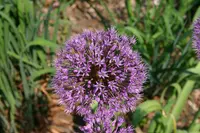
Allium aflatunense is a bulbous perennial ornamental onion known for its tall stems topped with dense, spherical clusters of small purple flowers. The foliage forms a low basal clump that often begins to fade as the flower heads reach their peak.
This species originates from Central Asia, where it grows in open, sunny habitats with well-drained soils. In gardens it is valued for strong vertical lines, long-lasting blooms, and reliable cold hardiness.
Gardeners who want to care for Allium aflatunense should provide full sun, moderately moist but well-drained soil, and avoid waterlogged conditions, which can damage the bulbs.

Care Difficulty
Easy Care

Light Preference
Full Sun

Water Requirements
Moderate Water

Temperature Preference
Cold Hardy

Hardiness Zone
4–9

Soil Texture
Sandy, Loamy, Clay

Soil pH
Slightly acidic (6.5–7.0), Neutral (7.0)

Soil Drainage
Well-drained

Fertilization
Minimal (feed rarely)
Scan your plant to receive care tips personalized for your specific plant
Available on iOS and Android
This ornamental onion prefers bright, open conditions to form strong stems and full flower heads.
This bulb prefers evenly moist but never waterlogged soil during active growth, then drier conditions later.
This hardy bulb handles cool winters and mild to warm summers when temperature swings are gradual.
Humidity is not a significant factor for Allium aflatunense, which prefers typical outdoor conditions.
Allium aflatunense grows best in loose, well-drained mineral soil that never stays waterlogged.
This species is suitable for container growing when the pot is deep and drainable.
This bulb grows well in average garden soil and needs only modest feeding during its active season for best flowering.
Pruning needs are minimal and focus on maintaining bulb strength and garden appearance rather than shaping.
This ornamental allium is most often grown in beds and borders, with transplanting done infrequently.
Propagation of this bulb is commonly done through division, with seed used mainly for patient gardeners and breeding work.
This hardy bulb usually needs little special winter care in most temperate gardens.

Plant Health Check
Not sure what's wrong with your plant? Check your plant's health inside the app.
This species is native to mountainous regions of Central Asia, especially around the Aflatun Valley in Kyrgyzstan, which is reflected in its species name aflatunense.
Each spherical flower head is made of many dozens of small star-shaped, violet florets arranged with striking geometric regularity, a feature that makes it valuable in ornamental breeding and garden design.
Its late spring flowering and abundant nectar strongly attract bees, hoverflies, and other beneficial insects, supporting pollinator activity when many spring bulbs are already fading.

Dried flower heads of this ornamental onion keep their structure and color remarkably well, so gardeners often use them as long-lasting architectural elements in borders and as material for dried floral arrangements, extending visual interest months after blooming ends.
This ornamental onion usually blooms in late spring to early summer. The spherical flower heads generally remain attractive for 3–4 weeks, then dry on the stalk, where they can still add structural interest to borders.
Keep your plants happy and healthy with plant identification, disease detection, and easy care guidance.