Coneflower Care (Echinacea purpurea 'White Swan')

Also known as: White Coneflower
Coneflower

About Coneflower

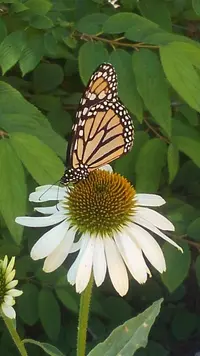
Coneflower Echinacea purpurea 'White Swan' is a hardy perennial often grown in garden beds, borders, and pollinator plantings. It forms upright clumps with sturdy stems and large, daisy-like flowers. White petals surround a prominent golden-brown cone, giving a clean, bright look that contrasts well with darker foliage and blooms. The plant has a strong, vertical habit that stays tidy through the season. This cultivar comes from the North American prairies, so it is adapted to sun, wind, and periods of dryness. Its toughness and tolerance of poor, well-drained soil make it suitable for beginners who want to learn how to care for Coneflower. It prefers full sun and moderate moisture but handles short dry spells once established.


Main Plant Requirements

Care Difficulty

Easy Care

Light Preference

Full Sun

Water Requirements

Low Water

Temperature Preference

Cold Hardy

Hardiness Zone

3–9

Soil Texture

Sandy, Loamy, Clay

Soil pH

Acidic (5.5–6.5), Slightly acidic (6.5–7.0)

Soil Drainage

Well-drained

Fertilization

Minimal (feed rarely)

Get Personalized Care Plan

Scan your plant to receive care tips personalized for your specific plant

Available on iOS and Android

How to Care for the Coneflower

This perennial thrives in open, bright conditions and rewards strong light with abundant blooms.

  • Provide 6–8 hours of direct sun daily; morning sun with light afternoon shade is ideal in hotter regions.
  • Tolerates light partial shade (around 3–4 hours sun), but stems may stretch and flowering decreases compared with Coneflower in full sun.
  • In summer, avoid reflected heat from south-facing walls that can scorch foliage; in cool seasons ensure it is not shaded by trees or buildings all day.

This plant prefers deep, infrequent watering once established, supported by fast-draining soil.

  • Outdoors in the ground, water when the top 4–6 cm of soil is dry, applying a slow, deep soak at the root zone only.
  • Reduce watering frequency in cool or rainy seasons; in hot, dry spells monitor for drooping leaves that recover by evening, a sign it is ready for a thorough soak.
  • Avoid soggy soil and standing water, which cause root rot; yellowing, limp leaves and blackened crowns often indicate overwatering in Echinacea purpurea 'White Swan'.

This hardy perennial tolerates a wide temperature range, with strong cold resistance once established.
  • Optimal active growth occurs around 65–80°F (18–27°C), with best flowering in warm, stable summer conditions.
  • Tolerates winter cold down to about -30°F (-34°C) in the ground when crowns are not waterlogged and soil drains freely.
  • Handles summer heat up to about 95°F (35°C) if soil moisture is adequate; during extreme heat waves, mulch the root zone to buffer temperature swings.

This plant thrives in typical outdoor humidity and rarely needs special humidity management.

Echinacea purpurea 'White Swan' prefers lean, well-drained, moderately fertile ground rather than rich, moisture-retentive substrates.

  • Use a sandy or gritty loam with 30–40% coarse material such as sharp sand or fine gravel to keep pores open.
  • Incorporate a modest amount of compost (10–20%) to supply nutrients without making the mix heavy or waterlogged.
  • Aim for slightly acidic to neutral pH around 6.0–7.0, avoiding strongly acidic or alkaline sites that limit nutrient uptake.
  • Avoid compacted clay and low-lying areas where water lingers, since chronic wetness promotes root and crown rot.

This species is suitable for container growing outdoors if the pot supports its deep, fibrous root system and tall stems.

  • Choose a container at least 30–35 cm deep so roots can anchor well, reducing flopping in wind.
  • Select a heavier material like ceramic or concrete to stabilize the tall flower stems against tipping.
  • Raise the container on pot feet or bricks so drainage holes stay clear and excess water escapes quickly after rain or watering.

This hardy perennial needs only light feeding in average garden soil.

  • Apply a thin layer of compost or well-rotted manure around plants in early spring to support new growth.
  • Use a balanced slow-release fertilizer (around 10-10-10) once in spring for Coneflower in poor or sandy soil.
  • Dilute liquid fertilizer to 1/2 strength if used, and apply no more than every 4–6 weeks during active growth.
  • Stop feeding in late summer and avoid fertilizing in winter dormancy to prevent weak, tender growth.

Pruning helps maintain flowering performance and a tidy shape for Echinacea purpurea 'White Swan'.

  • Deadhead spent blooms in summer by cutting stems back to a strong leaf node to encourage more flowers.
  • Remove dead, damaged, or diseased stems whenever seen using clean, sharp hand pruners or scissors.
  • In late fall or very early spring, cut back dry stems to 5–10 cm above soil level to refresh the clump.
  • Leave some seedheads over winter if desired for wildlife, then trim them off before new growth emerges.

This coneflower is usually grown in garden beds, so transplanting is more common than container repotting.

  • Plan transplanting for early spring or early fall when temperatures are mild and soil is workable.
  • Move plants only every 3–5 years or when clumps become crowded, growth declines, or flowering reduces.
  • Dig widely around the root system, lift the clump with as much root and soil as possible, and replant at the same depth.
  • Water thoroughly after transplanting, then keep soil evenly moist for 1–2 weeks to reduce root stress and improve establishment.

Gardeners most often propagate this cultivar by division or by seeds collected from mature plants.

  • Divide established clumps in early spring or early fall, ensuring each section has several shoots and healthy roots.
  • Replant divisions immediately into prepared soil, firm gently, and water well to settle roots and remove air pockets.
  • Sow seeds in late fall outdoors for natural cold stratification, or chill seeds in a refrigerator for 4–6 weeks before spring sowing.
  • Provide bright light, a free-draining seed mix, and moderate moisture to support steady germination and seedling growth.

This hardy perennial tolerates typical winter conditions in most temperate climates with minimal intervention.

  • Plants in the ground usually withstand freezing temperatures; focus on protecting the root zone rather than stems.
  • Apply a 5–8 cm layer of mulch after the ground cools to moderate soil temperature and reduce freeze–thaw heaving.
  • Container-grown plants are more exposed; move pots to a sheltered spot or unheated garage in very cold regions.
  • Cut back dried stems in late winter if not left for wildlife interest, just before new shoots appear.

Care Tips

Deadhead Strategically

Remove spent blooms down to a strong lateral bud in early and mid-summer to encourage a second flush of flowers, but leave the final late-season seedheads in place to support birds and natural reseeding when caring for Coneflower.

Thin Crowded Clumps

Every 3–4 years, lift and divide overly dense clumps in early spring, replanting divisions 30–45 cm apart to maintain good air circulation and reduce risk of foliar diseases like powdery mildew.

Winter Crown Protection

In colder regions, apply a light, airy mulch such as shredded bark around but not over the crowns in late fall to reduce freeze–thaw heaving while still allowing good drainage.

Targeted Pest Monitoring

Inspect flower cones and foliage weekly from late spring for aphids and Japanese beetles, hand-pick or hose off small infestations early, and use yellow sticky traps at bed edges if pressure becomes persistent.

Support in Windy Sites

In exposed gardens, install low, discreet ring supports or short stakes around young plants in late spring so stems grow through them, preventing lodging and flower breakage during storms.

Everything About Coneflower

Common Pests and Diseases

Aster yellows

This disease is caused by a phytoplasma, a bacteria-like organism, spread by leafhoppers and leads to distorted, stunted growth and deformed, greenish flowers. Symptoms include witches'-broom growth, narrow strap-like petals, and off-color foliage.

Solution

Remove and dispose of affected plants as soon as symptoms appear, since there is no cure once infected. Control leafhoppers with insecticidal soap or horticultural oil when populations are noticeable, and avoid planting Echinacea near known aster yellows–susceptible plants such as asters and marigolds.

Powdery mildew

This disease appears as white, powdery patches on upper leaf surfaces, often during warm days and cool, humid nights. Symptoms include yellowing, distorted leaves and reduced vigor if the problem is severe.

Solution

Improve air circulation by spacing plants properly and thinning crowded clumps, and avoid overhead watering late in the day. Remove heavily infected leaves and, if needed, apply a sulfur or potassium bicarbonate fungicide labeled for ornamentals at the first sign of mildew, following label directions carefully as part of Echinacea purpurea 'White Swan' care instructions.

Gray mold (Botrytis)

This disease causes tan to brown spots on petals and leaves that can develop fuzzy gray mold, especially in cool, damp weather. Symptoms include blighted flower heads and soft, decaying tissue at the base of stems or on spent blooms.

Solution

Promptly deadhead spent flowers and remove any decaying plant material from around the crown to reduce humidity and spore buildup. In prolonged wet conditions, improve drainage and airflow, and consider using a labeled fungicide on high-value plantings if cultural steps are not enough.

Japanese beetles

These insects skeletonize leaves by eating the tissue between veins and also feed on flower petals, leaving ragged, lacy damage. This pest is especially active on warm, sunny days in mid-summer.

Solution

Hand-pick beetles in the early morning and drop them into a container of soapy water to reduce populations, and avoid using floral lures close to the planting because they attract more beetles. For heavier infestations, consider a targeted product such as neem oil or a spinosad-based spray, applied only to affected plants and timed for active feeding periods.

Leaf spot

This disease, often caused by fungi such as Septoria or Cercospora, produces small brown or purplish spots on leaves that may enlarge and coalesce, leading to early leaf drop. Symptoms include thinning foliage and reduced plant vigor in wet, crowded plantings.

Solution

Remove and discard affected leaves during the season and clean up all fallen foliage in autumn to reduce overwintering spores. Water at the base of the plant instead of overhead, increase spacing for better airflow, and if spotting persists each year, apply a preventative fungicide labeled for leaf spot on perennials at the start of wet weather periods.

Interesting Facts

Distinct white ray florets

Unlike the typical purple forms of Echinacea purpurea, this cultivar produces creamy white ray florets surrounding an orange‑green central cone, giving high contrast that is especially visible in evening or low‑light garden conditions.

Stable seed parent traits

Although the white color does not come true from seed, this cultivar is widely used as a reliable seed parent in breeding programs because its growth habit and large cone structure are relatively consistent in the offspring.

Wildlife and seed dynamics

The prominent central cones mature into firm seed heads that provide late‑season food for finches and other small birds, while also allowing gardeners to observe natural reseeding patterns around the original clumps.

Botan icon

Did you know?

This cultivar was one of the early widely distributed white-flowered selections of Echinacea purpurea introduced into ornamental horticulture, helping shift the species’ use from primarily medicinal and prairie restoration contexts toward modern mixed-border and perennial-display plantings.

FAQs about Coneflower

This species is a herbaceous perennial. The top growth dies back in winter, then new shoots emerge from the crown each spring. Individual plants often persist for many years if divisions are done only when clumps decline.

Grow Healthy Plants with Botan Care

Keep your plants happy and healthy with plant identification, disease detection, and easy care guidance.

Botan plant care app — identify plants on mobile

Explore More Plants