Wine-colored Agaricus Care (Agaricus subrutilescens)

Wine-colored Agaricus

About Wine-colored Agaricus

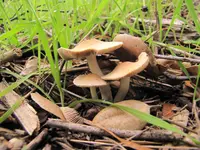
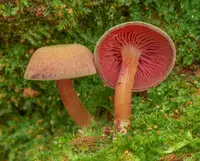
Wine-colored Agaricus (Agaricus subrutilescens) is a gilled mushroom species, not a leafy houseplant. It forms sturdy, medium-sized caps with a reddish wine tint and pale gills that darken as spores mature. The stems are thick, often with a ring, and the overall look is robust and fleshy.

This fungus occurs naturally in forested regions, especially in North America, often in leaf litter or rich, woody debris. It attracts interest from mushroom growers but can be harder to identify and culture than common button mushrooms.

It prefers cool, humid, shaded conditions and a nutrient-rich organic substrate. Anyone wanting to learn how to care for Wine-colored Agaricus should first be confident in correct identification before attempting cultivation at home.

Main Plant Requirements

Care Difficulty

Hard Care

Light Preference

Shade

Water Requirements

Keep Soil Moist

Temperature Preference

Cool Climate

Hardiness Zone

Unknown

Soil Texture

Loamy, Silty, Organic-rich

Soil pH

Acidic (5.5–6.5), Slightly acidic (6.5–7.0)

Soil Drainage

Moist but well-drained

Fertilization

Minimal (feed rarely)

Get Personalized Care Plan

Scan your plant to receive care tips personalized for your specific plant

Available on iOS and Android

How to Care for the Wine-colored Agaricus

This woodland mushroom prefers soft, filtered light that mimics a forest floor environment.

  • Provide bright shade or dappled light under shrubs or trees, with at most 1–2 hours of gentle morning sun and no direct afternoon sun.
  • Sites with 70–90% shade suit Wine-colored Agaricus; strong midday sun dries the substrate and can halt fruiting.
  • In summer, increase shade or mulch depth to prevent substrate overheating; in cooler seasons, allow a bit more indirect light to moderate soil temperature.

This species needs consistently moist but not waterlogged substrate to form healthy fruiting bodies.

  • Aim for a moisture level where the top 2–4 cm of leaf litter or compost feel damp but not soggy when squeezed by hand.
  • Improve drainage with loose organic material; standing water, sour smells, or slimy mycelium indicate overwatering and poor aeration.
  • During hot, dry periods, mist or lightly irrigate once the surface starts to lighten in color; in cool, wet weather, withhold extra water and rely on rainfall for Agaricus subrutilescens.

This mushroom performs best in cool, mild conditions typical of shaded woodland or sheltered garden areas.

  • Maintain an active growth zone around 55–65°F (13–18°C), with fruiting often strongest when daytime temperatures stay below 70°F (21°C).
  • The mycelium can tolerate down to about 32°F (0°C) in protected, mulched beds, but repeated hard freezes or frozen, bare substrate can damage it.
  • Growth slows above 75°F (24°C) and may stall over 80°F (27°C); use thicker mulch and heavy shade in summer, and expect peak production in cooler seasons.

This mushroom prefers consistently moist, high-humidity conditions during active growth and fruiting.

  • Aim for 80–95% humidity around developing caps and stems to prevent drying and cracking.
  • Dry air leads to shriveled caps, split margins, and stalled growth in Wine-colored Agaricus.
  • Use misting, humidifiers, or a plastic humidity tent with ventilation holes to maintain moisture without saturating the substrate.

This saprophytic mushroom needs a loose, organic-rich substrate rather than mineral garden soil.

  • Use a deep layer of pasteurized composted manure mixed with straw or shredded leaves to provide structure and nutrients.
  • Ensure excess water drains freely; the substrate should feel springy and moist, never waterlogged or compacted.
  • Maintain a slightly acidic to neutral pH around 6.5–7.2 for stable nutrient availability for Agaricus subrutilescens.
  • Improve aeration by blending in coarse organic matter and avoiding heavy, fine-textured materials that collapse and exclude air.

This species can be grown in containers if the vessel is large, stable, and supports a deep, aerated substrate layer.

  • Choose a broad, low bin or tub to spread the substrate horizontally, which encourages more fruiting surface area.
  • Select a rigid container that does not flex when lifted, so the substrate bed stays undisturbed and mycelium remains evenly distributed.
  • If using plastic tubs, adjust lid position or drill side holes to balance moisture retention with fresh air exchange at the substrate surface.

Agaricus subrutilescens grown in beds or containers benefits from modest, balanced nutrition to support steady flushes of mushrooms.

  • Use a well-matured compost or a balanced NPK fertilizer at 1/2 strength, blended into the substrate before spawning.
  • During active cropping, apply a light top-dress of compost or diluted liquid feed every 3–4 weeks if growth weakens.
  • Avoid high-salt or fast-acting fertilizers, which can damage mycelium and reduce yield in Wine-colored Agaricus.
  • Stop supplemental feeding once temperatures drop and growth slows markedly, as the mycelium enters a semi-dormant phase.

Pruning is not relevant for Agaricus subrutilescens, but timely harvesting and hygiene management serve a similar function for productivity.

  • Harvest mushrooms by gently twisting or cutting at the base when caps expand but before heavy spore drop.
  • Remove spent, damaged, or moldy fruiting bodies promptly to limit disease spread across the substrate.
  • Trim away contaminated casing or substrate sections with a clean knife if bacterial or fungal contamination appears.
  • Disinfect tools and hands before contact with the bed to reduce pathogen transfer and maintain consistent yields.

Cultivated Agaricus subrutilescens is usually managed by refreshing or relocating substrate beds rather than classic repotting.

  • Consider relocating or rebuilding beds when yields decline, contamination persists, or substrate becomes compacted and dry.
  • Plan major transplanting or new bed establishment in cool, stable weather, avoiding temperature extremes that stress mycelium.
  • Every 1–2 years, replace most of the substrate with fresh, pasteurized material and reintroduce clean spawn if needed.
  • Minimize root-zone stress by moving colonized blocks gently, maintaining moisture, shading from direct sun, and avoiding sudden temperature shifts.

Cultivation of Agaricus subrutilescens relies on spawn, which is laboratory-produced mycelium grown on grain or other carriers.

  • Obtain commercial spawn from a reputable supplier, since home production requires sterile technique and specialized equipment.
  • Prepare a pasteurized compost or substrate, then mix in spawn evenly at the recommended rate for uniform colonization.
  • Maintain 60–70°F, high humidity, and good air exchange during colonization, keeping the substrate consistently moist but not waterlogged.
  • Add a suitable casing layer once the substrate is well colonized, then adjust ventilation and humidity to initiate fruiting.

Outdoor beds of Agaricus subrutilescens need basic winter management in regions with cold or fluctuating temperatures.

  • In mild climates, leave beds in place and allow the mycelium to rest, keeping the substrate slightly moist but not saturated.
  • Where frost is expected, apply 5–8 cm of straw or leaf mulch over the bed to buffer temperature swings around the mycelium.
  • For container-based systems, move colonized blocks to a sheltered, frost-free space such as an unheated garage or shed.

Care Tips

Clean Substrate Handling

Always pasteurize or purchase pre-pasteurized composted manure and straw, and keep tools, trays, and hands clean during spawning to reduce contamination by competitor fungi and bacteria when growing Wine-colored Agaricus.

Controlled Fresh Air

Provide brief, regular fresh-air exchange in the grow room or fruiting tent without creating strong drafts, which helps remove excess CO₂ and promotes sturdy, well-shaped caps instead of long, thin stems.

Cap Development Monitoring

Check developing mushrooms at least twice daily and harvest when caps are nearly expanded but gills are still tight, which improves texture, flavor, and reduces spore release that can stress the culture and dirty the growing space.

Layered Casing Application

Apply casing soil in 2 light layers a few days apart instead of one thick layer, gently firming it each time to create an even, porous surface that encourages uniform pin formation and reduces waterlogging pockets.

Rotation Of Cropping Trays

Rotate trays or shelves between flushes so that each tray experiences slightly different airflow and light conditions over time, helping to balance microclimates and even out yields across the entire crop.

Common Pests and Diseases

Dry bubble

This disease causes distorted, dry, bubble-like masses on developing mushrooms and can severely reduce yield in cultivated Wine-colored Agaricus beds. Symptoms include white to tan lesions that turn brown and corky as they age.

Solution

Remove and discard all affected mushrooms and any nearby casing material, then spot-treat the area with a fungicide labeled for Agaricus cultivation or disinfectant approved for mushroom houses. Improve hygiene by disinfecting tools, cleaning benches and trays, and avoiding water splash onto caps to limit spread when following Wine-colored Agaricus care instructions.

Wet bubble

This disease leads to soft, watery, deformed mushroom tissue that may exude a cloudy fluid and develop a fishy odor. Symptoms include blister-like masses and discolored, misshapen fruitbodies that collapse easily.

Solution

Promptly remove and discard infected mushrooms and surrounding casing, placing them in sealed bags to prevent spore spread. Reduce overhead watering, improve drainage and airflow, and disinfect growing surfaces between flushes; where permitted, apply a targeted mushroom-house disinfectant to contaminated spots in the casing layer.

Cobweb mold

This disease appears as fast-growing, grayish to whitish, cobweb-like fungal growth spreading over casing and mushroom caps. Symptoms include rapid coverage of small areas that can engulf pins and young mushrooms if unchecked.

Solution

At the first sign, lightly mist affected areas with a diluted food-safe hydrogen peroxide solution (commonly 3% product diluted 1:3 with water) to suppress the mold, avoiding runoff. Improve air movement, lower relative humidity slightly, and promptly remove heavily colonized casing or mushrooms, then clean and disinfect the growing room between crops.

Green mold (Trichoderma)

This disease starts as white, fluffy patches in the casing or compost that quickly turn bright to dark green as spores form. Symptoms include patchy areas with reduced or absent mushroom formation and a strong earthy or musty odor.

Solution

Cut out and discard contaminated casing or compost with a margin of healthy material and seal it in bags before removal. Lower compost nitrogen to recommended levels, maintain proper pasteurization and hygiene, and between crops thoroughly clean and disinfect the growing room and equipment to reduce residual spores.

Sciarid fungus gnats

These insects are small, dark flies whose larvae feed in the casing and compost, damaging young mushrooms and increasing the risk of disease spread. This pest can cause pitting on caps, reduced yield, and introduce pathogens such as wet bubble and bacterial blotch.

Solution

Use fine mesh screens and sticky traps to monitor and reduce adult populations, and keep floors, spilled compost, and waste mushroom tissue clean and promptly removed. Where allowed, apply a biological control such as Bacillus thuringiensis israelensis (Bti) or entomopathogenic nematodes to the casing, and adjust watering to avoid persistently wet, algae-covered surfaces that favor larvae.

Interesting Facts

Wine-colored gill change

The gills of this species start pale pinkish and darken to chocolate brown as the spores mature, a color shift that helps confirm identification in the field.

Distinct almond-like odor

Mature fruiting bodies often have a noticeable almond or anise-like scent caused by specific aromatic compounds, which mycologists use as an additional identification character.

Habitat in rich litter

This mushroom typically appears in deep, rich leaf litter or woody garden mulch, often in human-influenced habitats rather than in undisturbed forests.
Botan icon

Did you know?

This species has been cultivated on a limited scale as an edible mushroom, but it is not widely commercialized because of its relatively restricted distribution and more demanding growing conditions compared to the common button mushroom.

FAQs about Wine-colored Agaricus

This mushroom is considered edible but is not a common choice for beginners. Identification mistakes with similar toxic species are a serious risk. Only consume specimens confirmed by an experienced mycologist and follow local foraging guidelines.

Grow Healthy Plants with Botan Care

Keep your plants happy and healthy with plant identification, disease detection, and easy care guidance.

Botan plant care app — identify plants on mobile

Explore More Plants