


Use Suitable Substrate
Prepare a loose, woody substrate such as well-soaked, pressure-sterilized conifer sawdust or chips rather than standard garden soil, as this more closely matches the natural host environment and supports stable fruiting.

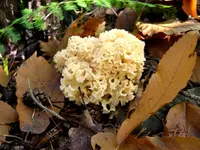
Cauliflower fungus, Sparassis crispa, is a distinctive wood-decay fungus, not a leafy plant. It forms large, creamy to pale yellow clusters that resemble a ruffled cauliflower. The fronds are thin, folded, and highly branched, creating many crevices and a sponge-like texture.
This species typically grows at the base of conifer trees, especially pines, in temperate forests of Europe, North America, and parts of Asia. It is a well-known edible mushroom but needs clean collection and careful identification.
In cultivation, it prefers cool, moist, shaded conditions and a wood-based substrate rather than ordinary garden soil. These specific needs make it moderately challenging for beginners who want to learn how to care for Cauliflower Fungus at home.

Care Difficulty
Hard Care

Light Preference
Shade

Water Requirements
Keep Soil Moist

Temperature Preference
Cool Climate

Hardiness Zone
4–9

Soil Texture
Loamy, Silty, Organic-rich

Soil pH
Strongly acidic (4.5–5.5), Acidic (5.5–6.5)

Soil Drainage
Moist but well-drained

Fertilization
Minimal (feed rarely)
Scan your plant to receive care tips personalized for your specific plant
Available on iOS and Android
Sparassis crispa prefers light conditions that mimic a shaded conifer forest floor.
Watering for Sparassis crispa focuses on keeping its woody substrate evenly moist without turning soggy.
This fungus thrives in cool to mild conditions typical of temperate coniferous forests.
This wood-inhabiting fungus needs consistently moist, humid conditions around its fruiting area to develop well.
This fungus does not grow in conventional potting soil and instead needs a woody substrate that mimics decaying conifer roots.
This species can be grown in containers when provided with a deep, stable, and well-ventilated substrate vessel.
This wood-decay fungus relies mainly on its tree host and usually needs minimal additional nutrients in cultivation.
Pruning Sparassis crispa is limited to hygiene and harvest rather than shaping growth.
This fungus is rarely repotted like a houseplant; management focuses on transplanting colonized substrate or moving inoculated wood.
Propagation of Sparassis crispa is done mainly through controlled inoculation rather than conventional plant methods.
Established outdoor Sparassis crispa in suitable climates usually needs little targeted winter care.

Plant Health Check
Not sure what's wrong with your plant? Check your plant's health inside the app.
This fungus forms a mycorrhizal association with conifers, especially Scots pine, exchanging mineral nutrients from the soil for sugars produced by the tree.
The fruiting body develops as a large, densely folded, brain-like mass with many crisp, leaf-like lobes, which distinguishes it from most cap-and-stem mushrooms.
It typically appears at the base of living or recently felled conifers from late summer into autumn, gradually contributing to wood decay and nutrient cycling in coniferous forests.

Individual fruiting bodies of this species can become quite large, sometimes reaching several kilograms in mass, which has made them a notable and easily recognized forest mushroom in parts of Europe and Asia.
This species is edible and valued as a culinary mushroom when young, firm, and pale. It should be thoroughly cleaned to remove debris and insects, then cooked well. Older, darker clusters become tough and less desirable.
Keep your plants happy and healthy with plant identification, disease detection, and easy care guidance.

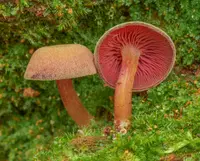
Purple-edged Lute
Callistosporium purpureomarginatum
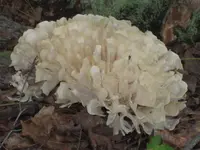
Eastern cauliflower mushroom
Sparassis spathulata
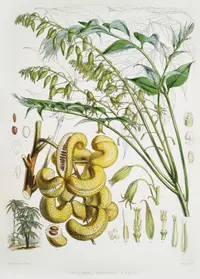
Decaisnea insignis
Decaisnea insignis
Coprinopsis uliginicola
Coprinopsis uliginicola
Geyer's onion
Allium geyeri
Candelabra aloe
Aloe arborescens
Red-banded polypores
Fomitopsis pinicola
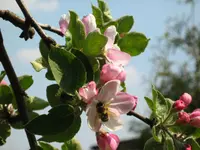
Caucasus apple
Malus orientalis