Eastern cauliflower mushroom Care (Sparassis spathulata)

Also known as: cauliflower mushroom
Eastern cauliflower mushroom

About Eastern cauliflower mushroom

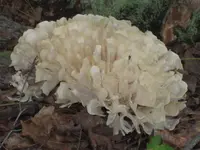
Eastern cauliflower mushroom, Sparassis spathulata, is a wood-decaying fungus rather than a traditional leafy plant. It forms dense, ruffled clusters that look like a pale yellow to cream cauliflower growing from the base of trees or buried wood.

This species occurs mainly in forests of eastern North America, often associated with conifers and sometimes hardwoods. It relies on decaying wood, so it does not grow in regular garden soil like common ornamentals.

Because it has a specific relationship with dead or dying wood, it can be challenging to cultivate reliably at home. Enthusiasts who care for Eastern cauliflower mushroom usually focus on providing suitable wood-based substrates and consistent moisture in a sheltered, shaded environment.

Main Plant Requirements

Care Difficulty

Hard Care

Light Preference

Partial Shade

Water Requirements

Keep Soil Moist

Temperature Preference

Cool Climate

Hardiness Zone

Unknown

Soil Texture

Loamy, Silty, Organic-rich

Soil pH

Strongly acidic (4.5–5.5), Acidic (5.5–6.5)

Soil Drainage

Moist but well-drained

Fertilization

Minimal (feed rarely)

Get Personalized Care Plan

Scan your plant to receive care tips personalized for your specific plant

Available on iOS and Android

How to Care for the Eastern cauliflower mushroom

This wood-decay fungus prefers low to moderate light that mimics a shaded forest floor.

  • Provide dappled or filtered light under trees, with no more than 1–3 hours of weak morning sun reaching the fruiting area.
  • Site Eastern cauliflower mushroom on the north or east side of logs or stumps to avoid intense midday and afternoon sun, which can dry and scorch clusters.
  • In hot summers, use leaf litter or low groundcover to shade the substrate; in cooler seasons, slightly brighter but still indirect light is acceptable.

Moist but not waterlogged conditions are essential for consistent fruiting and mycelium health.

  • Maintain evenly moist soil or woody substrate; allow only the top 1–2 cm to begin drying before lightly re-wetting, rather than following a fixed schedule.
  • Use loose, well-drained organic material around host wood so excess water can drain away while humidity around Sparassis spathulata remains high.
  • Reduce supplementary watering during cool, wet seasons and increase misting or gentle soaking during hot, dry periods if the substrate surface looks pale, hard, or cracked.

Cool to mild temperatures support reliable fruiting and slow, steady mycelial growth.

  • Aim for 50–68°F (10–20°C) during active growth, which reflects typical autumn woodland conditions where fruiting bodies form.
  • Tolerates brief drops to about 28–32°F (-2–0°C), but repeated hard freezes below this can damage developing clusters and slow recovery of the mycelium.
  • In warm regions, provide shade and moisture buffering when temperatures exceed 77°F (25°C), since extended heat above 82–86°F (28–30°C) can stress the organism and reduce production.

This fungus needs consistently moist, humid conditions outdoors to fruit well.

  • Aim for 70–90% humidity around the fruiting area, using heavy mulching or damp leaf litter to retain moisture.
  • It tolerates brief drops to 50–60%, but extended dry air shrivels and hardens Eastern cauliflower mushroom clusters.
  • Low humidity stress shows as stalled growth, pale or brittle fronds, so increase moisture with frequent misting of surrounding substrate, not direct spraying.

This wood-decaying fungus fruits best in moist, organic, well-aerated substrate rather than typical garden soil.

  • Use a loose mix of hardwood chips, shredded bark, and coarse leaf mold to mimic forest-floor texture and structure.
  • Ensure free drainage so water drains within seconds; waterlogged or compacted mineral soil quickly suppresses Sparassis spathulata.
  • Keep the substrate slightly acidic, around pH 5.0–6.5, by using oak or other non-alkaline hardwood chips and avoiding lime.
  • Improve aeration by layering coarse chips at the base and finer organic matter above, avoiding dense clay, peat-only mixes, or manure-heavy media.

This species is only moderately suitable for container growing when the container is treated as a deep, ventilated substrate bed outdoors.

  • Choose a tall, rigid tub or crate that allows a 20–30 cm layer of wood-based substrate while still leaving headroom for vertical fruiting.
  • Drill extra side holes a few centimeters above the base to vent carbon dioxide and prevent stagnant, anaerobic zones in the lower substrate.
  • Use a light-colored or insulated container to reduce overheating and surface drying of the colonized wood mix in full sun or hot climates.

Sparassis spathulata, the Eastern cauliflower mushroom, grows as a wood-decaying fungus and usually needs no added fertilizer if established on suitable host wood.

Sparassis spathulata is not pruned in the usual horticultural sense, but fruiting bodies benefit from basic hygiene.

  • Use clean, sharp scissors or a knife to harvest mature clusters close to the base without disturbing surrounding wood.
  • Remove decaying or insect-infested fruiting bodies to limit spore buildup and pests around the host tree base.
  • Avoid cutting into living tree tissue; focus only on the mushroom mass and loose debris on the soil surface.

This fungus is usually grown on buried wood or at the base of host trees, so care focuses on site preparation rather than classic repotting.

  • Transplant or establish new sites in cool seasons, ideally early fall or early spring, when soil is moist and temperatures mild.
  • Choose a shaded to semi-shaded spot and partially bury hardwood logs or stumps, ensuring firm soil contact to support mycelium spread.
  • Keep the area evenly moist but not waterlogged for several weeks after installation to reduce stress on the developing colony.
  • Avoid disturbing colonized wood once growth is visible; limit traffic and digging around the base to protect the mycelial network.

Reproducing Sparassis spathulata at home is specialized and usually done by enthusiasts using spores or mycelium on wood rather than standard garden techniques.

This fungus is quite cold hardy in-ground and typically requires minimal winter care once established on suitable wood.

  • Allow natural dormancy after fruiting; the mycelium persists within the host wood beneath the soil surface.
  • Maintain a light mulch layer of leaves or wood chips to moderate freeze–thaw swings around the colonized area.
  • Avoid compacting frozen soil or striking buried wood with tools, which can damage the living fungal tissue.

Care Tips

Sterilize Wood Substrate

Before inoculation, pressure-cook or steam the hardwood chips or sawdust for at least 60–90 minutes to reduce competing fungi and bacteria, which greatly improves colonization success.

Use Grain Spawn

Prepare or purchase clean grain spawn and mix it evenly through the cooled, sterilized wood substrate at 5–10% of the substrate volume to promote rapid and uniform mycelium spread.

Encourage Fruiting Triggers

Once the substrate is fully colonized, introduce a slight drop in temperature, fresh air exchange, and gentle light to signal the fungus to switch from vegetative growth to fruiting.

Maintain Surface Cleanliness

Keep the fruiting area free from decaying plant debris, old mushrooms, and standing water to limit contamination by molds and other fungi that can outcompete or deform the clusters.

Harvest At Firm Stage

Harvest when the fronds are still firm and pale, cutting the cluster at the base with a clean knife, which encourages cleaner regrowth and reduces the risk of rotting tissue remaining in the substrate during caring for Eastern cauliflower mushroom.

Common Pests and Diseases

Green mold contamination

This disease often appears as fast-growing green patches that overrun the white mushroom mycelium and fruiting clusters. Symptoms include stalled or distorted cauliflower-like heads and a dusty or velvety green surface on the substrate or on mushroom folds.

Solution

Remove and discard heavily contaminated blocks or trays, and reduce spore load by cleaning shelves, tools, and nearby surfaces with 70% isopropyl alcohol or a dilute bleach solution. Improve air filtration, reduce handling, and keep humidity surfaces dry between misting cycles to limit mold spore germination in Eastern cauliflower mushroom indoor care setups.

Bacterial blotch

This disease causes slimy, wet-looking tan to brown spots on the folds and tips of the mushroom, often where water has sat for long periods. Symptoms include soft, water-soaked tissue and an unpleasant odor if infection is advanced.

Solution

Increase fresh air exchange and avoid prolonged water droplets on the fruiting body by using finer misting or adjusting humidity so surfaces dry slightly between cycles. Remove and discard affected tissue promptly and sanitize growing containers and tools to reduce bacterial load before the next flush.

Fungus gnats

These insects are small, dark, mosquito-like flies that lay eggs in damp substrate and around developing fruiting bodies. This pest can cause tunneling damage in the mushroom tissue and spreads fungal and bacterial contaminants as adults move between blocks.

Solution

Use sticky traps around the growing area to reduce adult populations and cover substrate surfaces with fine insect mesh or breathable filter material to block egg-laying. Allow the top layer of substrate or casing to dry very slightly between waterings, remove heavily infested blocks, and clean up any decaying organic matter to disrupt the gnat life cycle.

Mite infestations

These pests are tiny arthropods that feed on mycelium and young fruiting structures, leading to poor formation, pitted surfaces, or stunted clusters. Symptoms include a dusty or grainy appearance on folds and slow, uneven growth despite good environmental conditions.

Solution

Discard heavily infested substrates, then thoroughly clean racks, walls, and tools to remove residual mites and eggs. Improve hygiene by filtering incoming fresh air, avoiding storage of old contaminated blocks nearby, and, if needed, use safe horticultural mite control products on non-fruiting room surfaces between production cycles.

Cobweb disease

This disease is caused by fast-growing competitor fungi that form light gray, cobweb-like mycelium over the substrate and along the mushroom folds. Symptoms include rapid coverage of clusters, softening tissue, and eventual collapse if not controlled quickly.

Solution

Isolate or remove infected blocks at the first sign of cobweb growth and increase fresh air exchange to reduce still, humid pockets where this fungus spreads easily. Spot-treat surrounding non-harvest areas with a light spray of 3% hydrogen peroxide, clean the room thoroughly between cycles, and avoid overcrowding blocks to keep air moving evenly around developing clusters.

Interesting Facts

Eastern North America specialist

This fungus occurs mainly in eastern North America, where it is associated with mixed hardwood and conifer forests rather than being widespread on other continents like some related Sparassis species.

Firm, spoonlike branches

The fruiting body has thick, spoon-shaped, flattened branches that are notably firmer and less frilly than those of the better-known cauliflower fungus Sparassis crispa, giving it a more robust, layered appearance.

Rooted wood decomposer

It typically fruits at the base of living or dead trees, especially pines and other conifers, where it causes brown rot in the wood and plays a role in recycling tough structural compounds such as cellulose and hemicellulose.

FAQs about Eastern cauliflower mushroom

This species is generally regarded as edible when young, firm, and clean, but correct identification is critical because some similar fungi cause illness. Always consult a local expert or mycologist before eating any wild mushroom.

Grow Healthy Plants with Botan Care

Keep your plants happy and healthy with plant identification, disease detection, and easy care guidance.

Botan plant care app — identify plants on mobile

Explore More Plants