BotaN logo

dead man's fingers Care (Xylaria polymorpha)

dead man's fingers

About dead man's fingers

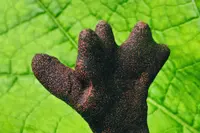
Dead man's fingers, Xylaria polymorpha, is a saprophytic fungus, not a leafy houseplant. It grows from decaying wood as short, finger-like black clubs. Each cluster usually emerges from buried roots, stumps, or fallen logs in temperate forests, especially in North America and Europe. It appears most often in cool, damp conditions. This species is not typically cultivated in pots, since it depends on rotting wood rather than standard soil. For anyone wishing to learn how to care for dead man's fingers outdoors, the key is providing stable moisture and access to well-decayed hardwood.

Main Plant Requirements

Care Difficulty

Hard Care

Light Preference

Shade

Water Requirements

Regular Water

Temperature Preference

Cool Climate

Hardiness Zone

Unknown

Soil Texture

Organic-rich, Loamy

Soil pH

Acidic (5.5–6.5)

Soil Drainage

Moist but well-drained

Fertilization

Minimal (feed rarely)

Get Personalized Care Plan

Scan your plant to receive care tips personalized for your specific plant

Available on iOS and Android

How to Care for the dead man's fingers

This wood-decay fungus prefers dim, forest-like light conditions similar to a shaded woodland floor.

  • Allow only dappled or filtered light, such as under trees or shrubs, with no more than 1–2 hours of weak morning sun and no direct afternoon sun.
  • Site dead man's fingers on the north or east side of logs or stumps, where it is shaded for most of the day but not in complete darkness.
  • Excessive sun exposure dries the substrate and slows fruiting; in summer, protect from hot, direct light, and in winter avoid exposing colonized wood to sudden bright sun after freezing.

This fungus relies on consistently moist, not waterlogged, wood and surrounding soil to fruit well.

  • Keep the host wood and nearby soil evenly moist; allow the top 2–3 cm of surrounding soil to feel just slightly dry before re-wetting with gentle, slow watering.
  • Use well-drained soil around the colonized wood so water does not pool; standing water encourages bacterial rot rather than healthy Xylaria polymorpha growth.
  • In warm, windy periods, monitor more often for drying and dark, shriveling fruiting bodies, while in cool, wet seasons watch for soggy, foul-smelling wood as a sign of excess moisture.

This species tolerates a wide temperature range but fruits best in cool to mild conditions typical of temperate forests.

  • Optimal fruiting usually occurs around 50–68°F (10–20°C), with mycelium activity continuing across a broader band as long as moisture is stable.
  • It survives cold down to about 20°F (-6°C) in protected wood, but repeated deep freezes with drying winds can damage exposed fruiting bodies.
  • Heat above 80°F (27°C), especially with low humidity, can dry the substrate; provide shade and mulch to buffer temperature swings through summer and transitional seasons.

This wood-decay fungus needs consistently high humidity to fruit well.

  • Aim for 70–95% humidity around dead man's fingers, similar to a damp woodland floor.
  • Dry air causes shrunken, cracked, or prematurely hardened fruiting bodies and slow colonization of wood.
  • Raise humidity by enclosing the inoculated wood in a ventilated plastic tent, misting surfaces, and reducing air drafts without sealing off all fresh air.

This species grows on dead wood, so any artificial substrate should mimic coarse, well-aerated forest litter rather than mineral soil.

  • Use a substrate made mainly from hardwood chips, sawdust, or decayed logs with only a small amount of peat or coco coir to hold moisture.
  • Ensure excess water drains away freely; the substrate must be moist but never waterlogged to avoid anaerobic conditions that inhibit Xylaria polymorpha.
  • Keep pH slightly acidic to neutral, roughly pH 5.5–7, by avoiding large additions of lime or strongly alkaline materials.
  • Improve aeration by mixing in coarse bark pieces and creating air gaps around the wood, rather than compacting the substrate tightly.

This species can be maintained in containers only as a specialized culture on wood, not as a typical potted plant.

  • Select a deep, rigid tub or box that can securely hold sizable wood pieces without tipping when fruiting bodies emerge on one side.
  • Drill side and base holes to allow slow drainage and gas exchange, then elevate the container on blocks so moisture does not stagnate under it.
  • Use opaque or dark-walled containers to reduce light on the colonized wood, which helps keep the substrate surface from drying too fast.

Xylaria polymorpha, known as dead man's fingers, is a saprophytic fungus that gains nutrients from decaying wood and does not benefit from conventional fertilizing.

Pruning is not a standard practice for Xylaria polymorpha, since its fruiting bodies naturally age and decompose on their own.

This fungus is not suited to normal pot culture, so management focuses on positioning suitable wood rather than traditional repotting.

  • If fruiting declines, provide fresh, untreated hardwood logs or branches as a new substrate instead of changing pots.
  • Shift colonized wood in late fall or early spring, when temperatures are cool and moisture is stable, to limit stress on the fungal network.
  • Move wood gently and keep it oriented similarly to its original position to reduce disturbance of internal fungal threads called mycelium.
  • After moving, maintain consistent moisture around the wood, avoiding complete drying to help the colony re-establish.

Propagation of Xylaria polymorpha is specialized and typically handled by experienced mycologists rather than home growers.

This wood-decay fungus is naturally cold hardy across temperate climates and needs no special winter care.

Care Tips

Provide decaying wood

Bury sections of well-rotted hardwood logs or thick branches halfway into the substrate so the fungus has a stable, long-term food source and a realistic structure to colonize.

Use shaded wood piles

Stack small hardwood pieces in a loose pile in a shaded, wind-sheltered spot to create varied moisture pockets that favor fruiting body formation and spread.

Mark inoculated spots

Label or discreetly flag the exact areas where substrate was inoculated so future mulching, raking, or stepping does not disturb the developing mycelium.

Minimize soil disturbance

Avoid deep digging, aggressive raking, or frequent regrading around colonized wood, since repeated disturbance can break up the mycelium network and reduce future fruiting.

Manage competing fungi

Remove heavily colonized wood that shows clear signs of faster-growing competitor fungi if they begin to dominate, then replace it with fresh hardwood pieces inoculated from your existing colony when caring for dead man's fingers.

Common Pests and Diseases

fungivorous springtails

These insects live in and on decaying wood and fruiting bodies, grazing on fungal tissue and sometimes scarring young stromata. Symptoms include pitted or roughened surfaces and small jumping insects visible when the substrate is disturbed.

Solution

Reduce excess surface moisture on the substrate, improve air movement around the culture, and avoid standing water in trays. If numbers are high, physically remove heavily infested pieces of wood and use fine-mesh barriers around cultures; in non-edible displays, a targeted horticultural soap drench to the surrounding substrate can help suppress populations without directly soaking the fruiting bodies.

woodlice (isopods)

These crustaceans commonly inhabit rotting logs and can chew on soft fungal tissue, especially young, fleshy stromata. Symptoms include irregular bite marks, missing sections at the base, and the presence of small gray or brown, segmented animals that curl when touched.

Solution

Lift display wood off bare soil using stones, bricks, or mesh to reduce access, and keep the immediate area around the culture free of deep leaf litter that shelters isopods. Hand-pick visible individuals at night with a flashlight and, if needed, place simple pitfall traps nearby to divert them away from the fungus rather than using broad-spectrum insecticides.

slugs and snails

These mollusks feed on tender fungal tissue in damp, shaded environments, often at night. Symptoms include smooth-edged chunks missing from stromata and occasional slime trails on wood or nearby surfaces.

Solution

Lower excessive surface moisture and improve drainage around outdoor logs or beds, and avoid overhead watering late in the day. Hand-remove slugs and snails at dusk, use copper tape or sharp mineral barriers (such as dry crushed eggshells) around containers, and place beer or yeast traps at a distance from the fungus to draw them away.

competing saprobic fungi

This disease pressure comes from other wood-decaying fungi colonizing the same substrate, which can overgrow or replace established colonies. Symptoms include patches of different-colored mold, crusts, or mushrooms appearing on the same log, and a decline or cessation of the characteristic dead man’s fingers fruiting.

Solution

At setup, use fresh or recently cut hardwood for growing Xylaria polymorpha and remove bark sections heavily colonized by other fungi. If contamination appears, cut away or discard the most affected wood pieces, reduce constant wetness, and maintain moderate but not stagnant humidity so the intended fungus has a stable but not overly favorable environment for aggressive competitors.

Interesting Facts

Specialized wood decomposer

This fungus is a saprobic specialist that colonizes and decomposes well-rotted hardwood, especially beech and maple, playing an important role in recycling carbon and nutrients back into forest soils.

Two-stage fruiting bodies

Its club-shaped fruiting bodies first appear pale and covered with a white asexual spore layer, then darken to charcoal-black as they mature and switch to producing sexual spores in flask-shaped structures called perithecia.

Cold-season spore release

Mature fruiting bodies often persist year-round, but spore release in this species is most active during cool, moist periods in late fall to spring, when air movement and humidity favor efficient dispersal.

Botan icon

Did you know?

The species is a well-studied model for fungal secondary metabolism, and its fruiting bodies produce the pigment melanin and several unusual small molecules, including cytochalasins, which have been widely used in cell biology research to study how cells build and reorganize their internal skeleton.

FAQs about dead man's fingers

This fungus is considered inedible. The texture is tough and woody, and it has no culinary value. Some related species can be mildly toxic. It is best treated as a decomposer to observe, not to eat.

Grow Healthy Plants with Botan Care

Keep your plants happy and healthy with plant identification, disease detection, and easy care guidance.

Botan plant care app — identify plants on mobile

Explore More Plants