landslide mushroom Care (Psilocybe caerulescens)

landslide mushroom

About landslide mushroom

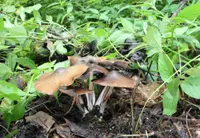
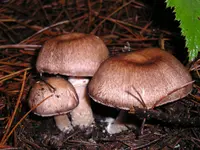
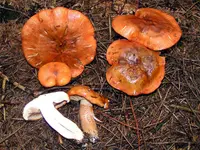
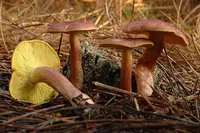
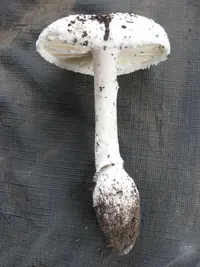
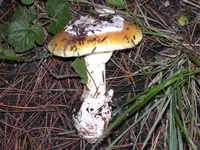
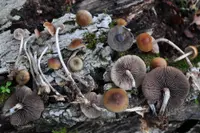
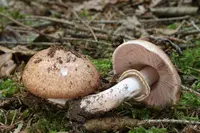
Psilocybe caerulescens, commonly called landslide mushroom, is a small saprotrophic fungus rather than a true plant. It typically forms slender, pale to brown caps on thin stems, often bruising blue when handled.

In nature it usually appears on disturbed, erosion-prone soils, such as landslides or road cuts, in warm, humid regions of Mexico and parts of the southeastern United States. It can be challenging to cultivate because it needs very clean conditions, stable humidity, and a suitable nutrient-rich substrate.

Those who care for landslide mushroom indoors must pay close attention to airflow, contamination control, and consistent moisture, as it is sensitive to environmental fluctuations.


Main Plant Requirements

Care Difficulty

Hard Care

Light Preference

Partial Shade

Water Requirements

Keep Soil Moist

Temperature Preference

Warm Climate

Hardiness Zone

Unknown

Soil Texture

Loamy, Silty, Organic-rich

Soil pH

Acidic (5.5–6.5)

Soil Drainage

Moist but well-drained

Fertilization

Minimal (feed rarely)

Get Personalized Care Plan

Scan your plant to receive care tips personalized for your specific plant

Available on iOS and Android

How to Care for the landslide mushroom

Psilocybe caerulescens prefers low to moderate light that mimics its shaded forest habitat.

  • Provide 2–4 hours of soft morning sun with bright, dappled or filtered light for the rest of the day; avoid harsh midday exposure.
  • Site landslide mushroom under shrubs, trees, or beside rocks where it receives partial shade and protection from direct overhead sun.
  • Excessive sun causes drying and bleaching of caps, while too little light leads to weak, pale growth; adjust exposure seasonally as summer light intensifies.

Psilocybe caerulescens needs consistently moist but not waterlogged conditions around the substrate.

  • Water when the top 1–2 cm of the substrate or soil feels just starting to dry, aiming to re-moisten before it becomes dusty or cracked.
  • Ensure excellent drainage with a loose, high-organic mix; standing water or sour, swampy smells indicate poor aeration and potential rot.
  • During hot, dry weather, check moisture daily; in cool, humid periods reduce watering and watch for slimy caps or mold as signs of excess moisture.

This species prefers mild, stable temperatures with cool nights and no frost exposure.

  • Aim for an active growth range of 65–75°F (18–24°C) with slightly cooler nights to support healthy fruiting.
  • Below about 40°F (4°C) growth stops and tissue can be damaged, so protect from frost and prolonged cold snaps.
  • Above 80°F (27°C), especially with low humidity, the mycelium and fruiting bodies may dry or stall; provide shade and airflow in hot seasons to moderate heat.

This fungus needs consistently high humidity to form healthy pins and fruiting bodies.

  • Maintain 85–95% humidity during fruiting, using a humidifier or misting walls rather than spraying caps directly.
  • Dry air causes cracked, shrunken caps and stalled pin development in landslide mushroom clusters.
  • Increase humidity with a clear tent or monotub, moist perlite layer, and minimal fanning to reduce rapid moisture loss.

Psilocybe caerulescens thrives in loose, organic-rich, well-aerated substrate rather than compact mineral soil.

  • Use a mix of pasturized hardwood sawdust, fine wood chips, and well-aged composted manure for a nutrient-rich, airy base.
  • Ensure fast drainage by avoiding dense garden soil; excess water should run through quickly without leaving standing pockets.
  • Keep substrate slightly acidic to neutral, around pH 5.5–7.0, which supports healthy mycelial colonization.
  • Improve aeration by keeping particle size varied and avoiding over-compression when packing the substrate into trays or beds.

This species can be grown in containers if moisture, aeration, and depth are carefully controlled.

  • Choose wide, shallow tubs or trays that allow an even substrate layer so the mycelium can colonize and fruit across the surface efficiently.
  • Drill small side holes just above substrate level to balance gas exchange with moisture retention without over-drying the block.
  • Use opaque or tinted containers to limit side light, which reduces unwanted side pinning and directs fruiting toward the intended surface.

Psilocybe caerulescens is usually grown on nutrient-rich substrates, so added fertilizer is rarely necessary for healthy fruiting.

Psilocybe caerulescens does not require classic pruning, but basic hygiene around the growing area supports healthy flushes.

  • After each harvest, cut remaining mushroom stems at the base with a clean, sharp knife or scissors.
  • Remove any dead, decaying, or moldy fruiting bodies promptly to limit contamination and pest issues.
  • Avoid disturbing the underlying substrate or mycelium network when trimming spent mushrooms.
  • Disinfect tools between uses with alcohol to reduce transfer of fungal competitors or pathogens.

Transplanting focuses on moving colonized substrate or spawn rather than traditional roots when managing Psilocybe caerulescens.

  • Shift colonized blocks or trays when growth slows, substrate shrinks, or contamination risk increases.
  • Plan moves between flushes, typically every few months, to reduce disturbance during active fruiting.
  • Handle blocks gently, supporting the entire mass to prevent cracking or tearing of the mycelium.
  • Limit temperature and humidity swings during and after moving to reduce stress on the colony.

Propagation of Psilocybe caerulescens relies on sterile techniques rather than typical garden methods.

  • Use spores on sterile agar or grain as a primary method, working in the cleanest environment possible.
  • Create grain spawn from well-colonized agar, then transfer to bulk substrate when fully white and firm.
  • Maintain 70–76°F, high humidity, and good gas exchange during colonization to support vigorous growth.
  • Experienced growers may clone tissue from a healthy mushroom into sterile media for consistent traits.

Outdoor colonies of Psilocybe caerulescens are sensitive to hard frost and benefit from simple winter preparation.

  • In climates with freezing winters, complete outdoor growing cycles before consistent frosts arrive.
  • For beds in mild regions, apply a light mulch layer to buffer soil temperature swings and retain moisture.
  • Move any container-based setups or fruiting chambers indoors or to a frost-free, sheltered space for winter.

Care Tips

Substrate surface management

After full colonization, lightly scratch or rake the top 0.5–1 cm of substrate to break up dense mycelial mats, which encourages more even pin formation and reduces the risk of bacterial wet spots when growing landslide mushroom.

Gradual fresh-air increase

Once pins appear, increase fresh-air exchange in small steps over several days by widening vents or opening the chamber more often, which helps prevent long, thin stems and reduces contamination spikes caused by sudden humidity drops.

Targeted misting technique

Mist the walls and lid of the fruiting chamber rather than directly on developing caps, allowing fine droplets to evaporate and maintain high humidity while avoiding cap spotting and bacterial blotch on clusters.

Cluster harvesting strategy

Cut tight clusters at the base with a sterile blade as a group when most caps are nearly mature, leaving the surface as undisturbed as possible so the remaining mycelium can recover quickly for the next flush.

Flush recovery support

After each harvest, remove leftover stem bases and obvious aborts, then give the substrate a 12–24 hour rest with slightly reduced airflow to let the mycelium rehydrate and repair before resuming full fruiting conditions.

Common Pests and Diseases

Green mold

This disease is caused mainly by Trichoderma species that rapidly colonize substrate and fruiting surfaces. Symptoms include dense green patches on casing or substrate, stalled mycelium, and deformed or aborted mushrooms.

Solution

Immediately remove and discard any visibly green-contaminated substrate and fruits, then isolate remaining healthy blocks. Improve hygiene by sterilizing or pressure-cooking substrate thoroughly, cleaning tools and surfaces with 70% isopropyl alcohol or diluted bleach, and increasing fresh air exchange to favor healthy mycelium over contaminant molds.

Cobweb mold

This disease is caused by fast-growing Cladobotryum species that form thin, grayish, cobweb-like mycelium over substrate and mushrooms. Symptoms include soft, water-soaked fruitbodies that quickly collapse if the mold is not controlled early.

Solution

As soon as cobweb-like growth appears, reduce humidity slightly, increase fresh air exchange, and spot-treat affected patches with a light mist of 3% hydrogen peroxide diluted 1:1 with clean water. Remove badly affected fruits and surrounding casing, and improve overall hygiene and air movement to prevent recurrence.

Bacterial blotch

This disease is usually caused by Pseudomonas bacteria under overly wet, stagnant conditions. Symptoms include yellow to brown sticky spots on caps, greasy surfaces, and soft, watery tissue that spoils quickly.

Solution

Remove and discard affected mushrooms, then adjust conditions by reducing direct misting on caps and improving ventilation to dry surfaces between misting cycles. Use only clean, low-mineral water, disinfect misting equipment regularly, and maintain moderate humidity with good air movement to limit bacterial spread.

Fungus gnats

These insects are small dark flies whose larvae feed in the substrate and around developing mycelium. This pest can create feeding tunnels, introduce pathogens, and reduce yield by stressing the colonized substrate.

Solution

Use fine insect mesh on vents and doors, and place yellow sticky traps near the growing area to monitor and reduce adult populations. For the substrate, avoid standing water, keep surfaces clean, and if needed apply a biological control such as Bacillus thuringiensis israelensis (Bti) according to label directions to target larvae without harming the crop.

Mites

These pests include various tiny arthropods that move through substrate and over fruiting bodies. Symptoms include slowed colonization, small pits or roughened mushroom surfaces, and visible specks that move when observed closely.

Solution

Discard heavily infested blocks and clean the growing area thoroughly, including shelves and containers. To prevent new infestations, pasteurize or sterilize all substrate, store dry materials sealed, use physical barriers such as clean plastic liners, and if necessary introduce predatory mites from reputable suppliers as a targeted biological control when growing landslide mushroom at scale.

Interesting Facts

Distinct bluish bruising

This species shows a rapid blue staining reaction on caps and stems when damaged, caused by the oxidation of psilocin and related indole compounds in its tissues.

Preference for landslide soils

In its native range, it is strongly associated with disturbed clay-rich soils, especially along landslides, road cuts, and eroded banks rather than stable forest floors.

Narrow native distribution

It is naturally documented mainly from certain montane regions of Mexico and parts of the southeastern United States, where it fruits during warm, wet periods in late summer to autumn.

Botan icon

Did you know?

Ethnobotanical studies describe this species as one of the mushrooms historically used by Mazatec communities in Oaxaca, Mexico, in ceremonial contexts, where it has been referred to by local vernacular names and used alongside other psychoactive Psilocybe species.

FAQs about landslide mushroom

This fungus can appear and mature quite quickly after heavy rains, often within several days, especially on disturbed soils or old landslide zones, then may persist for weeks if moisture and temperature remain suitable.

Grow Healthy Plants with Botan Care

Keep your plants happy and healthy with plant identification, disease detection, and easy care guidance.

Botan plant care app — identify plants on mobile

Explore More Plants