St. George's Mushroom Care (Calocybe gambosa)

Also known as: Majska kolobarica
St. George's Mushroom

About St. George's Mushroom

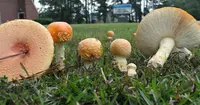
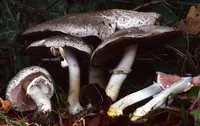
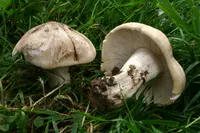
St. George's mushroom, Calocybe gambosa, is a spring-fruiting edible fungus, not a leafy plant. It forms sturdy, fleshy caps with thick, white to cream stems and crowded pale gills. The mushrooms often appear in arcs or partial rings in grasslands and open woodland edges.

This species occurs across parts of Europe and has been introduced to some other temperate regions, usually in calcareous or neutral soils. It is considered somewhat specialized, since it prefers stable grassland or meadow habitats and can be slow to establish in new sites.

Moist, well-drained soil and moderate light suit it best, and consistent spring moisture strongly influences cropping. In cultivation, how to care for St. George's Mushroom usually centers on maintaining suitable soil conditions and undisturbed turf.

Main Plant Requirements

Care Difficulty

Hard Care

Light Preference

Partial Shade

Water Requirements

Keep Soil Moist

Temperature Preference

Cool Climate

Hardiness Zone

5–8

Soil Texture

Loamy, Silty, Organic-rich

Soil pH

Slightly acidic (6.5–7.0), Neutral (7.0)

Soil Drainage

Moist but well-drained

Fertilization

Minimal (feed rarely)

Get Personalized Care Plan

Scan your plant to receive care tips personalized for your specific plant

Available on iOS and Android

How to Care for the St. George's Mushroom

This spring-fruiting fungus prefers cool, moderate light in open woodland or grassy sites rather than intense sun.

  • Provide 3–5 hours of gentle morning sun with bright dappled or light partial shade for the rest of the day, especially under sparse trees or along woodland edges.
  • Avoid strong midday and afternoon sun, which can overheat and dry the upper soil layer, shrinking the mycelium zone and reducing St. George's Mushroom fruiting.
  • In summer, protect sites from prolonged bare exposure; in early spring and fall, slightly more direct light is acceptable as the sun angle is lower and air cooler.

This species needs consistently moist, not saturated, soil around the mycelium network to fruit well in spring.

  • Aim for soil that feels evenly moist 5–8 cm deep; if the top 2–3 cm are dry and crumbly, a slow, thorough soak is appropriate.
  • Ensure excellent drainage with a loamy, well-structured soil; persistent puddling, sour smell, or slimy patches suggest overwatering and risk suffocating Calocybe gambosa mycelium.
  • During cool, rainy spring, extra watering is rarely needed, but in unusually dry periods, irrigate every few days based on soil feel, watching for cracking or shrinking turf as a sign of dryness.

This fungus fruits best in cool spring conditions and is sensitive to both hard frost and strong heat.

  • Optimal fruiting occurs around 50–60°F (10–16°C), with mycelium growth continuing slowly between about 40–65°F (4–18°C) in moist soil.
  • Short dips to 32°F (0°C) may damage or halt visible mushrooms but often spare the underground mycelium; prolonged freezes below 28°F (-2°C) can reduce future yields.
  • Sustained temperatures above 70–75°F (21–24°C) combined with dry soil suppress fruiting; in hot summers, shade and soil moisture conservation help protect the mycelium until cooler weather returns.

Stable moisture around the substrate is more important than ambient air humidity for this fungus.

Calocybe gambosa fruits best in cool, moist, well-aerated, organic-rich ground.

  • Use a loose, humus-rich loam with plenty of decayed leaf litter or compost to mimic natural grassland or woodland edges.
  • Ensure drainage is moderate: soil should stay evenly moist but never waterlogged, or the mycelium may rot.
  • Aim for slightly alkaline to neutral conditions, around pH 7.0–8.0, often achieved in calcareous or limy soils.
  • Improve aeration and structure by mixing in leaf mold, coarse sand, or fine grit, while avoiding compacted or clay-heavy ground.

This species is not well suited to container growing, as it prefers stable, cool ground with complex soil ecology.

Calocybe gambosa is a woodland mushroom that usually needs no added fertilizer if grown in healthy, organic‑rich soil.

Pruning is not applicable for Calocybe gambosa, as it is a mushroom-forming fungus rather than a leafy plant.

This species is seldom grown in containers; management focuses on transplanting colonized substrate rather than traditional repotting.

  • Transplant only well‑colonized spawn or substrate, not individual mushrooms, to reduce stress on the fungal network.
  • Carry out moves in cool, moist weather in spring or fall to match natural growth conditions.
  • Shift substrate gently into a new bed with similar soil type and organic content to avoid shocking the mycelium.
  • Keep the new site evenly moist and shaded for several weeks so the fungus can reestablish its feeding network.

Reproducing Calocybe gambosa at home is challenging and usually handled by specialist growers rather than casual gardeners.

In the ground, Calocybe gambosa is cold hardy across most temperate climates and normally needs no special winter care.

Care Tips

Select host trees

Choose a long-term site near established deciduous trees or hedgerows, as this fungus often forms stable, recurring fruiting rings in undisturbed turf close to consistent root systems.

Create semi-permanent bed

When establishing an outdoor patch, mark and keep a dedicated 1–2 m² area with minimal digging, mowing, or foot traffic so the underground mycelium can mature for several years before peak production.

Use clean spawn

Always start with fresh, lab-produced spawn or well-identified wild tissue and use disinfected tools to transfer it, reducing the risk of introducing competing fungi or soil-borne pathogens into the bed.

Top-dress, do not dig

Replenish organic matter by applying a thin top-dressing of leaf mold or well-rotted woodchip compost each year rather than turning the soil, which helps keep the mycelial network intact when growing St. George's Mushroom.

Monitor ring edges

Inspect the expanding edge of the fairy ring each spring and keep that zone lightly moist and free from heavy thatch or dense weeds, as the most active mycelium and highest chance of fruiting occur at this advancing margin.

Common Pests and Diseases

Mycophagous slugs

This pest feeds on emerging fruiting bodies, leaving irregular holes and slime trails on caps and stems. Symptoms include ragged edges and rapid loss of young mushrooms, especially in moist outdoor beds.

Solution

Hand-pick slugs in the evening or early morning, use beer traps or simple boards as shelters for easy collection, and keep the fruiting area free of dense debris where slugs hide. Copper tape barriers or coarse dry mulch (sharp sand, grit) around beds can reduce access without contaminating the substrate.

Mycophagous springtails

These insects live in the substrate and can graze on fine mycelium and very young primordia, sometimes causing poor or uneven fruiting in indoor or contained cultivations. This pest usually appears in overly wet, organic-rich substrates with stagnant air.

Solution

Improve drainage and reduce constant saturation of the substrate so it stays moist but not waterlogged, and increase airflow to lower humidity spikes. If populations are high in controlled cultivation, introduce sticky traps nearby to monitor numbers and allow the substrate to dry slightly between mistings to make conditions less favorable.

Fungus gnat larvae

These insects lay eggs in damp growing media, and the larvae can tunnel through mycelium and pin-stage mushrooms, weakening the colony and deforming fruiting bodies. Symptoms include small dark adult gnats around the bed and stunted or aborted pins in indoor or sheltered setups.

Solution

Allow the surface of the substrate casing to become just slightly drier between waterings while maintaining overall moisture below the surface, and improve ventilation to prevent stagnant, wet zones. Use fine mesh over vents or openings, place yellow sticky cards to trap adults, and avoid leaving standing water or overly rich, decomposing organic matter near the cultivation area.

Green Trichoderma mold

This disease is caused by Trichoderma species that colonize the substrate or casing, first appearing as white patches that quickly turn dense green. Symptoms include suppressed or completely halted fruiting and a strong earthy or musty odor different from healthy Calocybe gambosa mycelium.

Solution

Promptly remove and discard heavily contaminated substrate and avoid mixing it with compost for reuse. Improve hygiene by cleaning tools and containers, pasteurizing or replacing casing material, and ensuring good fresh-air exchange so surfaces do not remain constantly saturated; in small-scale setups, slightly lowering substrate moisture and avoiding carbohydrate-rich supplements helps reduce recurrence.

Bacterial blotch

This disease develops on caps under prolonged surface wetness and poor air circulation, causing greasy yellow to brown spots and sometimes a slimy texture. Symptoms include localized discoloration that spreads where water droplets persist on mushroom surfaces.

Solution

Reduce overhead watering and avoid fine mist directly on caps; water the substrate instead and let surfaces dry slightly between irrigations. Increase airflow and lower humidity peaks, remove and discard badly affected mushrooms, and clean surfaces and tools with a mild food-safe disinfectant to reduce bacterial load as part of practical St. George's Mushroom care instructions.

Interesting Facts

Spring-only fruiting

This species is unusual among edible mushrooms because it fruits very early in the year, typically around April–May, often coinciding with St. George’s Day in parts of Europe.

Strong mealy aroma

Fresh fruiting bodies have a distinctive floury or mealy smell, caused by specific volatile compounds, which foragers use as a key identification feature.

Grassland ring formation

The fungus often grows in arcs or complete fairy rings in unimproved grasslands, showing the outward radial spread of its underground mycelium over many years.

Botan icon

Did you know?

In several European countries, this mushroom has a long history as a valued spring food, and in some regions traditional markets once opened their mushroom season specifically when its first fruiting bodies appeared, marking an important seasonal food event.

FAQs about St. George's Mushroom

This species is considered a good edible mushroom when correctly identified and well cooked. However, it has toxic look-alikes, so collection should only be done by experienced foragers or using reliable local expert verification resources.

Grow Healthy Plants with Botan Care

Keep your plants happy and healthy with plant identification, disease detection, and easy care guidance.

Botan plant care app — identify plants on mobile

Explore More Plants