Host tree matching
Match the fungus with compatible host trees such as spruce, pine, or birch, and keep competing groundcovers and dense turf at least 30–40 cm away from trunks so the mycorrhizal partnership can form effectively.

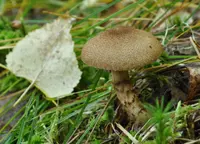
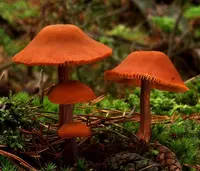
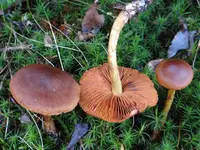
Scaly webcap, Cortinarius pholideus, is a woodland mushroom rather than a typical garden plant. It produces medium-sized brown caps with distinct, often darker, scaly patches and a slender stem. A delicate cobweb-like veil may be seen on young specimens.
This species occurs mainly in coniferous and mixed forests across temperate regions of the Northern Hemisphere, forming mycorrhiza, a nutrient-trading partnership, with tree roots. It is not suited to standard garden cultivation because it depends on living host trees and specific soil fungi communities.
Because of its specialized life cycle, it is considered difficult to grow intentionally, and attempts to care for scaly webcap at home are rarely successful.

Care Difficulty
Hard Care

Light Preference
Partial Shade

Water Requirements
Keep Soil Moist

Temperature Preference
Cool Climate

Hardiness Zone
Unknown

Soil Texture
Loamy, Sandy, Organic-rich

Soil pH
Acidic (5.5–6.5)

Soil Drainage
Moist but well-drained

Fertilization
Minimal (feed rarely)
Scan your plant to receive care tips personalized for your specific plant
Available on iOS and Android
This woodland fungus prefers cool, shaded conditions rather than direct sun exposure.
This mycorrhizal fungus depends on consistently moist, free-draining forest soil rather than direct watering.
This species thrives in cool to mild conditions typical of shaded woodlands.
Humidity is not a significant factor for Cortinarius pholideus compared with host tree and soil conditions.
Cortinarius pholideus is a mycorrhizal fungus that depends on specific tree partners and natural forest soil rather than prepared mixes.
This species is not suitable for container growing because it relies on complex mycorrhizal relationships with trees in natural soils.
This wild mycorrhizal fungus does not need routine fertilization and usually relies on its tree partners for nutrients.
Pruning is not applicable for Cortinarius pholideus, as it is a wild mushroom rather than a plant with stems or branches to shape.
Transplanting this woodland fungus is rarely successful because it depends on specific mycorrhizal relationships with host tree roots.
Propagation of Cortinarius pholideus is specialized and not suitable for typical home cultivation, as it relies on complex fungus–tree root symbiosis.
This scaly webcap is a hardy woodland fungus that requires no active winter care in its natural habitat.

Plant Health Check
Not sure what's wrong with your plant? Check your plant's health inside the app.
This species has a dark brown to blackish cap covered in paler, often concentrically arranged scales, giving it a strongly patterned, roughened appearance that helps separate it from many other brown Cortinarius species in the field.
It typically fruits on the ground in nutrient-poor coniferous forests, especially with spruce and pine, forming ectomycorrhizal associations where its fungal filaments exchange mineral nutrients for sugars from tree roots.
Its gills start pale but mature to a rusty brown as the spores develop, and spore prints of this species show the characteristic warm brown color that is a key diagnostic feature in the genus Cortinarius.
This species is not considered edible and should be treated as potentially poisonous. Several Cortinarius species contain dangerous toxins that damage the kidneys. Identification is difficult, so for safety, it is best never to eat it.
Keep your plants happy and healthy with plant identification, disease detection, and easy care guidance.