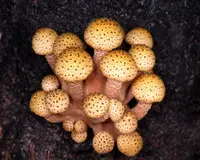
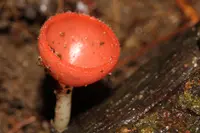
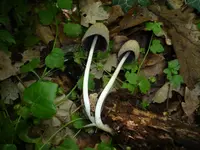
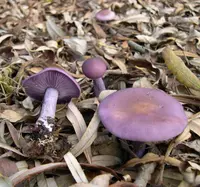
rosy navel Care (Contumyces rosellus)

rosy navel

About rosy navel

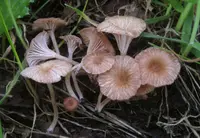
Rosy navel, Contumyces rosellus, is a small, delicate mushroom rather than a leafy houseplant. It typically forms pink to rosy caps with a central navel-like depression and slender stems. Fruiting bodies often appear in moist, mossy or grassy habitats, usually in woodlands or heathland areas.

This fungus tends to emerge in cool, damp conditions and can be short-lived, so it is not a typical choice for long-term indoor cultivation. Because it is a wild, ephemeral mushroom, it is considered challenging to manage in controlled environments. Those interested in how to care for rosy navel should focus on recreating its cool, moist, well-drained natural habitat as closely as possible.

Main Plant Requirements

Care Difficulty

Moderate Care

Light Preference

Partial Shade

Water Requirements

Moderate Water

Temperature Preference

Warm Climate

Hardiness Zone

Unknown

Soil Texture

Loamy

Soil pH

Slightly acidic (6.5–7.0)

Soil Drainage

Well-drained

Fertilization

Minimal (feed rarely)

Get Personalized Care Plan

Scan your plant to receive care tips personalized for your specific plant

Available on iOS and Android

How to Care for the rosy navel

Contumyces rosellus, a small saprophytic fungus, fruits best in cool, soft forest light rather than direct sun.

  • Aim for dappled or filtered light under shrubs or trees, with only 1–2 hours of weak morning sun and full shade during harsh midday and afternoon periods.
  • Tolerates deep shade but fruiting bodies become sparse in very dim sites; choose a bright shade position with open sky or light canopy where possible.
  • Protect fruiting areas from direct summer sun, which can dry substrates quickly and shorten mushroom life; in winter, slightly more open exposure is acceptable if substrates stay moist.

Water needs focus on keeping the substrate evenly moist without waterlogging to support healthy fruiting of Contumyces rosellus.

  • Maintain leaf litter or wood-rich soil just consistently damp; allow only the top 1–2 cm to begin drying before rewetting the area with a gentle soak.
  • Increase watering frequency during hot, windy spells when substrates dry quickly, and reduce in cool, humid seasons while still preventing complete drying.
  • Watch for signs of overwatering such as sour smell, standing water, or slimy decay, and for underwatering when caps become brittle, edges crack, or fruiting stops abruptly.

Stable cool to mild temperatures support reliable fruiting and mycelial activity for this species.

  • Aim for an overall growing range of about 50–70°F (10–21°C), which suits the forest-floor conditions where this fungus typically develops.
  • Contumyces rosellus tolerates short dips near 40°F (4°C), but hard frost below 32°F (0°C) can damage or halt fruiting bodies at the surface.
  • In warm periods above 75°F (24°C), protect the site with thick mulch and shade, since extended heat over 80°F (27°C) combined with dryness sharply reduces fruiting.

This small fungus does not have specific humidity requirements under typical outdoor conditions.

Contumyces rosellus typically fruits on moist, decaying organic material rather than in standard potting soil.

  • Provide a loose, crumbly substrate based on well-rotted leaf litter or fine wood debris that stays evenly moist without becoming waterlogged.
  • Ensure rapid drainage by mixing in coarse sand or fine bark chips so water passes through but the surface remains slightly damp.
  • Aim for mildly acidic to neutral conditions (pH 5.5–7.0), avoiding highly alkaline substrates that slow decomposition and nutrient release.
  • Do not use dense clay or compacted garden soil, which restricts air flow around developing mycelium and can cause rot.

This species is not well suited to traditional container growing and is usually observed on natural forest substrates rather than cultivated in pots.

Contumyces rosellus is usually self-sustaining in natural or garden soil and needs little added fertilizer.

Contumyces rosellus does not respond to pruning in the same way as a typical garden plant and generally needs no pruning.

This fungus is not suited to standard repotting and is best left undisturbed where it naturally appears.

  • Avoid transplanting fruiting bodies or surrounding soil, as the main organism lives as fine threads in the substrate.
  • If growth appears in lawn or beds, adjust mowing or traffic rather than attempting to move the colony.
  • Minimize soil disturbance over known patches to reduce damage to the hidden mycelium network.
  • If habitat must change, focus on improving similar soil conditions nearby instead of lifting individual specimens.

Propagation of Contumyces rosellus is informal and relies on its own spore dispersal rather than controlled methods.

This species overwinters naturally in the soil as mycelium and usually requires no special winter care.

Care Tips

Use sterile substrate

Prepare culture bags or trays with a well-pasteurized, low-nutrient substrate such as a fine sawdust–straw mix to reduce competing fungi and bacteria before inoculating with Contumyces rosellus mycelium.

Control air exchange

Provide gentle, regular fresh air exchange in the fruiting space using a small fan on a timer or passive vents to prevent CO2 buildup, which otherwise causes thin, elongated fruiting bodies and weak caps.

Monitor surface moisture

Mist the fruiting surface lightly and only when it begins to look matte rather than shiny, avoiding visible water droplets on pins and caps to reduce the risk of bacterial blotch and cap deformities.

Sanitize handling tools

Clean knives, tweezers, and harvest containers with 70% isopropyl alcohol before each use and between culture batches to limit the spread of mold spores and bacterial contamination.

Harvest at prime stage

Cut fruiting bodies when caps are fully colored but still firm and edges are slightly inrolled, as timely harvesting during caring for rosy navel helps maintain culture vigor and reduces decay on the substrate surface.

Common Pests and Diseases

Slime mold colonization

This disease involves other fungi or slime molds coating the fruiting bodies in gray, white, or yellowish, slimy growth that obscures the rosy cap surface. Symptoms include distorted caps that decay faster than unaffected mushrooms.

Solution

Carefully remove and discard affected mushrooms and nearby debris, then improve air movement and reduce excessive surface moisture in the immediate area. Avoid overhead watering or heavy wetting of the fruiting area and keep litter thinner so caps dry quickly after rain or irrigation.

Parasitic fungi

This disease occurs when specialized parasitic fungi attack the caps or stems, causing misshapen, tough, or discolored fruiting bodies and sometimes powdery or cottony overgrowth. Symptoms include caps that fail to expand normally and rapidly lose color and texture.

Solution

Remove all visibly parasitized mushrooms and surrounding organic material to reduce inoculum, and avoid creating dense, continuously wet litter where parasitic fungi thrive. If cultivating, adjust substrate depth and moisture so the surface is moist but not saturated and promotes good airflow around developing fruiting bodies.

Fungus gnat larvae

This pest consists of small fly larvae tunneling into caps and stems, leaving tiny entry holes and soft, waterlogged tissue that collapses early. Symptoms include caps with interior galleries and a tendency to rot quickly, often accompanied by tiny black adult gnats nearby.

Solution

Promptly harvest or remove mature and decaying mushrooms to limit breeding sites and reduce organic residues where larvae feed. In cultivation settings, use fine mesh barriers and yellow sticky traps for adults, and keep the upper substrate layer slightly drier between flushes to make conditions less favorable for egg laying and larval development.

Springtails

These insects are tiny soil arthropods that congregate on very damp surfaces and may graze on young primordia, leading to pitting, surface scarring, or aborted tiny caps. Symptoms include scattered small feeding marks and noticeable jumping white or gray specks when the substrate is disturbed.

Solution

Lower surface moisture slightly by improving drainage and ventilation so the substrate is evenly moist but not waterlogged, which discourages large springtail populations. Remove heavily damaged fruiting bodies and excess decaying organic matter, and, in controlled setups, use physical barriers or moisture management rather than chemical controls as primary springtail management.

Interesting Facts

Tiny pink bonnet

This species produces very small, delicate pink caps, often only a few millimeters across, which gives it a distinctive rose-tinted appearance compared to many other pale woodland mushrooms.

Leaf litter specialist

It typically fruits among decaying leaves and other fine forest debris, playing a role in breaking down organic matter and helping nutrients return to the soil surface layer.

European distribution pattern

The species is mainly reported from temperate parts of Europe, where it appears in scattered, often inconspicuous groups, and can be overlooked due to its small size and subtle coloration.

FAQs about rosy navel

This species performs best outdoors in a cool, moist, shaded setting similar to a woodland floor. Indoors it is very difficult to maintain stable humidity, airflow, and microbial conditions, so long‑term culture inside is usually unsuccessful.

Grow Healthy Plants with Botan Care

Keep your plants happy and healthy with plant identification, disease detection, and easy care guidance.

Botan plant care app — identify plants on mobile

Explore More Plants