common earthball Care (Scleroderma citrinum)

Also known as: Pigskin Poison Puffball
common earthball

About common earthball

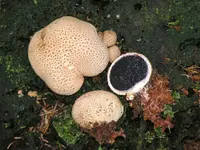
Common earthball, Scleroderma citrinum, is a terrestrial fungus rather than a leafy plant. It forms round, potato-like fruiting bodies with thick, yellow-brown, often cracked skin. Inside, the flesh turns dark and powdery as spores mature.

This species is widespread in woodlands and heathlands across Europe and North America, usually growing on the ground among leaf litter or moss. It forms partnerships with tree roots, which makes it difficult to cultivate reliably at home.

Those trying to care for common earthball should know it prefers poor, well-drained, slightly acidic soils and naturally dappled woodland light with consistent but not waterlogged moisture.


Main Plant Requirements

Care Difficulty

Moderate Care

Light Preference

Partial Shade

Water Requirements

Moderate Water

Temperature Preference

Cold Hardy

Hardiness Zone

4–9

Soil Texture

Loamy, Sandy, Organic-rich

Soil pH

Acidic (5.5–6.5), Slightly acidic (6.5–7.0)

Soil Drainage

Well-drained

Fertilization

Minimal (feed rarely)

Get Personalized Care Plan

Scan your plant to receive care tips personalized for your specific plant

Available on iOS and Android

How to Care for the common earthball

Scleroderma citrinum, known as common earthball, develops best in dappled woodland-style light rather than open sun.

  • Provide bright shade or light filtered sun, such as under trees or shrubs, with only 1–3 hours of gentle morning sun per day.
  • Avoid strong midday and afternoon sun, which can overheat the soil surface and dry the fungal habitat too quickly.
  • In summer, rely on partial to deep shade; in cooler seasons, slightly more open light is acceptable as long as the soil does not bake.

Water management focuses on maintaining consistently moist, but not saturated, soil around the host tree roots.

  • Allow the top 2–5 cm of soil to dry slightly between natural rains or supplemental watering, then moisten thoroughly without pooling.
  • Use well-drained, sandy or loamy soil so excess water moves away fast; persistent puddles or sour, swampy smell indicate overwatering risk for Scleroderma citrinum.
  • In dry, hot periods, watch for cracked soil or shrinking fruiting bodies as cues to irrigate, while in cool, wet seasons avoid any extra watering.

This species is adapted to temperate woodland climates with cool to mild conditions through most of the year.

  • Optimal fruiting occurs around 55–70°F (13–21°C), with mycelium growth continuing, though slower, from about 45–75°F (7–24°C).
  • It tolerates short dips near 25–30°F (-4– -1°C) once established, but repeated hard freezes and bare, exposed soil can reduce fruiting.
  • Heat above 80–85°F (27–29°C), especially with dry soil, may suppress fruiting, so shade, leaf litter, and soil moisture help buffer summer extremes.

Humidity is not a key factor for Scleroderma citrinum, which naturally tolerates a wide range of outdoor conditions.

This ectomycorrhizal fungus needs well-aerated, free-draining ground rather than dense, enriched garden beds.

  • Favors sandy or sandy-loam soils with low to moderate organic matter, often under trees where leaf litter accumulates lightly.
  • Prefers slightly acidic to neutral conditions, roughly pH 5.0–7.0, similar to typical forest soils.
  • Avoid compacted clay, waterlogged spots, or heavily fertilized beds, which reduce oxygen and disrupt fungal–root partnerships.
  • For encouraging Scleroderma citrinum, leave leaf litter, small twigs, and undisturbed tree-root zones instead of adding compost-heavy mixes.

This species is not suitable for long-term container growing, as it depends on complex root and soil relationships found in the ground.

This ectomycorrhizal fungus relies on its tree host, so common earthball usually needs no direct fertilization.

Pruning is not relevant for Scleroderma citrinum because it is a fungal fruiting body, not a leafy plant or shrub.

Transplanting focuses on moving infected soil or host trees rather than handling the fungal body itself.

  • Only consider transplanting when establishing or moving young host trees already associated with the fungus in their root zone.
  • Plan moves in cool, moist seasons, typically early spring or fall, to limit stress on tree roots and fungal hyphae.
  • Preserve as much original root-ball soil as possible, keeping mycorrhizal roots shaded and moist during the move.
  • Replant at the same soil depth, water thoroughly, and avoid disturbing the area afterward so the symbiosis can reestablish.

Deliberate propagation is rarely attempted, as Scleroderma citrinum spreads naturally via spores and mycorrhizal roots.

This species is naturally cold hardy in its native range and requires no special winter care in the ground.

Care Tips

Host tree selection

Establish this ectomycorrhizal fungus near compatible host trees such as pine, spruce, oak, or birch, and avoid isolated lawn areas with no woody hosts, since its long‑term presence depends on forming root partnerships with these trees.

Minimal soil disturbance

Once fruiting bodies appear in a site, flag or mark the area and keep raking, rototilling, and deep digging away from that zone to preserve the fine mycelial network that drives future sporocarp production.

Low‑nutrient management

Maintain relatively low soil fertility by avoiding routine lawn fertilizers, heavy compost additions, or manure in the colonized zone, since high nitrogen and phosphorus can suppress this fungus in favor of competing decomposers.

Leaf litter handling

Allow a thin, patchy layer of leaf litter to remain under host trees to conserve moisture and support hyphal growth, but avoid piling thick, wet mulch directly over visible fruiting bodies to reduce the risk of rot.

Spore spread assistance

To support growing common earthball populations on a property, gently crumble older, fully mature fruiting bodies in the same woodland area during dry weather so that spores disperse locally without waterlogging the interior tissue.

Common Pests and Diseases

Mycophagous springtails

These insects feed on fungal tissue, often tunneling into developing fruiting bodies and leaving pitted, scarred surfaces. This pest can reduce the visual quality of the earthball and speed up decay in very damp sites.

Solution

Limit chronically wet, compacted surfaces around the fruiting bodies by improving drainage and avoiding standing water, which reduces springtail populations. In contained cultivation, allow the substrate surface to dry slightly between waterings and, if needed, use fine mesh or physical barriers to keep springtails from accessing young fruiting bodies.

Fungivorous mites

These insects puncture and graze the outer layers of the fruiting body, leading to rough, discolored patches and premature collapse of the tissue. Damage is usually worse in very humid, stagnant conditions with abundant organic debris.

Solution

Reduce mite pressure by keeping the surrounding substrate moderately moist rather than saturated and by removing excessive leaf litter that shelters mites. In trays or controlled culture, increase ventilation, avoid overfeeding organic amendments, and if infestation is heavy, discard heavily damaged specimens and reset the substrate rather than attempting chemical control.

Slugs and snails

These pests chew irregular holes in the outer rind and may hollow out soft inner tissues, often leaving slime trails and exposed spore mass. Damage is most common in shaded, moist environments with dense ground cover.

Solution

Manage slugs and snails by removing nearby debris that offers daytime shelter and by using physical barriers such as copper tape or coarse grit around cultivation areas. In small outdoor beds, hand-pick at dusk or after rain and, if necessary, use iron phosphate slug baits placed away from desirable wildlife habitats.

Bacterial soft rot

This disease causes sections of the fruiting body to become water-soaked, foul-smelling, and mushy, often starting where the rind has been damaged. Symptoms include rapid collapse and liquefaction of inner tissues under very wet, warm conditions.

Solution

Limit the risk of soft rot by avoiding prolonged saturation of the soil surface and by minimizing mechanical damage to the outer rind during observation or harvest. Remove and dispose of any fruiting bodies that show soft, foul-smelling decay to reduce bacterial load in confined growing setups and adjust watering so the surface can dry slightly between wet periods, which supports more stable Scleroderma citrinum care.

Interesting Facts

False truffle structure

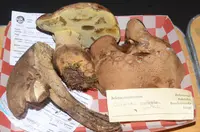
This fungus forms a dense, potato-like ball with a thick, tough outer skin and a dark, powdery spore mass inside, rather than a typical cap-and-stem mushroom. The interior quickly turns from pale to purplish-black as the spores mature, which helps distinguish it from true edible puffballs.

Mycorrhizal forest partner

It forms ectomycorrhizal associations with the roots of many broadleaf and conifer trees, including oak and pine. In this partnership, the fungus helps trees absorb water and minerals, especially phosphorus, while receiving sugars produced by the tree through photosynthesis.

Poisonous look-alike

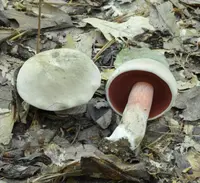
The species is considered poisonous and can cause severe gastrointestinal symptoms if eaten. Its tough rind, lack of a clear stem, and dark marbled interior before full spore maturity help separate it from edible puffball species used as food.

Botan icon

Did you know?

The spores of this earthball are often dispersed when small mammals, such as rodents, dig into the fruiting body to investigate or eat parts of it, breaking it open and releasing large quantities of spores into the leaf litter and surrounding soil.

FAQs about common earthball

This fungus is considered poisonous and must not be eaten. It can cause severe gastrointestinal upset and, in some cases, more serious systemic symptoms. Children and pets should be kept from handling or ingesting it.

Grow Healthy Plants with Botan Care

Keep your plants happy and healthy with plant identification, disease detection, and easy care guidance.

Botan plant care app — identify plants on mobile

Explore More Plants