Support trailing stems
Provide a low trellis, hoop, or moss pole near the pot so stems can be gently tied and directed, which keeps the plant compact and reduces the risk of breakage at the base.

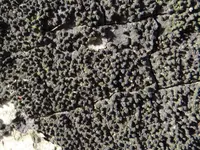
Wood mulberry (Bertia moriformis) is a small, decorative houseplant valued for its dense, mulberry-like clusters of dark, bead-shaped growths along its stems. It has a compact, slightly trailing habit that suits shelves, small tables, and terrariums, making it popular for limited indoor spaces.
This species comes from tropical forest environments, where it grows in warm, humid, shaded conditions. It is considered moderately challenging, as it dislikes cold drafts, low humidity, and inconsistent moisture. Light, porous soil and stable indoor conditions are important when learning how to care for Wood Mulberry.

Care Difficulty
Moderate Care

Light Preference
Partial Shade

Water Requirements
Moderate Water

Temperature Preference
Warm Climate

Hardiness Zone
Unknown

Soil Texture
Loamy

Soil pH
Slightly acidic (6.5–7.0)

Soil Drainage
Well-drained

Fertilization
Minimal (feed rarely)
Scan your plant to receive care tips personalized for your specific plant
Available on iOS and Android
This tropical shrub prefers bright, gentle light and is sensitive to harsh sun exposure.
This species prefers evenly moist, well-drained soil and reacts poorly to extremes of wet or dry.
This plant grows best in warm, frost-free conditions with only mild temperature swings.
This species prefers moderately moist air and reacts if conditions are too dry.
Bertia moriformis benefits from a loose, humus-rich substrate that drains freely yet stays lightly moist.
This species adapts well to container growing when root room and drainage are carefully managed.
This species grows slowly and needs only light feeding when cultivated, especially in containers.
Bertia moriformis benefits from occasional, light structural pruning to maintain a healthy framework.
This tree is better suited to ground planting than long-term container culture, so focus on careful transplanting.
Garden propagation of this species is specialized and not often attempted by home growers.
This species is moderately cold tolerant in suitable climates and usually needs only basic winter care in the ground.

Plant Health Check
Not sure what's wrong with your plant? Check your plant's health inside the app.
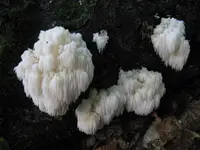
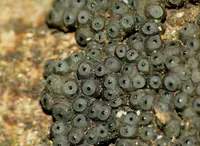
The fruiting bodies form dense clusters of tiny, mulberry-like lobes that age from pale to dark, often becoming overgrown with natural green algae, which gives the plant a soft, mossy look despite being a true fern relative.
Although it does not look like a typical fern, this species is a terrestrial clubmoss ally in the family Lycopodiaceae, producing spores instead of flowers and seeds as its means of reproduction.
In nature it is known from a limited range in tropical Southeast Asia and parts of the western Pacific, where it grows on shaded forest floors in consistently warm, humid conditions.
Growth is generally slow to moderate. Young plants may add only a few inches each year, then speed up slightly once established. Container conditions, light levels, nutrition, and root space strongly influence overall growth rate.
Keep your plants happy and healthy with plant identification, disease detection, and easy care guidance.