Select proper host
Establish cultures only on well-decayed conifer wood with a soft, spongy texture, as fresher or very hard logs resist colonization and slow mycelial spread.

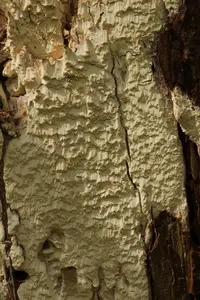
Yellow porecrust (Amyloporia xantha) is a crust-forming wood-decay fungus, not a leafy houseplant. It grows as a thin, bright yellow to ochre layer tightly attached to dead or dying wood. The surface is usually smooth to slightly bumpy, with tiny pores where spores are released. In nature it occurs on conifer logs and stumps in temperate forests, helping break down lignin and other wood components. It is not a decorative species and is rarely cultivated, so learning how to care for yellow porecrust is mainly relevant to those studying wood-inhabiting fungi. In general it prefers shaded, consistently moist, well-rotted wood rather than soil.

Care Difficulty
Moderate Care

Light Preference
Partial Shade

Water Requirements
Moderate Water

Temperature Preference
Warm Climate

Hardiness Zone
Unknown

Soil Texture
Loamy

Soil pH
Slightly acidic (6.5–7.0)

Soil Drainage
Well-drained

Fertilization
Minimal (feed rarely)
Scan your plant to receive care tips personalized for your specific plant
Available on iOS and Android
This wood-decaying fungus prefers low to moderate natural light similar to shaded forest conditions.
Moist but not waterlogged wood is essential for stable development of this crust fungus.
This species performs best in cool to mild conditions typical of temperate forests.
This wood-decaying fungus tolerates a broad humidity range but fruits best in consistently moist air.
Amyloporia xantha grows on wood rather than in soil, so focus on the properties of its woody substrate.
This species is not naturally suited to decorative container growing, but cultivation on contained wood blocks is possible for study or display.
This wood-decaying fungus usually grows on nutrient-rich hosts and does not need additional fertilization in cultivation.
Amyloporia xantha does not require true pruning, but fruiting bodies can be managed for hygiene and observation.
This fungus is usually established on dead or declining wood, so care focuses on positioning new substrate rather than classic repotting.
Cultivation of this species is specialized, and routine home propagation is uncommon and technically demanding.
In temperate climates this wood-inhabiting fungus is naturally cold hardy and needs little active winter care.

Plant Health Check
Not sure what's wrong with your plant? Check your plant's health inside the app.
This wood-decay fungus is distinguished by its bright yellow to sulfur-yellow pore surface on the underside of the fruiting body, which helps separate it from many similar brown-rot polypores.
It causes brown rot, a type of wood decay where the fungus primarily breaks down cellulose and hemicellulose but leaves modified lignin, resulting in dry, brown, cubically cracked wood in conifer hosts.
This species is most often recorded on dead or decaying conifer wood, including structural timber, where it can weaken wood by reducing its strength and integrity over time.
This fungus spreads gradually along dead or decaying wood, forming crust-like patches, but is not considered aggressively invasive in natural settings. In structures, it can slowly extend through moist, untreated timber if underlying moisture problems persist.
Keep your plants happy and healthy with plant identification, disease detection, and easy care guidance.