Bear's Head Tooth Care (Hericium americanum)

Bear's Head Tooth

About Bear's Head Tooth

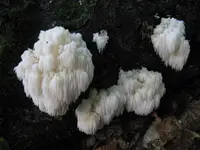
Bear's head tooth, Hericium americanum, is a toothed edible mushroom rather than a leafy plant. It forms cascading clusters of soft, white spines that hang like icicles from dead or dying hardwood trees.

This fungus is native to North America and is most often found in temperate forests on beech, maple, or oak logs. It tends to fruit in cool, moist conditions, which can make it somewhat challenging to cultivate consistently at home.

Those who care for Bear's Head Tooth usually focus on providing clean hardwood-based substrate, steady moisture, and good fresh air exchange to support healthy, well-formed fruiting bodies.

Main Plant Requirements

Care Difficulty

Hard Care

Light Preference

Shade

Water Requirements

Keep Soil Moist

Temperature Preference

Cool Climate

Hardiness Zone

4–9

Soil Texture

Loamy, Organic-rich

Soil pH

Acidic (5.5–6.5)

Soil Drainage

Moist but well-drained

Fertilization

Minimal (feed rarely)

Get Personalized Care Plan

Scan your plant to receive care tips personalized for your specific plant

Available on iOS and Android

How to Care for the Bear's Head Tooth

This fungus prefers cool, shaded forest conditions with indirect light rather than direct sun exposure.

  • Provide dappled or filtered light, similar to a north-facing edge of woodland, avoiding strong midday sun that can dry the substrate and damage developing spines of Bear's Head Tooth.
  • Aim for 1–3 hours of soft morning sun at most, with the rest of the day in shade or bright indirect light under trees or shade cloth.
  • In summer, increase shading as canopy thins or if grown on exposed logs; in cooler seasons, allow a little more indirect light without exposing it to harsh, drying wind.

Hericium americanum needs consistently moist, never waterlogged, conditions around its substrate to form healthy fruiting bodies.

  • Maintain evenly moist wood or substrate, allowing only the outer 1–2 cm to start feeling slightly dry before rehydrating with a thorough soak or slow hose spray.
  • Ensure surplus water can drain or run off so the substrate is moist but not standing in puddles, which encourages rot and anaerobic bacteria.
  • In hot or windy weather, monitor daily for drying and rewet more often; pale, shrunken, or toughening spines usually indicate underwatering, while sour odor and slimy patches suggest excess moisture.

This species fruits best in cool to mild conditions and is sensitive to both hard frost and intense heat.

  • Target 55–70°F (13–21°C) for reliable growth and fruiting, keeping the substrate cool and shaded to prevent drying and stress.
  • Short exposures down to about 30°F (-1°C) may be tolerated in dormant mycelium, but fruiting bodies are damaged by frost and should be protected from freezing nights.
  • When temperatures exceed 75–80°F (24–27°C), provide extra shade and humidity; above 85°F (29°C) fruiting usually stalls and the organism is prone to drying and contamination.

This fungus needs high humidity to form healthy, full fruiting bodies.

  • Maintain 85–95% relative humidity around developing clusters for consistent size and texture in Bear's Head Tooth.
  • Dry air causes yellowing, shrinking tips, cracked spines, and premature hardening of the fruiting body.
  • Increase humidity with a sealed fruiting chamber, frequent fine misting of walls (not directly on mushrooms), and a moist but not dripping substrate.

In natural settings this species grows on hardwood, but for cultivation it needs a loose, moist, lignin-rich substrate rather than typical garden soil.

  • Use a mix based on sterilized hardwood sawdust or pellets with 20–40% wheat bran or soy hulls for nutrients and structure.
  • Ensure the substrate holds moisture evenly but still allows air pockets; avoid dense, compacted mixes that stay waterlogged.
  • Aim for slightly acidic to neutral conditions, roughly pH 5.5–7.0, which support stable mycelial growth of Hericium americanum.
  • Improve aeration by keeping substrate particle size varied and packing bags or blocks only firmly enough to hold shape, not tightly compressed.

Hericium americanum grows well in containers when treated as a compact substrate block rather than a potted plant.

  • Select a stable, low, wide container or grow bag so the heavy fruiting block does not tip as clusters enlarge on one side.
  • Use side slits or removable lid vents in the container to direct where fruiting bodies emerge and to improve localized airflow.
  • Choose thicker plastic or food-grade buckets for better moisture retention, then adjust air holes so the block does not dry out along edges.

This wood-decay fungus relies mainly on nutrient-rich hardwood, so Bear's Head Tooth needs only light supplemental feeding in cultivation.

  • Use a mild, balanced liquid fertilizer at 1/4–1/2 strength if the supplemented sawdust or log substrate seems depleted.
  • Feed every 4–6 weeks only during active growth and flushes, avoiding heavy salt buildup in the substrate.
  • Skip fertilizer in winter or between fruiting cycles when mycelial activity slows.
  • Organic options such as well-aged compost extract or diluted fish emulsion can support long-term substrate nutrition.

Hericium americanum does not require structural pruning, but light trimming of fruiting bodies can improve hygiene and appearance.

  • Harvest clusters cleanly at the base with a sharp knife or scissors when spines elongate and turn bright white.
  • Remove damaged, discolored, or overly wet tissue promptly to limit bacterial and mold problems.
  • Cut away crowded or fused fruiting bodies to improve airflow and reduce moisture trapping.
  • Sanitize tools before use so wounds on the substrate or nearby wood do not introduce pathogens.

This species is usually grown on hardwood logs or supplemented sawdust blocks, so management focuses on renewing or shifting colonized substrate rather than classic repotting.

  • Shift colonized blocks when surface dries rapidly, pins form only on edges, or growth slows despite good moisture.
  • Transplant outdoor log cultures in early spring or fall, moving them to shaded, humid locations with good airflow.
  • Expect to renew or replace exhausted blocks every 1–3 years, depending on wood type and fruiting intensity.
  • Handle colonized substrate gently, minimizing impact and exposure to sun and wind, then rehydrate with a careful soak to reduce mycelial stress.

Hericium americanum is typically propagated using tissue culture or grain spawn rather than traditional garden methods.

  • Use clean grain spawn from a reputable supplier to inoculate sterilized sawdust or pre-drilled hardwood logs.
  • Inoculate in spring or early summer so mycelium colonizes fully before extreme heat or winter cold.
  • Maintain 65–75°F and high humidity during colonization, protecting substrate from direct sun and drying drafts.
  • For advanced growers, clone healthy tissue from fresh fruiting bodies onto sterile agar, then expand to grain.

Outdoor log-grown Hericium americanum is hardy in many temperate climates and usually needs only modest winter management.

  • Allow fully colonized logs to experience normal winter chilling, which often supports future fruiting cycles.
  • Apply a 5–8 cm layer of leaf mulch around partially buried logs to moderate freeze–thaw stress at the contact zone.
  • Keep container blocks in an unheated but frost-free space if prolonged temperatures below 20°F are expected.
  • Avoid waterlogged conditions around logs or blocks, as saturated, frozen substrates increase tissue damage and rot risk.

Care Tips

Dial-in fresh air

Provide gentle, continuous fresh air exchange in the fruiting area using a small fan pointed away from the blocks to prevent CO₂ buildup and leggy, drooping teeth while keeping air movement mild enough that surfaces do not dry out.

Surface mist control

Mist the air and the outside of the grow tent or chamber walls rather than the developing clusters directly, which maintains the high humidity Hericium americanum needs without causing waterlogging or bacterial spotting on the fruiting bodies.

Block wrapping strategy

Wrap supplemented sawdust blocks tightly in autoclavable filter bags and only cut a single, small X-shaped opening for fruiting, which channels the mushroom’s energy into one strong cluster and limits contamination points when growing Bear's Head Tooth.

Cold shock timing

After full colonization, drop the temperature by about 5–10°F for 24–48 hours to encourage uniform primordia (baby mushroom) formation, then return to the normal fruiting temperature range to support steady growth.

Harvest and regrow

Cut clusters cleanly at the base with a sharp knife while some tips are still short and white, then let the block rest 5–7 days and resume normal humidity and fresh air to encourage a second or even third flush from the same substrate.

Common Pests and Diseases

Green mold

This disease appears as fast-spreading green patches on the developing mushroom surface or on the substrate, often caused by Trichoderma species. Symptoms include stalled growth, deformed fruiting bodies, and a strong earthy or sour odor.

Solution

Promptly remove and discard any heavily contaminated blocks or bags to prevent spore spread, and clean the growing area with a dilute bleach or 70% isopropyl alcohol solution. For future Hericium americanum care, use fully pasteurized or sterilized substrate, maintain good fresh air exchange without strong drafts, and avoid introducing unfiltered outdoor air during early colonization.

Bacterial blotch

This disease causes water-soaked, slimy, or greasy-looking spots on spines and lobes, which may turn tan or brown and emit an unpleasant odor. Symptoms include soft tissue that collapses easily when touched.

Solution

Improve air movement around the fruiting bodies, reduce surface wetness by avoiding heavy misting, and ensure humidity stays high without condensation directly on the mushrooms. Remove and discard affected clusters, sanitize tools and surfaces, and lower temperature slightly if the grow area is very warm and stagnant.

Cobweb mold

This disease shows as very fine, grayish-white, cobweb-like growth that quickly covers substrate or young clusters, often caused by Cladobotryum species. Symptoms include rapid spread toward mushroom tissue and eventual browning or collapse of affected areas.

Solution

Increase fresh air exchange immediately and isolate the affected block; remove heavily infested tissue with clean tools and discard it in a sealed bag. Spot-treat early, small patches by lightly misting with a 3% hydrogen peroxide solution, and prevent recurrence by avoiding overly still, humid air and by keeping the grow room cleaned between cycles.

Sciarid flies

These insects, often called fungus gnats in mushroom farms, lay eggs in the substrate and their larvae feed on mycelium and young primordia. This pest can cause poor pin formation, tunneling damage, and can vector other fungi and bacteria into the grow.

Solution

Use fine insect screening on air inlets, sticky traps near but not directly over the blocks, and avoid leaving wet organic debris in or near the grow room. In more persistent cases, apply a biological control such as Bacillus thuringiensis israelensis (BTi) to the substrate according to label directions and rotate crops to break the life cycle.

Hypomyces infection

This disease, caused by parasitic fungi such as Hypomyces, leads to distorted, felt-like growth that overgrows the normal tooth structure and may change color from white to yellowish or reddish. Symptoms include arrested mushroom development and a tough, cottony or crusty texture on affected areas.

Solution

Immediately remove and discard any infected fruiting bodies and their substrate to reduce spore load, and thoroughly clean racks, walls, and tools with an appropriate disinfectant. For growing Bear's Head Tooth again in the same space, use fresh substrate, maintain strong hygiene during inoculation, and avoid reusing any surfaces or tools that are not fully sanitized.

Interesting Facts

Distinct branching spines

Unlike the closely related lion’s mane, this species forms several thick branches covered in downward-hanging spines rather than a single pom-pom mass, giving it the “bear’s head tooth” appearance.

Old hardwood specialist

It typically fruits on large, well-decayed logs or standing snags of hardwoods such as beech and maple, playing a key role in breaking down lignin and cellulose in mature temperate forests.

Recognized edible species

This fungus is widely regarded by mycologists as a good edible with a firm, meaty texture and mild, seafood-like flavor, which has led to increasing interest in how to take care of Bear's Head Tooth in small-scale cultivation.

Botan icon

Did you know?

Hericium americanum is one of only a few North American tooth fungi that consistently produces large, showy fruiting bodies high on standing dead trees, which makes it unusually visible and often easier to spot than many other wood-decay fungi that remain close to the forest floor.

FAQs about Bear's Head Tooth

Yes, the fruiting body is edible and considered a choice culinary mushroom when harvested fresh and cooked thoroughly. It is also studied for potential medicinal properties, but supplements and extracts should be used cautiously and preferably under professional guidance.

Grow Healthy Plants with Botan Care

Keep your plants happy and healthy with plant identification, disease detection, and easy care guidance.


Botan plant care app — identify plants on mobile

Explore More Plants