Trunk protection
Install a white tree guard or wrap the lower trunk with breathable tree wrap from late fall to early spring to prevent sunscald and frost cracks, removing it each spring to avoid moisture buildup and pests.

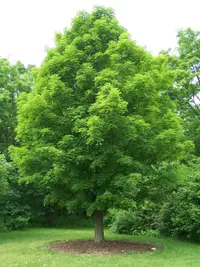
Sugar maple, Acer saccharum, is a long-lived deciduous tree known for its dense crown, strong trunk, and brilliant orange-red fall color. It is native to eastern and central North America and is a defining species of many hardwood forests there.
The tree grows best in cool to temperate climates and prefers moist, well-drained, slightly acidic soils. It has moderate growth speed and forms a large canopy, so it needs space and is not suitable for small gardens or containers.
Because it dislikes compacted soil, drought, and urban pollution, it can be more demanding than some other maples. Gardeners who learn how to care for sugar maple often value it for long-term shade and landscape structure.

Care Difficulty
Moderate Care

Light Preference
Full Sun

Water Requirements
Moderate Water

Temperature Preference
Cold Hardy

Hardiness Zone
3–8

Soil Texture
Loamy, Sandy, Clay

Soil pH
Acidic (5.5–6.5), Slightly acidic (6.5–7.0)

Soil Drainage
Moist but well-drained

Fertilization
Minimal (feed rarely)
Scan your plant to receive care tips personalized for your specific plant
Available on iOS and Android
Acer saccharum prefers bright outdoor light levels that support strong growth and stable leaf color.
Acer saccharum needs consistent soil moisture, especially during establishment and summer heat.
This species is a cold-hardy tree that performs best in climates with cool winters and moderate summers.
This species tolerates a wide humidity range and does not need special humidity control outdoors.
This tree prefers deep, moist, well-structured mineral soil with consistent drainage.
This species is generally unsuited to long-term container growing due to its large size and deep root system.
Acer saccharum usually grows well in reasonably fertile soil and benefits from modest, thoughtful feeding in managed landscapes.
Acer saccharum responds best to light, structural pruning rather than heavy cutting.
Sugar maple is most often grown in the ground, so focus on careful transplanting rather than frequent repotting.
Acer saccharum is mainly propagated from seed, which demands patience and specific conditions for good germination.
Established Acer saccharum trees are cold hardy and usually need minimal winter care in their suitable climate range.

Plant Health Check
Not sure what's wrong with your plant? Check your plant's health inside the app.
Sugar maple is the main tree species tapped for traditional maple syrup production in North America because its xylem sap has a relatively high sucrose concentration and flows strongly during freeze–thaw cycles in late winter.
The wood of sugar maple is dense, hard, and fine-grained, making it a preferred material for flooring, cutting boards, bowling alleys, and musical instruments, especially when it shows the distinctive curly or birdseye figure.
In natural forests, sugar maple seedlings and saplings can survive for many years in deep shade under a closed canopy and then accelerate growth rapidly when a gap opens, which helps this species dominate many northeastern hardwood forests.

Exceptional sugar maple individuals can live for more than 300 years and reach heights around 80–100 ft with very broad crowns, making them among the most long-lived and imposing deciduous trees in eastern North America.
This species usually grows about 30–60 cm per year under good conditions, which is considered a moderate rate. Growth is faster in deep, moist, well‑drained soils and cooler climates, slower in dry or compacted sites.
Keep your plants happy and healthy with plant identification, disease detection, and easy care guidance.