nopal tapón Care (Opuntia robusta)

Also known as: wheel cactus, Blue-leaf Cactus, Spiny Blue-Leaf Cactus
Alex Yar, Botan author
Reviewed byAlex Yar
Plant Expert

About nopal tapón

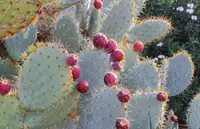
Nopal tapón, Opuntia robusta, is a shrubby to tree-like cactus known for its large, round, blue-green pads and sturdy, upright structure. It often forms a strong, sculptural clump over time.

This species is native to arid and semi-arid regions of Mexico, where it thrives in rocky, well-drained soils and intense sun. Its thick pads store water, which makes it highly drought tolerant and generally easy to keep alive in dry climates.

Few pests bother it, but spines and tiny glochids can cause skin irritation during handling. Good drainage, bright light, and restrained watering are the main points to remember when learning how to care for nopal tapón.

Main Plant Requirements

Care Difficulty

Easy Care

Light Preference

Full Sun

Water Requirements

Low Water

Temperature Preference

Warm Climate

Hardiness Zone

8–11

Soil Texture

Sandy, Loamy, Rocky

Soil pH

Slightly acidic (6.5–7.0), Slightly alkaline (7.0–7.5)

Soil Drainage

Well-drained

Fertilization

Minimal (feed rarely)

Get Personalized Care Plan

Scan your plant to receive care tips personalized for your specific plant

Available on iOS and Android

How to Care for the nopal tapón

This cactus prefers strong, direct light to maintain compact growth and firm pads.

  • Provide 6–10 hours of full sun daily; morning and midday sun are ideal, with light afternoon shade in very hot, arid areas.
  • Young or recently transplanted nopal tapón benefits from 1–2 weeks of filtered light or partial shade to prevent sunscald while it acclimates.
  • In cooler months, ensure it still receives several hours of direct sun; insufficient light causes elongated, weak pads and dull, pale color.

This desert cactus is highly drought-tolerant and needs infrequent, careful watering.

  • Water only when the top 5–8 cm of soil are completely dry; in hot, active growth this may mean every 2–4 weeks, less often in cooler periods.
  • Use very fast-draining, gritty soil so water runs through quickly; avoid standing water around roots or in soil basins.
  • Signs of overwatering include yellowing, soft or mushy pads and a sour smell; wrinkling or slight pad shriveling indicates it is time to water Opuntia robusta.

This species prefers warm, arid conditions and tolerates a fairly wide temperature range when kept dry.

  • Aim for 70–90°F (21–32°C) during active growth; it also handles brief heat up to about 100°F (38°C) if soil is dry and airflow is good.
  • It tolerates cool weather down to about 25°F (-4°C) for short periods when dry, but repeated freezes damage pads and young growth.
  • Protect from hard frost below 20°F (-7°C) and from extreme heat above 105°F (41°C) by providing temporary cover or light shade during those events.

Humidity is rarely a concern for this desert cactus and typical indoor levels are usually adequate.

Opuntia robusta prefers a very fast-draining, mineral-rich substrate that stays dry between waterings.

  • Use a gritty mix such as 50–70% mineral components (pumice, coarse sand, small gravel) with 30–50% cactus potting mix.
  • Aim for slightly acidic to neutral pH around 6.0–7.2, avoiding strongly acidic or clay-heavy soils that hold water.
  • Ensure the mix feels loose and crumbly; break up fine particles that compact and restrict air movement around roots.
  • Avoid peat-heavy, moisture-retentive, or unamended garden soil, which encourages root rot and slow, weak growth.

This species adapts well to container growing when stability and drainage are managed carefully.

  • Choose a wide, heavy terracotta or concrete pot to counter the paddle weight and reduce tipping in windy spots.
  • Select a container only slightly wider than the root zone so the mix dries evenly instead of staying wet at the bottom.
  • Raise the pot on feet or bricks so drainage holes stay clear and excess water exits quickly from the container base.

Opuntia robusta grows well in lean soils but benefits from light, controlled feeding in containers or very poor ground.

  • Use a diluted balanced liquid fertilizer (e.g., 10-10-10 at 1⁄4–1⁄2 strength) or a light top-dressing of compost in spring.
  • Feed during the warm growing season only, about every 6–8 weeks for potted plants; skip feeding for in-ground plants with decent soil.
  • Stop fertilizing in late summer so pads harden before cold weather and to avoid weak, overly lush growth.
  • When caring for nopal tapón, always apply fertilizer to already moist soil to limit root burn in this cactus.

Pruning Opuntia robusta is mainly done to control size, remove damage, and keep pads safely spaced.

  • Carry out pruning in late spring or early summer once frost risk has passed and new growth is visible.
  • Remove dead, shriveled, storm-damaged, or diseased pads first, cutting cleanly at the joint with sharp, disinfected pruners.
  • Thin crowded or crossing pads to improve light and air flow, which supports firmer growth and better overall structure.
  • Use thick gloves and long-handled tools to avoid spines and glochids, and dispose of pads so they cannot re-root unintentionally.

This cactus is usually grown in-ground, but container plants or young Opuntia robusta may need occasional repotting or transplanting.

  • Check for roots circling the pot, slow growth despite good light, or frequent drying out; these indicate a need to move up 1 pot size.
  • Plan transplanting or repotting for late spring to early summer, when soil is warm and the plant is actively growing.
  • For containers, repot every 3–5 years into a fast-draining cactus mix, keeping the root ball largely intact and handling pads gently.
  • After moving, water lightly once, then allow soil to dry almost completely before the next watering to limit root stress and rot.

New Opuntia robusta plants are most commonly raised from pad cuttings, with seeds used mainly for larger-scale growing.

  • Take healthy, mature pads in late spring or early summer, cutting cleanly at the joint and letting the cut end callus for 5–10 days.
  • Set callused pads upright in a gritty, fast-draining cactus mix, burying the base 2–3 cm deep for stability.
  • Keep in bright, indirect light and maintain slightly dry conditions; lightly mist or give very small sips of water until roots form.
  • For seeds, sow on the surface of well-draining mix at 70–80°F, just barely covered, and keep slightly moist until germination.

Mature Opuntia robusta tolerates light to moderate frost when well rooted and kept dry, but young or potted plants need extra winter care.

  • In-ground plants in mild, dry climates usually manage winter without cover if soil drains very sharply.
  • In colder or wetter regions, add a 5–8 cm layer of coarse mulch or gravel around the base to insulate roots and improve drainage.
  • For container plants, move pots under a roofed porch, unheated greenhouse, or indoors near a bright window before hard freezes.

Care Tips

Pad propagation timing

Take pad cuttings only from firm, fully mature segments in late spring to early summer, then air-dry the cut surface for 7–14 days until a thick callus forms before planting to minimize rot and improve strike rate.


Wind and weight support

In windy or exposed sites, anchor the base with a low rock ring or short discreet stakes and remove overly top-heavy pads to prevent the plant from uprooting or snapping at the joints as the canopy gains weight.

Tool and wound hygiene

When removing pads or shaping the plant, use a sharp, alcohol-sterilized knife or pruning saw and make clean cuts at the joint so wounds seal faster and are less likely to allow fungal or bacterial entry.

Gravel collar for dryness

Apply a 3–5 cm wide collar of coarse gravel around the stem base instead of organic mulch to keep the crown dry, reduce splash-borne disease, and discourage slugs or snails from damaging young pads while growing nopal tapón.

Summer container rotation

If grown in a pot, rotate the container by 90° every 3–4 weeks during the active growing season so pads develop evenly and the plant does not lean or twist strongly toward a single light source.

Common Pests and Diseases

Cochineal scale

This pest appears as white, cottony clusters on pads, often along veins or spine bases, and feeds on plant sap, causing yellowing and weakening of segments.

Solution

Physically remove clusters by spraying pads with a strong stream of water, then wipe remaining insects with cotton swabs dipped in 70% isopropyl alcohol. In outdoor plantings, encourage natural predators like lady beetles and, if needed, use a horticultural soap or lightweight horticultural oil labeled for cacti, applied in the evening to avoid sunburn.

Opuntia mealybug

This pest lives in pad joints and root zones, creating white, waxy masses and leading to stunted growth and occasional pad collapse.

Solution

Unpot plants to inspect and wash roots, trimming heavily infested roots and repotting into fresh, well-draining substrate. Treat above- and below-ground infestations with repeated applications of insecticidal soap or systemic insecticides labeled for succulents, keeping the plant in bright, indirect light until recovery.

Cactus longhorn beetle

This pest is a large black beetle whose larvae tunnel inside pads and stems, causing sudden pad drooping, internal decay, and structural weakness.

Solution

Inspect regularly at dusk and hand-pick adult beetles, destroying them before they lay eggs. Prune and dispose of any bored or collapsing pads, and maintain plants vigorous but not overfertilized, since lush, tender growth attracts more beetles; consider physical barriers or traps in areas where this species is common when planning Opuntia robusta plant care outdoors.

Fusarium wilt

This disease causes localized yellowing, internal brown streaks in pads, and gradual collapse, often entering through wounds or stressed tissue.

Solution

Remove and discard all affected pads, cutting well into healthy tissue and sterilizing cutting tools between cuts. Improve drainage, avoid overhead watering, and reduce mechanical injury to pads; in landscape settings, do not replant susceptible cacti in the same infected soil area for several years.

Anthracnose

This disease produces sunken, tan to dark brown spots on pads that may ooze and later dry into scabby lesions, often following warm, humid, or rainy periods.

Solution

Prune and dispose of infected pads promptly, keeping cuts clean and angled to shed water. Improve air circulation, avoid wetting pads when watering, and in persistent cases apply a copper-based fungicide labeled for ornamental cacti during warm, wet spells according to label directions.

Interesting Facts

Circular paddle shape

This species forms unusually large, almost perfectly circular cladodes (pads), sometimes over 40 cm across, which makes it easy to distinguish from many other flat-padded Opuntia species with more oval segments.

Specialist herbivore relationship

In its native Mexican range, the blue cactus pad bug, Chelinidea staffilesi, commonly feeds on this species, using its piercing mouthparts to extract sap from the large pads without typically killing the plant.

Blue-grey waxy coating

The pads often show a distinctive blue-grey or glaucous surface caused by a waxy cuticle, which reflects sunlight and reduces water loss in its arid habitats.

Botan icon

Did you know?

In some parts of central Mexico, large, mature plants of this species are intentionally planted and maintained as living fences, where their broad, spiny pads form dense, long-lasting barriers for livestock control and property boundaries.

FAQs about nopal tapón

Young pads and ripe fruits are edible when properly cleaned and de-spined, and are used in traditional Mexican cuisine. Avoid old, woody pads. People with latex or cactus allergies should try small amounts first and monitor reactions.

Grow Healthy Plants with Botan Care

Keep your plants happy and healthy with plant identification, disease detection, and easy care guidance.

Botan plant care app — identify plants on mobile

Explore More Plants