


Rock mulch ring
Create a 10–20 cm wide ring of coarse rocks or gravel around the base to keep leaves off wet soil, reduce splash-back on the trunk, and mimic the rocky conditions that limit rot in habitat.

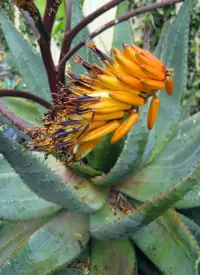
Mountain aloe (Aloe marlothii) is a large, slow-growing succulent tree aloe known for its thick trunk and bold, upright rosettes of stiff, spiny leaves. Mature plants form a strong architectural shape that stands out in dry gardens and large containers.
In its native range in southern Africa, it grows on rocky slopes and open hillsides in hot, sunny, and arid conditions. This origin makes it very drought tolerant but sensitive to prolonged cold and poor drainage.
For those who want to care for Mountain aloe successfully, it helps to provide maximum light, minimal but deep watering, and a sharply draining, gritty soil mix.

Care Difficulty
Moderate Care

Light Preference
Full Sun

Water Requirements
Low Water

Temperature Preference
Warm Climate

Hardiness Zone
9–11

Soil Texture
Sandy, Loamy, Rocky

Soil pH
Slightly acidic (6.5–7.0), Neutral (7.0)

Soil Drainage
Well-drained

Fertilization
Minimal (feed rarely)
Scan your plant to receive care tips personalized for your specific plant
Available on iOS and Android
This large aloe thrives with strong, direct sun and open exposure in most warm climates.
This succulent prefers deep, infrequent watering and fast-draining soil to prevent root rot.
This species prefers warm, arid conditions and tolerates substantial heat once established.
This species is adapted to dry air, so typical indoor humidity is usually suitable for Mountain aloe.
This succulent needs very fast-draining, mineral-based soil to prevent root and stem rot.
This species is suitable for container growing when the pot is chosen for drainage and stability.
Aloe marlothii benefits from light, infrequent feeding rather than heavy fertilization.
Pruning Aloe marlothii focuses on hygiene and safety rather than shaping the plant.
Mountain aloe is usually grown outdoors and only needs infrequent repotting or transplanting.
Aloe marlothii is most often propagated from offsets, with seed used for larger-scale growing.
Aloe marlothii is drought tolerant but only moderately frost hardy, so winter care matters in colder climates.

Plant Health Check
Not sure what's wrong with your plant? Check your plant's health inside the app.
This species forms a single massive rosette on a short, stout trunk, with stiff, broad leaves up to 1.5 m long that are densely armed with large reddish spines along both the edges and the leaf surfaces.
Mature plants produce tall, candelabra-like inflorescences with many side branches, each carrying dense clusters of tubular orange to red flowers that provide a major winter nectar source for sunbirds in its native range.
The species occurs across a broad swath of southern Africa, from South Africa into Eswatini, Mozambique, and Botswana, typically on rocky slopes and open savanna where it tolerates intense sun and seasonal drought.

Aloe marlothii shows marked regional variation, and some botanists have described distinct subspecies or local forms based on differences in leaf spines, branching pattern of the flower stalks, and flower color across its wide native range.
Lack of flowers often comes from insufficient full sun, a plant that is still too young, or mild winter conditions. This species blooms best after several years when exposed to strong light and a noticeable cool, dry winter rest.
Keep your plants happy and healthy with plant identification, disease detection, and easy care guidance.

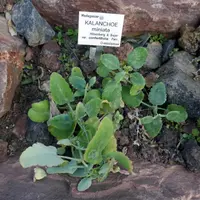
Kalanchoe miniata
Kalanchoe miniata
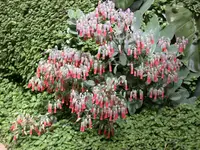
Kalanchoe laxiflora
Kalanchoe laxiflora
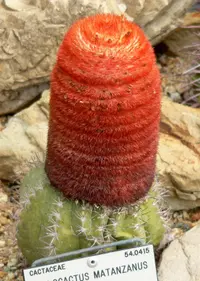
Dwarf turk's cap cactus
Melocactus matanzanus
 POPULAR
Hoya Hearts
Hoya kerrii
Butterfly agave
Agave potatorum
bitter root
Lewisia rediviva
Haworthia cooperi var. pilifera
Haworthia cooperi var. pilifera
nylon hedgehog cactus
Echinocereus viridiflorus