Aichryson villosum Care

Aichryson villosum

About Aichryson villosum

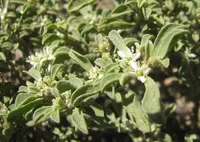
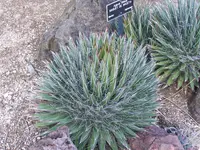
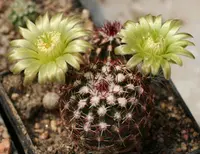
Aichryson villosum is a small, shrubby succulent from the Canary Islands, valued for its compact rosettes of fleshy, softly hairy leaves. The stems stay relatively low and branching, giving the plant a dense, cushion-like form that suits windowsills and small indoor spaces.

This species prefers bright, indirect light and moderate watering, with a well-drained, gritty substrate typical for succulents. Its drought tolerance and slow, manageable growth make it suitable for beginners who want to care for Aichryson villosum without complex routines.

Main Plant Requirements

Care Difficulty

Moderate Care

Light Preference

Bright Indirect Light

Water Requirements

Low Water

Temperature Preference

Tropical / Frost Sensitive

Hardiness Zone

10–11

Soil Texture

Sandy, Loamy, Rocky

Soil pH

Slightly acidic (6.5–7.0), Neutral (7.0)

Soil Drainage

Well-drained

Fertilization

Minimal (feed rarely)

Get Personalized Care Plan

Scan your plant to receive care tips personalized for your specific plant

Available on iOS and Android

How to Care for the Aichryson villosum

This compact succulent prefers bright, gentle light that avoids harsh midday sun.

  • Provide 4–6 hours of bright morning sun or bright filtered light; east or lightly shaded south exposure suits Aichryson villosum well.
  • Offer light afternoon shade outdoors to prevent leaf scorch, pale patches, or crisped edges from intense sun, especially in summer.
  • If stems stretch, leaves space out, or color dulls, increase light gradually; in winter, move closer to the brightest window or use a weak grow light.

This species stores water in its tissues and benefits from a thorough-dry cycle.

  • Water only when the top 2–4 cm of soil are completely dry; in average home conditions this often means every 7–14 days in active growth.
  • Use a gritty, fast-draining mix and let excess water drain fully; a persistently wet, heavy substrate greatly increases root rot risk for Aichryson villosum.
  • In winter or cool, low-light periods, extend intervals between waterings; wrinkling, drooping leaves suggest thirst, while mushy, yellowing leaves indicate overwatering.

This plant prefers mild, frost-free conditions similar to a cool, bright patio or windowsill.

  • Aim for 60–75°F (16–24°C) for steady growth; short periods up to 80–85°F (27–29°C) are tolerated if light is not too intense and soil is not waterlogged.
  • Protect from cold; growth slows below about 50°F (10°C), and tissue damage occurs near 32°F (0°C), so avoid frost and freezing drafts.
  • In hot summers, offer shade during the hottest hours and slightly reduce watering frequency; in cooler seasons keep it above 50°F (10°C) and drier to prevent rot.

This succulent handles typical indoor humidity but benefits from slightly drier air than many foliage houseplants.

  • Aim for 30–50% humidity, avoiding persistently damp, stagnant air around Aichryson villosum.
  • It tolerates dry heated-room air if watering is adjusted so the mix dries between waterings.
  • Watch for edema-like blistering or soft, translucent leaves as signs of excess humidity and improve air movement rather than misting.

This species prefers a lean, open, fast-draining mix similar to many compact succulents.

  • Use a sandy or gritty mix, such as 50–70% cactus mix blended with mineral components like perlite, pumice, or coarse sand.
  • Maintain slightly acidic to neutral pH around 6.0–7.0, which supports balanced nutrient uptake without encouraging rot organisms.
  • Add only a small proportion of fine compost to avoid a water-retentive, heavy structure that can suffocate roots.
  • Avoid clay-rich, peat-heavy, or compacted soils; check that water runs through in seconds and the surface dries within 1–2 days.

This species is well suited to container culture on bright windowsills or sheltered outdoor spots.

  • Choose a shallow but wide pot to accommodate its fibrous, relatively shallow root system while supporting its spreading canopy.
  • Use unglazed terracotta if extra evaporation is needed in cool or low-light situations to reduce the risk of root rot.
  • Place containers where they cannot be knocked, as the brittle, succulent stems can snap easily if the pot is unstable or bumped.

This compact succulent grows well with modest feeding during its active season.

  • Use a balanced liquid fertilizer (around 10-10-10 or 20-20-20) diluted to 1/4–1/2 strength for Aichryson villosum.
  • Apply every 4–6 weeks in spring and summer when growth is active.
  • Skip feeding for 2–3 waterings after any repotting to limit root stress.
  • In fall and winter, reduce to 1 light application or stop entirely if growth is very slow.

Light pruning helps maintain size, shape, and vigor in this small succulent shrub.

  • Carry out main pruning in late winter or early spring before strong new growth.
  • Remove dead, damaged, or leggy stems with clean, sharp scissors or small pruners.
  • Thin crowded shoots to improve air flow and keep a compact, rounded form.
  • Pinch soft tips after flowering to encourage branching and denser foliage on Aichryson villosum.

This species prefers slightly snug pots and does not need frequent repotting.

  • Check for roots circling the drainage holes, slow growth, or the soil drying out within 1–2 days as signs it needs a larger pot.
  • Repot Aichryson villosum every 2–3 years in spring, moving to a pot only 2–3 cm wider with a gritty, fast-draining mix.
  • Water lightly 1–2 days before repotting, then handle the root ball gently and loosen only tightly bound outer roots.
  • After repotting, water once to settle soil, then let the mix dry partly and keep the plant in bright, indirect light for 7–10 days.

This plant is most often propagated from stem cuttings, which root reliably in warm, bright conditions.

  • Take non-flowering stem cuttings 5–8 cm long in late spring or early summer from healthy Aichryson villosum shoots.
  • Let cut ends callus for 1–2 days, then insert into a barely moist, well-draining succulent mix.
  • Keep in bright, indirect light at 68–75°F with low to moderate humidity to limit rot.
  • Seeds are possible but slower; sow on the surface of a sandy mix, keep slightly moist, and maintain warmth for germination.

This succulent is not frost hardy and needs cool, dry, bright winter conditions, especially in cold climates.

  • Move container plants indoors before temperatures drop below 40°F, choosing a bright windowsill or under grow lights.
  • Maintain cool indoor temperatures around 50–60°F to support a mild resting phase.
  • Water sparingly, allowing most of the soil to dry between light waterings to prevent root rot in Aichryson villosum.
  • Ensure pots and foliage stay away from freezing window glass or cold drafts to avoid tissue damage.

Care Tips

Pinch To Compact

Regularly pinch back the soft growing tips with clean fingers to keep the plant low, dense, and prevent stems from becoming leggy and top-heavy.

Rotate For Balance

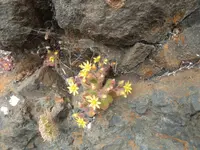
Turn the pot 90° every 1–2 weeks during active growth so stems develop evenly and the plant does not lean or twist toward one light source.

Support Heavy Stems

If older, succulent stems start to droop under their own weight, discreetly support them with short, thin stakes or a low hoop to prevent snapping at the base.

Monitor Winter Rest

In winter, watch for natural partial leaf drop and slower growth, then remove only clearly dried leaves and avoid forcing new growth so the plant can complete its rest period.

Check For Mealybugs

Inspect leaf joints and the undersides of leaves every few weeks for white cottony clusters, and if found, dab them off with cotton swabs dipped in 70% isopropyl alcohol as part of general caring for Aichryson villosum.

Common Pests and Diseases

Mealybugs

This pest feeds on plant sap and often hides in leaf joints and along fuzzy stems, leaving white cottony clusters. Symptoms include sticky honeydew, distorted new growth, and slow decline of the rosette.

Solution

Remove visible insects with a cotton swab dipped in 70% isopropyl alcohol, then rinse the plant gently with lukewarm water. Isolate the plant, repeat alcohol spot-treatments weekly until no new insects appear, and improve light and airflow as part of general Aichryson villosum care instructions.

Aphids

These insects cluster on tender shoots and flower stalks, sucking sap and causing curled, yellowing, or sticky foliage. Honeydew may attract sooty mold on the leaves and stems.

Solution

Spray the plant with a strong but gentle stream of water to knock off colonies, then treat with insecticidal soap, covering both upper and lower leaf surfaces. Repeat every 5–7 days until populations drop, and avoid excess nitrogen fertilization that encourages soft, aphid-prone growth.

Spider mites

This pest is favored by warm, dry indoor air and can be harder to spot on hairy leaves, causing faded, speckled foliage and fine webbing in tight rosettes. Symptoms include leaf loss and overall decline if infestations are heavy.

Solution

Increase humidity around the plant slightly and rinse the foliage thoroughly under lukewarm water, paying attention to leaf undersides and rosette centers. Follow with insecticidal soap or a light horticultural oil, repeating at 7–10 day intervals until no new damage appears.

Powdery mildew

This disease appears as white, powdery patches on leaves and stems, which can be subtle on already hairy foliage. Symptoms include dull, deformed leaves and gradual weakening of the plant under prolonged high humidity and poor airflow.

Solution

Remove the worst affected leaves and improve spacing and air movement around the plant, avoiding overhead watering late in the day. If conditions stay humid, apply a sulfur-based or potassium bicarbonate fungicide labeled for ornamental succulents, following the product directions carefully.

Botrytis blight

This disease causes soft, water-soaked spots on leaves and stems that quickly become covered with gray fuzzy mold, especially in cool, damp conditions. Symptoms include collapsing rosettes and mushy tissue at the base of stems or spent flower stalks.

Solution

Cut off and discard all affected tissues, sterilizing pruning tools between cuts, and ensure the plant is kept drier with good airflow and no standing water on leaves. Reduce watering frequency, keep foliage dry, and if needed apply a suitable ornamental fungicide to protect remaining healthy tissue during prolonged cool, humid weather.

Interesting Facts

Endemic to Madeira

This species is naturally restricted to the Madeira archipelago, where it grows on rocky slopes and cliffs in mild, oceanic conditions.

Densely hairy foliage

The leaves and stems are covered with fine hairs (trichomes) that help reduce water loss and protect tissues from intense sunlight and wind exposure in its native habitats.

Short-lived succulent shrub

Unlike many long-lived woody succulents, this species typically forms a compact, somewhat shrubby plant that is relatively short-lived but can persist by self-seeding in suitable conditions.

FAQs about Aichryson villosum

This species usually blooms in late spring to summer, producing clusters of yellow star-shaped flowers. Individual blooms last several weeks, but the overall flowering period can extend 4–8 weeks under stable indoor or mild outdoor conditions.

Grow Healthy Plants with Botan Care

Keep your plants happy and healthy with plant identification, disease detection, and easy care guidance.

Botan plant care app — identify plants on mobile

Explore More Plants