Prevent crown rot
Plant on a slight mound or raised bed so water always drains away from the crown, which reduces the risk of rot in wet seasons.

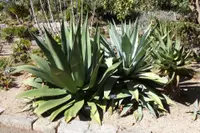
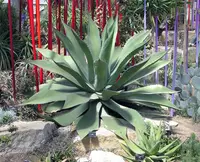
Pulque agave (Agave salmiana) is a large, architectural succulent from arid regions of Mexico, traditionally used for sap to make the drink pulque. It forms a broad rosette of thick, blue-green leaves with prominent teeth and a sharp terminal spine, creating a strong focal point in dry gardens.
This species grows slowly but can reach an impressive size outdoors in warm climates. It is drought-tolerant and prefers strong light, sharply drained soil, and infrequent watering. Once its needs are understood, it is relatively straightforward to care for Pulque agave, especially in xeriscape or low-maintenance plantings.

Care Difficulty
Easy Care

Light Preference
Full Sun

Water Requirements
Low Water

Temperature Preference
Warm Climate

Hardiness Zone
8–11

Soil Texture
Sandy, Loamy, Rocky

Soil pH
Slightly acidic (6.5–7.0), Slightly alkaline (7.0–7.5)

Soil Drainage
Well-drained

Fertilization
Minimal (feed rarely)
Scan your plant to receive care tips personalized for your specific plant
Available on iOS and Android
Agave salmiana thrives in strong, direct sun similar to its native arid habitats.
This species prefers deep but infrequent watering that allows the soil to dry between soakings.
This agave prefers warm, dry conditions and tolerates a broad temperature range once established.
Humidity is rarely a limiting factor for Agave salmiana, which prefers dry air conditions.
Agave salmiana needs very fast-draining, mineral-dominated soil to prevent root and crown rot.
This species can be grown in containers if the pot is adapted to its size and weight.
Agave salmiana needs only light feeding, as excessive nutrients can cause weak, lush growth and reduce stress tolerance.
Agave salmiana pruning is minimal and mainly focused on safety and hygiene rather than shaping.
Large Agave salmiana specimens are more often transplanted outdoors than repotted, due to their eventual size and weight.
New Agave salmiana plants are most reliably produced from offsets rather than from seed in home settings.
Mature Agave salmiana tolerates light frosts but benefits from simple winter protection in colder climates.

Plant Health Check
Not sure what's wrong with your plant? Check your plant's health inside the app.
This species is traditionally cultivated in central Mexico as one of the primary agaves used to produce pulque, a fermented drink made from its sap (aguamiel) collected from the rosette center before flowering.
Mature plants can form an impressively large rosette with thick, dark green leaves that may exceed 1.5–2 m in length, giving it one of the more imposing silhouettes among commonly cultivated agaves.
Like most agaves, this species is monocarpic, meaning it flowers only once at the end of its life, sending up a very tall flowering stalk sometimes likened to a pole or small tree before the main rosette dies back and offsets continue its lineage.

Archaeological and ethnobotanical evidence indicates that this species has been managed and semi-domesticated for centuries by Indigenous peoples of Mexico, who selected and propagated particular clones for sap yield, fiber quality, and tolerance to local semi-arid conditions.
Growth is slow to moderate. In suitable outdoor conditions, it may add 5–15 cm of leaf length per year, forming a substantial rosette over 5–10 years, then continuing to enlarge gradually before eventually flowering once.
Keep your plants happy and healthy with plant identification, disease detection, and easy care guidance.