Encourage Dense Mats
Pinch back soft new growth after flowering to encourage side shoots and create a tighter, more erosion-resistant groundcover when growing Spanish Aizoon.

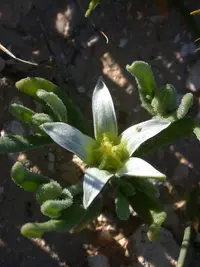
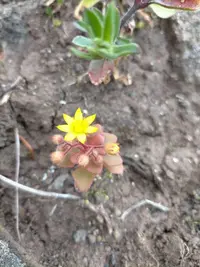
Spanish aizoon, Aizoanthemopsis hispanica, is a small annual succulent from dry, open habitats in the western Mediterranean. It forms low, branching tufts with narrow, fleshy leaves and small, daisy-like white to pale pink flowers.
This species is adapted to poor, rocky or sandy soils and brief moisture pulses, then long dry spells. It tends to stay compact, which suits rock gardens, troughs, and sunny containers.
Its drought tolerance and modest nutrient needs make it relatively easy to grow if drainage is excellent and watering stays light. Gardeners who learn how to care for Spanish Aizoon usually find it reliable in warm, bright locations.

Care Difficulty
Easy Care

Light Preference
Full Sun

Water Requirements
Low Water

Temperature Preference
Warm Climate

Hardiness Zone
7–10

Soil Texture
Sandy, Loamy, Rocky

Soil pH
Slightly acidic (6.5–7.0), Slightly alkaline (7.0–7.5)

Soil Drainage
Well-drained

Fertilization
Minimal (feed rarely)
Scan your plant to receive care tips personalized for your specific plant
Available on iOS and Android
This compact annual succulent thrives in strong light that mimics open, sunny habitats.
This drought-tolerant annual prefers infrequent, deep watering in fast-draining soil.
This sun-loving annual prefers warm, dry conditions and does not tolerate hard frost.
This drought-adapted succulent tolerates typical indoor humidity and does not need special humidity management.
This species needs very free-draining, mineral-based soil to prevent root rot.
This compact succulent is well suited to container growing outdoors or in bright, dry indoor spaces.
This drought-adapted annual needs only light feeding to support compact growth and flowering in poor soils.
Aizoanthemopsis hispanica benefits from light pruning to keep the mat tidy and flowering well.
This small annual is more often transplanted than repotted, as it completes its life cycle in one season.
Aizoanthemopsis hispanica is most commonly propagated from seed, which suits its annual life cycle.
This annual is not frost tolerant, so plants usually die back after hard frost and need re-sowing next season.

Plant Health Check
Not sure what's wrong with your plant? Check your plant's health inside the app.
This species is native to semi-arid, winter-rainfall regions of the western Mediterranean, where it completes its entire life cycle quickly during the cool, moist season and survives the dry summer only as seed.
Its small white flowers tend to open fully in bright light and close or partially close in dull conditions, a common trait in the ice plant family that helps protect pollen and reproductive organs.
In nature it often grows in open, sandy or gravelly soils with very low organic matter, showing a strong adaptation to well-drained, nutrient-poor substrates and intense sun exposure.
This species stays low and forms small clumps or loose mats, but it is not aggressive. It spreads slowly by short stems and self-seeding, so it usually stays where planted and is easy to control.
Keep your plants happy and healthy with plant identification, disease detection, and easy care guidance.