Rock mulch collar
Create a 5–10 cm wide ring of coarse gravel or small rocks around the base to keep the neck dry, reduce soil splash on the leaves, and discourage rot at the crown.

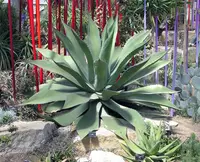
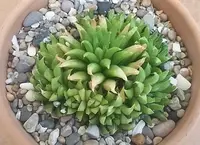
Butterfly agave (Agave potatorum) is a compact, rosette-forming succulent from arid regions of Mexico. It stays relatively low and symmetrical, which suits containers and small gardens. Leaves are thick, blue-green to gray-green, with gently scalloped edges and short, sharp spines, giving the rosette a patterned, almost geometric look. The plant is slow growing and eventually produces a tall flower stalk once in its lifetime. It prefers bright light, very well-drained soil, and dry intervals between waterings. These traits make it durable but sensitive to overwatering, so understanding how to care for Butterfly agave is important for long-term success.

Care Difficulty
Easy Care

Light Preference
Full Sun

Water Requirements
Low Water

Temperature Preference
Warm Climate

Hardiness Zone
9–11

Soil Texture
Sandy, Loamy, Rocky

Soil pH
Slightly acidic (6.5–7.0), Neutral (7.0)

Soil Drainage
Well-drained

Fertilization
Minimal (feed rarely)
Scan your plant to receive care tips personalized for your specific plant
Available on iOS and Android
This desert succulent thrives in bright conditions with controlled exposure to intense sun.
This species prefers infrequent, deep watering and thoroughly dry soil between soakings.
This agave prefers warm, dry climates and reacts poorly to hard frost or prolonged cold.
This species tolerates a wide humidity range and usually does not need special adjustment indoors.
Agave potatorum needs very fast-draining, mineral-based soil to prevent root and crown rot.
This species is well suited to container growing when the pot is chosen for drainage and stability.
This succulent needs modest feeding to support steady growth without weakening its compact rosette.
Pruning needs for Agave potatorum are minimal and mostly cosmetic.
Agave potatorum grows slowly and dislikes frequent disturbance, so repotting is infrequent.
Propagation is usually done from offsets rather than seeds for home growers.
This species tolerates only light frost and benefits from basic winter protection in cold regions.

Plant Health Check
Not sure what's wrong with your plant? Check your plant's health inside the app.
In parts of Oaxaca, this species has been used as one of the wild agaves for artisanal mezcal production, where its relatively small rosettes and distinctive flavor profile are valued by local producers.
This species forms a solitary, symmetrical rosette that typically stays much smaller than many other agaves, which is why it is often favored for container growing and detailed landscape design.
Agave potatorum is native to semi-arid, highland regions of central and southern Mexico, where it is adapted to cool, dry conditions on rocky slopes and open oak woodlands.

The specific epithet potatorum is derived from Latin related to drinking and reflects its traditional association with fermented beverages long before modern mezcal and tequila industries were formalized.
Brown leaf tips or patches usually result from sun scorch, cold damage, salt buildup, or prolonged drought. Check for dry, hard soil, recent temperature extremes, or fertilizer excess, then adjust care and trim only completely dead tissue.
Keep your plants happy and healthy with plant identification, disease detection, and easy care guidance.