Rotate For Symmetry
Turn the pot 90° every 1–2 weeks so all sides receive similar light, which helps keep the rosette mounds compact and prevents one-sided, stretched growth.

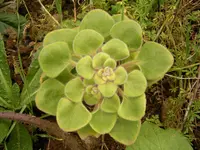
The tree of love, Aichryson laxum, is a compact succulent perennial grown mainly as a small houseplant. It forms a low, branching shrub with fleshy stems and rosettes of soft, heart-shaped leaves. Yellow, star-shaped flowers appear in loose clusters above the foliage, creating a light, airy look when in bloom.
Aichryson laxum is native to the Canary Islands, where it grows in mild, bright but not harsh conditions. Its succulent leaves store water, which makes it more forgiving of short dry spells but sensitive to overwatering. It prefers bright, indirect light, a free-draining potting mix, and moderate indoor temperatures, which helps make it relatively simple to care for Tree of Love.

Care Difficulty
Moderate Care

Light Preference
Bright Indirect Light

Water Requirements
Moderate Water

Temperature Preference
Tropical / Frost Sensitive

Hardiness Zone
10–11

Soil Texture
Sandy, Loamy, Organic-rich

Soil pH
Slightly acidic (6.5–7.0), Neutral (7.0)

Soil Drainage
Well-drained

Fertilization
Light (every 4–6 weeks)
Scan your plant to receive care tips personalized for your specific plant
Available on iOS and Android
This succulent prefers bright, gentle light that avoids harsh midday sun.
This plant stores moisture in its tissues and prefers thorough but infrequent watering.
This species prefers mild, frost-free conditions with moderate warmth.
This succulent prefers relatively dry air and does not require elevated humidity.
Use a sharply draining, gritty mix that mimics a dry, rocky habitat.
This species adapts very well to container culture, including small decorative pots.
This succulent grows on relatively low nutrients but responds well to light feeding in active growth.
Light pruning keeps Aichryson laxum compact and encourages branching.
This plant prefers slightly cramped pots and only occasional repotting.
New plants are most commonly produced from stem cuttings.
This succulent dislikes frost and needs protection in cold climates.

Plant Health Check
Not sure what's wrong with your plant? Check your plant's health inside the app.
This species is naturally restricted to the Azores archipelago, where it grows on humid, rocky volcanic slopes and cliffs, showing a strong adaptation to oceanic island conditions such as persistent wind and high air humidity.
Its name laxum refers to the characteristically loose, open rosettes formed by its succulent leaves, which helps reduce self-shading and maximizes light capture in the often cloudy Atlantic island climate.
Although often treated as a long-lived houseplant, in nature it behaves as a relatively short-lived perennial or subshrub that maintains populations through frequent reseeding rather than extreme individual longevity.
Lack of blooms usually comes from insufficient light, overly rich or constantly wet soil, or no cooler rest period in winter. Moderate feeding and a slight winter temperature drop often improve flowering in the following season.
Keep your plants happy and healthy with plant identification, disease detection, and easy care guidance.