Stabilize tall stems
As stems elongate, anchor the base slightly deeper in the potting mix and add a discreet top dressing of coarse gravel to stabilize the plant and prevent toppling in shallow containers.

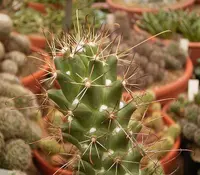
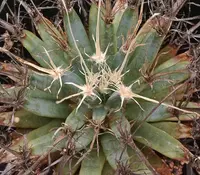
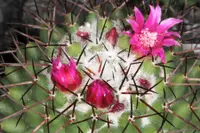
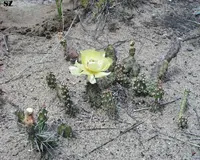
Cochemiea poselgeri is a small, clustering cactus known for its slender, finger-like stems and dense covering of fine white spines. In maturity, it often forms low mounds that can produce showy tubular flowers, usually pink to red, followed by small ornamental fruits. This species is native to arid regions of the Baja California peninsula, where it grows on rocky slopes with strong sun and sharp drainage. Its adaptation to drought and lean, mineral soils makes it relatively undemanding in cultivation, as long as excess moisture is avoided. Understanding how to care for Cochemiea poselgeri starts with providing bright light, very free-draining soil, and careful, infrequent watering.

Care Difficulty
Moderate Care

Light Preference
Full Sun

Water Requirements
Low Water

Temperature Preference
Tropical / Frost Sensitive

Hardiness Zone
10–11

Soil Texture
Sandy, Rocky, Loamy

Soil pH
Slightly acidic (6.5–7.0), Neutral (7.0)

Soil Drainage
Well-drained

Fertilization
Minimal (feed rarely)
Scan your plant to receive care tips personalized for your specific plant
Available on iOS and Android
This desert cactus needs strong light that mimics full sun in arid habitats.
This species is highly drought-tolerant and is more often harmed by excess water than by dryness.
This cactus prefers warm, dry conditions with good air movement.
This cactus prefers dry air and usually does best in 20–40% humidity.
Cochemiea poselgeri needs a very fast-draining, mineral-based substrate to prevent root rot.
This species is suitable for container growing, provided the pot supports its narrow, elongating stems.
This desert cactus needs modest feeding to support healthy growth in containers.
This species needs minimal pruning, mainly for cleanliness and safety.
This cactus prefers to stay slightly root-bound and only needs infrequent repotting.
This cactus is usually propagated from stem cuttings or seeds under warm, bright conditions.
This desert cactus is frost-sensitive and needs careful winter management in most climates.

Plant Health Check
Not sure what's wrong with your plant? Check your plant's health inside the app.
This species develops very thin, elongated stems that naturally scramble through shrubs and low vegetation in its native habitat near the Gulf of California, rather than forming a compact globe or column like many other cacti.
Each areole typically bears a strongly hooked central spine that helps the stems catch and rest on surrounding plants, functioning as a mechanical support in its climbing, trailing growth.
The plant produces narrow, tubular red to pink flowers that project horizontally from the stem and are adapted for pollination by hummingbirds, which can easily access the nectar with their long bills.

In its native Sonoran Desert range, this species is often found growing on rocky slopes and coastal hillsides where its trailing, clustering stems can form loose mats or cascading clumps, making it unusually pendent and scrambling compared with most ground-anchored desert cacti.
Sparse or absent flowering usually comes from insufficient light, cool temperatures during the growing season, or a plant that is still immature. Ensure strong sun, a marked cool and dry winter rest, and avoid heavy fertilizing with high nitrogen.
Keep your plants happy and healthy with plant identification, disease detection, and easy care guidance.