


Rootbound management
Allow the plant to become slightly rootbound to encourage sturdy, compact growth, but plan to repot into a pot only 2–3 cm wider when fine feeder roots start circling tightly or water runs straight through the pot too quickly.

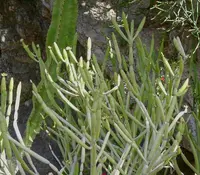
Euphorbia alluaudii, often called the African milk bush, is a succulent shrub with many slender, upright green stems and small, sparse leaves. It develops a sculptural, almost architectural form that suits modern interiors and dry gardens.
This species is native to arid regions of Madagascar, where it has adapted to strong sun and limited rainfall. Those same traits make it relatively easy to grow in containers, as long as it receives plenty of light and very well-drained soil.
For anyone learning how to care for Euphorbia alluaudii, its main needs are bright conditions, low to moderate watering, and protection from cold and excess moisture.

Care Difficulty
Easy Care

Light Preference
Full Sun

Water Requirements
Low Water

Temperature Preference
Tropical / Frost Sensitive

Hardiness Zone
10–11

Soil Texture
Sandy, Loamy, Rocky

Soil pH
Slightly acidic (6.5–7.0), Neutral (7.0)

Soil Drainage
Well-drained

Fertilization
Minimal (feed rarely)
Scan your plant to receive care tips personalized for your specific plant
Available on iOS and Android
This succulent prefers bright, strong light that mimics its native arid habitat.
Watering should be infrequent and guided by soil dryness rather than a fixed schedule.
This species prefers warm, dry conditions and has low tolerance for cold or frost.
This drought-adapted succulent handles typical indoor humidity well, so humidity control is rarely critical.
For Euphorbia alluaudii, use a mineral, fast-draining mix that mimics arid, rocky habitats.
This species is well-suited to container growing due to its upright, woody, drought-tolerant habit.
Light feeding supports healthy, upright growth in Euphorbia alluaudii without encouraging weak, overly soft stems.
Thoughtful pruning keeps Euphorbia alluaudii compact, safe to handle, and structurally strong.
Container-grown Euphorbia alluaudii benefits from occasional repotting to refresh soil and prevent root binding.
New Euphorbia alluaudii plants are most often produced from stem cuttings taken during the warm growing season.
This species is highly frost sensitive and requires careful winter management in most temperate climates.

Plant Health Check
Not sure what's wrong with your plant? Check your plant's health inside the app.
This species is native to spiny thickets of southwestern Madagascar, where it grows among drought-adapted shrubs on rocky, well-drained soils exposed to intense sunlight.
The plant often carries only tiny, short-lived leaves and relies mainly on its green, pencil-like stems for photosynthesis, an adaptation that reduces water loss in its arid habitat.
Like many Euphorbia species, it produces a white, milky latex that is toxic and irritant, deterring herbivores and sealing wounds quickly when stems are damaged.

In its native habitat, this species can develop into a tangled, many-stemmed shrub several meters tall, forming dense, almost impenetrable clumps that provide shelter and microhabitats for small animals in otherwise harsh, exposed landscapes.
Growth is moderately fast for a succulent shrub. In warm, bright conditions it can add 10–30 cm per year, slowing in winter. Container size, root health, and fertilizer levels strongly influence how quickly it gains height and branching.
Keep your plants happy and healthy with plant identification, disease detection, and easy care guidance.

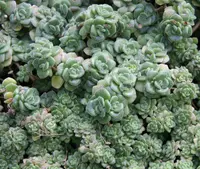
Aichryson tortuosum
Aichryson tortuosum
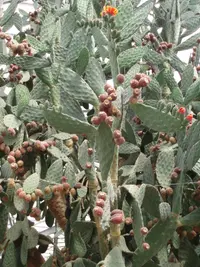
woollyjoint pricklypear
Opuntia tomentosa
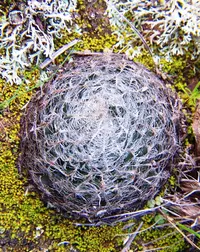
Spiderweb Haworthia
Haworthia arachnoidea
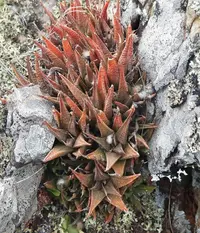
Breede Haworthia
Haworthiopsis venosa
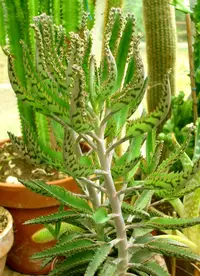
Kalanchoe × houghtonii
Kalanchoe × houghtonii
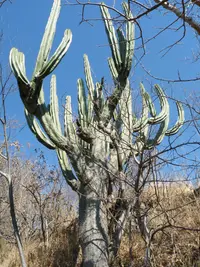
Pitaya de Queretaro
Stenocereus queretaroensis
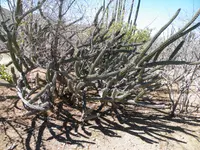
Galloping Cactus
Stenocereus gummosus
Texas cone cactus
Cochemiea conoidea