


Use support posts
Install sturdy, rot-resistant wooden or metal posts early and loosely tie the main stems with soft ties so the heavy, columnar growth stays upright and resists wind damage as it matures.

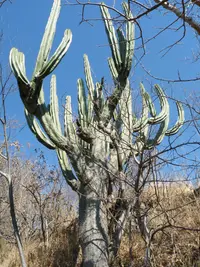
Pitaya de Queretaro, Stenocereus queretaroensis, is a columnar cactus native to arid and semi-arid regions of central Mexico. It forms tall, many-ribbed stems with short spines and can develop a candelabra-like shape over time.
This species is mainly grown for its edible, colorful fruits and its striking architectural form in dry gardens. It is naturally adapted to intense sun, high heat, and low rainfall, which makes it relatively forgiving of drought but sensitive to overwatering.
In cultivation, it prefers strong light, very well-drained, mineral-rich soil, and infrequent but deep watering. Understanding these desert conditions is the key to how to care for Pitaya de Queretaro in home gardens or collections.

Care Difficulty
Moderate Care

Light Preference
Full Sun

Water Requirements
Low Water

Temperature Preference
Tropical / Frost Sensitive

Hardiness Zone
10–11

Soil Texture
Sandy, Rocky, Loamy

Soil pH
Slightly acidic (6.5–7.0), Neutral (7.0)

Soil Drainage
Well-drained

Fertilization
Minimal (feed rarely)
Scan your plant to receive care tips personalized for your specific plant
Available on iOS and Android
This desert cactus needs strong light to form sturdy stems and bloom reliably.
This species is highly drought-tolerant and prefers infrequent, deep watering in fast-draining soil.
This cactus thrives in warm, arid conditions and has low tolerance for prolonged cold.
This cactus prefers dry to moderately dry air and rarely needs extra humidity.
Stenocereus queretaroensis needs a very fast-draining, mineral-rich substrate that dries quickly between waterings.
This tall, columnar cactus can be grown in containers if the pot is chosen for rapid drainage and stability.
This desert cactus benefits from light feeding but grows acceptably in lean soil.
Stenocereus queretaroensis needs minimal pruning, mainly for safety and plant health.
This columnar cactus is usually grown in-ground but young plants and container specimens sometimes need transplanting.
Stenocereus queretaroensis is commonly propagated from stem cuttings and sometimes from seed.
This cactus is sensitive to prolonged freezing and needs thoughtful winter management in most climates.

Plant Health Check
Not sure what's wrong with your plant? Check your plant's health inside the app.
In its native range in central Mexico, this cactus often forms dense stands that resemble a forest of tall columns, providing vertical structure and shade in otherwise open, arid landscapes.
Its nocturnal, tube-shaped white flowers are adapted for pollination by nectar-feeding bats, which visit at night and transfer pollen as they move between plants.
The edible fruits, commonly called pitayas, are an important seasonal food in parts of Mexico, where they are traditionally eaten fresh, used in drinks, or sold in local markets as a regional specialty, and interest in growing Pitaya de Queretaro for its fruit has increased in recent years.

Large, mature individuals can develop multi-armed, candelabra-like crowns that provide nesting and perching sites for birds and other wildlife, making this cactus a structural keystone species in some semi-arid Mexican ecosystems.
The ripe fruit is edible and widely consumed fresh, in juices, or processed products. The pulp is usually sweet to mildly tart. The seeds are also eaten. As with any new food, introduce it gradually to monitor tolerance.
Keep your plants happy and healthy with plant identification, disease detection, and easy care guidance.

Elephant's Ear
Alocasia micholitziana 'Frydek'
Breede Haworthia
Haworthiopsis venosa
Scheer's fishhook cactus
Sclerocactus scheerii
Tesajo Cholla
Cylindropuntia tesajo
the trumpet player's Schomburgkia
Myrmecophila tibicinis
Spiderweb Haworthia
Haworthia arachnoidea
Cauliflower Fungus
Sparassis crispa
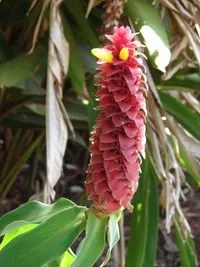
red tower ginger
Costus comosus