BotaN logo

the trumpet player's Schomburgkia Care (Myrmecophila tibicinis)

the trumpet player's Schomburgkia

About the trumpet player's Schomburgkia

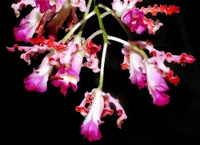
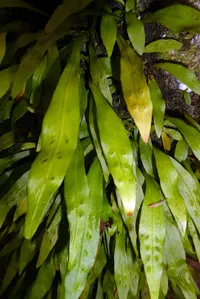
Myrmecophila tibicinis is a large, epiphytic orchid known for its tall, cane-like pseudobulbs and showy clusters of lavender to pink flowers. It often forms dramatic clumps that can become quite heavy with age.

This species is native to coastal forests and mangroves of Central America and the Caribbean, where it grows on trees exposed to strong light and moving air. Its hollow pseudobulbs frequently house ants, which in nature help protect the plant.

M. tibicinis is considered a plant for intermediate to advanced growers because it needs bright light, excellent drainage, and stable warmth. Understanding how to care for Myrmecophila tibicinis often comes down to providing high light and avoiding chronically wet roots.


Main Plant Requirements

Care Difficulty

Hard Care

Light Preference

Full Sun

Water Requirements

Low Water

Temperature Preference

Tropical / Frost Sensitive

Hardiness Zone

11–12

Soil Texture

Sandy, Rocky, Organic-rich

Soil pH

Acidic (5.5–6.5), Slightly acidic (6.5–7.0)

Soil Drainage

Well-drained

Fertilization

Light (every 4–6 weeks)

Get Personalized Care Plan

Scan your plant to receive care tips personalized for your specific plant

Available on iOS and Android

How to Care for the the trumpet player's Schomburgkia

This sun-loving epiphytic orchid thrives in bright, intense light similar to coastal or scrub habitats.

  • Provide 6–10 hours of direct sun daily, ideally strong morning to early afternoon exposure, with only light filtering in very hot inland sites.
  • In hot summers, protect from harsh midafternoon sun to prevent leaf scorching and bleaching, using 30–40% shade cloth if growth yellows or tips burn.
  • In winter, maximize unshaded light; if grown farther from the equator, gradual spring acclimation to increased sun reduces stress for Myrmecophila tibicinis.

This species prefers a distinct wet–dry cycle that mimics seasonal rains.

  • Water thoroughly, then allow roots and medium to dry almost completely; in pots, wait until the top 3–5 cm are dry and canes feel slightly lighter before rewatering.
  • Increase watering frequency in active growth and hot weather, but ensure excellent drainage; standing water or constantly soggy bark or rock leads to root rot and shriveled canes with blackened bases.
  • During cooler months, reduce watering and let plants stay dry a bit longer; deep wrinkles and very light pseudobulbs suggest underwatering, while limp, mushy roots indicate excess moisture.

This orchid prefers warm to hot conditions with no exposure to frost.

  • Aim for 70–85°F (21–29°C) during the day and 60–70°F (16–21°C) at night for best growth and flowering.
  • Tolerates short heat spikes up to 95°F (35°C) if humidity and airflow are high; beyond this, shade and extra ventilation reduce heat stress and leaf burn.
  • Avoid temperatures below 50°F (10°C); extended exposure near this range slows growth, and any light frost can permanently damage canes and roots, especially in exposed positions.

This orchid prefers warm, moderately humid air but tolerates brief drier spells if roots are well hydrated.

  • Aim for 50–70% humidity, as very dry air slows growth and reduces flowering.
  • Watch for wrinkled pseudobulbs and crisp leaf tips as signs humidity is too low.
  • Increase humidity with a pebble tray beneath the pot or grouping plants, but maintain strong air movement to prevent fungal issues for Myrmecophila tibicinis.

This epiphytic orchid needs a very open, fast-draining medium rather than conventional garden soil.

  • Use a coarse mix such as large orchid bark with chunky perlite and a little charcoal to keep structure open.
  • Ensure rapid drainage; excess water must run through within seconds to avoid root suffocation and rot.
  • Keep pH slightly acidic to neutral, roughly 5.5–7.0, which suits most epiphytic orchid nutrient uptake.
  • Improve aeration by using larger particle sizes and avoiding fine peat or regular potting soil that compacts around roots.

This species is well suited to container growing when the pot supports its large pseudobulbs and tall spikes.

  • Choose a heavy clay or ceramic pot or a wide orchid basket to reduce tipping as the plant becomes top-heavy.
  • Select a container only slightly larger than the root mass so the open mix dries predictably between waterings.
  • Ensure large, unobstructed drainage holes so water exits quickly and the airy mix does not stay saturated at the base.

This epiphytic orchid needs modest feeding to support healthy growth and flowering in cultivation.

  • Use a balanced orchid fertilizer (around 20-20-20) at 1⁄4–1⁄2 strength, or a similar low-salt formula.
  • Feed every 2–3 weeks during active growth in spring and summer, skipping weeks with very bright, hot weather.
  • Reduce feeding to once a month or stop entirely in cooler, low-light winter conditions.
  • Flush the potting mix with plain water monthly to prevent fertilizer salt buildup around the roots.

Pruning for Myrmecophila tibicinis is minimal and focuses on hygiene rather than shaping.

  • Cut away dead, blackened, or rotting pseudobulbs and leaf bases at any time using sterilized scissors or pruners.
  • Remove spent flower spikes once they dry, cutting close to the base without damaging healthy tissue.
  • Avoid cutting green pseudobulbs, since they store water and nutrients that support future flowering.
  • Inspect while pruning for scale or other pests hiding in leaf sheaths and treat promptly if found.

This species prefers to stay undisturbed and is usually repotted only when the container or mount is completely outgrown.

  • Repot every 3–5 years, or when roots circle the pot, push the plant upward, or growth slows despite good care.
  • Choose late spring to early summer, just before or as new roots start, to minimize transplant shock.
  • Use a coarse, fast-draining orchid mix or mount on bark, handling thick roots gently and keeping breaks to a minimum.
  • After repotting, keep in bright, indirect light with slightly reduced watering for 1–2 weeks to let roots recover.

Propagation of Myrmecophila tibicinis for home growers is typically done by division of mature clumps.

  • Divide in late spring or early summer when new root growth begins and the plant is actively growing.
  • Unpot the clump, then separate sections with at least 3–4 healthy pseudobulbs and a good root system each.
  • Plant divisions in a coarse orchid mix or on mounts, securing them firmly so new roots can attach.
  • Maintain high humidity, bright filtered light, and slightly reduced watering until new growth and roots establish.

Cold-sensitive Myrmecophila tibicinis needs warm, frost-free conditions during winter, especially in container culture.

  • Keep temperatures above 55–60°F; extended exposure below this range can damage leaves and roots.
  • Move container plants indoors or into a heated greenhouse before the first frost is expected.
  • Provide the brightest possible light indoors, with good air movement to reduce fungal issues in cool conditions.
  • Water less often in winter, allowing the medium to dry more between waterings while preventing complete desiccation.

Care Tips

Mounting technique

Grow this species on a large slab of cork or hardwood with a thin layer of coarse sphagnum around the roots so the pseudobulbs can elongate and the roots dry quickly between waterings, similar to its natural cliff and tree habitats.

Provide climbing support

Install a sturdy vertical trellis or branch above the mount or basket, guiding new growth toward it with soft ties so the plant can climb and produce its characteristic long, pendant inflorescences over time.

Strong air movement

Use an oscillating fan to create continuous, gentle air flow across the plant and mounting surface, which reduces bacterial spotting on leaves and helps the thick roots dry properly after irrigation.

High-light acclimation

If moving a plant to brighter conditions, increase light over 3–4 weeks by gradually shortening the distance to the light source or removing shade layers one at a time to avoid sunburn on older pseudobulbs.

Warm-season hardening

In warm climates, place the plant outdoors in a bright, breezy, sheltered spot during late spring and summer to encourage stronger pseudobulbs and flowering, then bring it back under cover before night temperatures drop below its safe range when caring for Myrmecophila tibicinis.

Common Pests and Diseases

Scale insects

These insects attach tightly to pseudobulbs and leaves, sucking sap and causing yellowing, shriveling, and sticky honeydew that can attract sooty mold.

Solution

Remove visible insects by gently scraping with a cotton swab dipped in isopropyl alcohol, then wash the plant with lukewarm water and mild soap; improve air movement and avoid overfertilizing, and if the infestation persists, use a targeted horticultural oil spray labeled for orchids, applied according to directions and kept off open flowers when possible.

Spider mites

These pests thrive in hot, dry conditions and feed on the undersides of leaves, causing fine speckling, dulling of leaf color, and sometimes fine webbing along leaf edges and sheaths.

Solution

Increase humidity to above 50%, rinse foliage thoroughly under a gentle shower to remove mites, and apply an insecticidal soap or neem oil spray to both leaf surfaces every 5–7 days for several cycles, ensuring good coverage in leaf axils and between pseudobulbs.

Mealybugs

These insects hide in leaf axils, sheaths, and between clustered pseudobulbs, appearing as white cottony masses and causing stunted growth and deformed new shoots.

Solution

Inspect tight crevices regularly when caring for Myrmecophila tibicinis, remove infested sheaths and wipe colonies with alcohol-damped cotton, then follow up with a systemic insecticide or repeated horticultural soap treatments while isolating the plant from others until no new insects appear.

Bacterial soft rot

This disease causes water-soaked, foul-smelling lesions on pseudobulbs or leaf bases that can spread rapidly in warm, stagnant conditions.

Solution

Immediately cut away all affected tissue with a sterile blade, dust the cuts with ground cinnamon or a bactericidal product, reduce watering, and increase airflow; keep water off new growths and avoid overhead misting, especially in cool nights and crowded growing spaces.

Fungal leaf spots

Symptoms include small, dark, sunken spots or irregular lesions on leaves, often starting where water sits on the surface for extended periods.

Solution

Remove affected leaves or cut out localized spots with sterile tools, improve spacing and air circulation, water in the morning so foliage dries quickly, and apply a broad-spectrum fungicide labeled for orchids as a preventive spray to remaining healthy tissue if spotting continues to appear.

Interesting Facts

Hollow ant chambers

This orchid forms swollen, hollow pseudobulbs with natural openings that house ant colonies, providing shelter in exchange for debris and nutrients the ants deposit inside.

Trumpet-like pseudobulbs

The species name tibicinis refers to its long, tubular pseudobulbs that resemble flutes or trumpets, a feature that helps store water and maintain the plant through dry periods.

Massive coastal clumps

In its native coastal habitats from Mexico to northern South America, this orchid can form very large clumps on exposed trees or rocks, tolerating strong sun and salty winds that many orchids cannot handle.

Botan icon

Did you know?

Field studies have documented that ant activity inside its hollow pseudobulbs can reduce herbivore damage on the plant, making this a classic example of a defensive mutualism between an orchid and ants.

FAQs about the trumpet player's Schomburgkia

This species performs best outdoors in warm, frost‑free climates where it receives high light, moving air, and large temperature swings. Indoors it often grows slowly and flowers poorly unless provided with strong artificial light and excellent ventilation.

Grow Healthy Plants with Botan Care

Keep your plants happy and healthy with plant identification, disease detection, and easy care guidance.

Botan plant care app — identify plants on mobile

Explore More Plants