Optimize mounting surface
Attach plants to rough, breathable materials like cork bark, hardwood, or plastic-coated wire mesh so the base dries quickly and roots can anchor without staying wet against metal or dense wood.

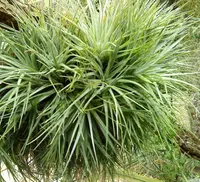
Tillandsia stricta is an epiphytic air plant from South America that naturally grows on trees and rocks rather than in soil. It belongs to the bromeliad family and absorbs water and nutrients mainly through its leaves.
Plants form compact rosettes of narrow, often slightly arching leaves that can appear green to gray-green, depending on light and humidity. When mature, they produce a colorful flower spike with bright bracts and small tubular blooms.
This species suits indoor displays because it stays relatively small and copes well with typical household conditions when given good air circulation. Understanding how to care for Tillandsia stricta is straightforward once you know it prefers bright, indirect light and regular, but not excessive, moisture.

Care Difficulty
Moderate Care

Light Preference
Bright Indirect Light

Water Requirements
Moderate Water

Temperature Preference
Tropical / Frost Sensitive

Hardiness Zone
10–12

Soil Texture
Sandy, Rocky, Organic-rich

Soil pH
Acidic (5.5–6.5)

Soil Drainage
Well-drained

Fertilization
Light (every 4–6 weeks)
Scan your plant to receive care tips personalized for your specific plant
Available on iOS and Android
This species prefers bright, indirect light with some gentle direct sun each day.
This air plant absorbs moisture through its leaves and depends on thorough but well-timed wetting and drying cycles.
Stable, warm conditions support strong growth and flowering in this air plant species.
This species benefits from moderate to high ambient humidity to keep the leaves hydrated and functional.
This air plant does not grow in traditional soil and should be mounted or placed in a very loose, soil‑free medium.
This species is suitable for loose placement in containers or mounted displays rather than conventional pot culture.
Nutrient needs for Tillandsia stricta are modest, but light feeding supports foliage color and flowering.
Pruning needs are minimal, mainly to keep Tillandsia stricta clean and to shape mature clumps.
This species is an epiphyte, so transplanting focuses on remounting or repositioning Tillandsia stricta rather than traditional repotting.
New plants are most commonly produced from offsets, making Tillandsia stricta propagation straightforward for home growers.
This warm-climate epiphyte is not frost hardy and needs thoughtful winter care in most temperate regions.

Plant Health Check
Not sure what's wrong with your plant? Check your plant's health inside the app.
The typically green rosette of this species can flush pink to reddish under high light or before flowering, a response linked to increased production of protective pigments called anthocyanins.
Its star-shaped flowers open from tight pink bracts, are usually pale violet to purple with white or yellowish centers, and individual blooms last only a short time, often opening in the evening or early morning.
In nature this epiphyte occurs from coastal restinga vegetation in Brazil to more inland, drier sites, showing an unusually broad tolerance for wind, salt spray, and fluctuating humidity for a small air plant.

Tillandsia stricta is one of the true atmospheric bromeliads, relying almost entirely on highly specialized leaf scales called trichomes to absorb water and nutrients directly from rain, mist, and dust, while its roots function mainly as anchors rather than for feeding.
Lack of sufficient light, irregular watering, or poor air circulation commonly delay flowering. Plants usually bloom only when mature. Stable conditions, good airflow, and patience are essential when caring for Tillandsia stricta to eventually see a bloom spike.
Keep your plants happy and healthy with plant identification, disease detection, and easy care guidance.