Bromeliad Care (Vriesea 'Astrid')

Bromeliad

About Bromeliad

Vriesea 'Astrid' is a compact bromeliad grown mainly for its colorful rosette of patterned leaves and long-lasting central flower spike. It is an epiphytic plant, which means it often grows attached to trees in its native tropical habitats of Central and South America. Indoors, it stays relatively small and tidy, making it suitable for shelves or tabletops. The plant stores water in its central cup, so its roots play a smaller role than in many other houseplants. This growth habit, plus its slow growth rate, makes it fairly low-maintenance once placed in stable warmth and bright, indirect light. Understanding how to care for Bromeliad focuses mostly on correct watering in the cup and avoiding cold drafts.

Main Plant Requirements

Care Difficulty

Moderate Care

Light Preference

Bright Indirect Light

Water Requirements

Moderate Water

Temperature Preference

Tropical / Frost Sensitive

Hardiness Zone

11–12

Soil Texture

Loamy, Peaty, Organic-rich

Soil pH

Acidic (5.5–6.5), Slightly acidic (6.5–7.0)

Soil Drainage

Moist but well-drained

Fertilization

Light (every 4–6 weeks)

Get Personalized Care Plan

Scan your plant to receive care tips personalized for your specific plant

Available on iOS and Android

How to Care for the Bromeliad

Vriesea 'Astrid' prefers bright, indirect light that mimics filtered forest conditions.

  • Provide 6–8 hours of bright, filtered light daily, such as near an east or north window or under sheer curtains if grown indoors as a Bromeliad.
  • Tolerates light shade, but growth and color reduce if kept in low light for long periods; rotate the plant if it leans toward a window.
  • Avoid harsh midday sun, especially from south or west exposures, which can cause leaf scorch; in summer, shift slightly back from hot windows.

Vriesea 'Astrid' needs moderate watering with attention to both the central cup and the potting mix.

  • Keep the central rosette (cup) 1/2–3/4 full of fresh water and flush it every 1–2 weeks to prevent stagnation and mineral buildup.
  • Water when the top 2–3 cm of mix feel dry; the mix should drain quickly so roots are moist but never waterlogged.
  • Reduce watering in cooler months, watching for limp, curling leaves as a sign of underwatering and brown, mushy bases as a sign of overwatering.

This plant prefers warm, stable temperatures without extremes or sudden drafts.

  • Aim for 65–80°F (18–27°C) for best growth, which matches typical home conditions and supports steady leaf development.
  • Protect from temperatures below 55°F (13°C); cold drafts and light frost can permanently damage foliage and the growing point.
  • In hotter periods above 85°F (29°C), increase air movement and humidity, keep out of direct afternoon sun, and check that the cup water does not overheat.

This plant prefers moderate to high humidity but adapts to typical home conditions.

  • Aim for 50–70% humidity; it tolerates short periods around 40% but may grow more slowly.
  • Crisping leaf tips, curling edges, or dull foliage indicate humidity stress rather than underwatering.
  • Group plants, use a pebble tray, or run a small humidifier nearby to support caring for Bromeliad in dry homes.

This epiphytic bromeliad prefers a very airy, fast-draining, organic-rich mix rather than dense potting soil.

  • Use a mix of roughly 40% fine orchid bark, 30% peat or coco coir, and 30% perlite or pumice for structure and airflow.
  • The mix should drain within seconds yet stay lightly moist, never soggy or waterlogged around the roots.
  • A slightly acidic pH around 5.5–6.5 supports healthy nutrient uptake for Vriesea 'Astrid'.
  • Avoid heavy clay-based products, straight garden soil, or compacted peat that restricts oxygen and promotes rot.

This species is well suited to container growing due to its compact, non-invasive root system.

  • Choose a pot only 2–5 cm wider than the root ball to keep the root zone evenly moist without staying saturated.
  • Select a stable, heavier container if the rosette becomes top-heavy, especially as the central flower spike develops.
  • Use a pot with wide drainage holes and elevate it slightly so excess water escapes freely and does not reabsorb from a saucer.

Vriesea 'Astrid' has modest nutrient needs but benefits from light feeding during the active growing season.

  • Use a balanced liquid fertilizer (around 10-10-10 or 20-20-20) diluted to 1/4–1/2 strength for Bromeliad indoor care.
  • Feed every 4–6 weeks in spring and summer, applying to the potting mix, not into the central cup.
  • Stop fertilizing in fall and winter, when growth slows, to avoid salt buildup and weak, floppy leaves.
  • Avoid compost-heavy or slow-release fertilizers that stay constantly wet around the roots, as this can lead to rot.

Vriesea 'Astrid' needs only light pruning to keep the rosette tidy and healthy.

  • Best time for pruning is after flowering or during active growth in spring or early summer.
  • Remove dead, damaged, or yellowing leaves with clean, sharp scissors, cutting close to the base of the leaf.
  • Trim spent flower spikes at the base once they fade to redirect energy into new offsets (pups).
  • Avoid heavy cutting of healthy leaves, as this rosette plant does not branch and over-pruning weakens it.

This plant prefers a stable container and only occasional repotting when clearly root-bound or crowded with pups.

  • Check for roots circling the pot, mix drying extremely fast, or many offsets pushing against the rim as signs to repot.
  • Plan repotting for spring or early summer, about every 2–3 years, when temperatures are warm and growth is active.
  • Use a shallow pot with free-draining bromeliad or orchid-style mix, keeping the base of the rosette just above the medium.
  • Handle the roots gently, keep them slightly moist but not waterlogged after repotting, and shade from strong sun for 1–2 weeks to reduce stress.

New Vriesea 'Astrid' plants are most reliably produced by separating offsets, called pups, from the mother rosette.

  • Wait until pups reach about 1/3–1/2 the size of the mother before removing them for best survival rates.
  • Carry out division in spring or early summer, when warmth and longer days support active root growth.
  • Gently separate pups with a clean knife, keeping some roots attached, and plant in a fine, well-drained bromeliad mix.
  • Maintain bright, indirect light, high humidity, and lightly moist mix until pups root and show fresh leaf growth.

Vriesea 'Astrid' is frost-sensitive and must be kept above freezing in winter.

  • Move outdoor containers indoors before temperatures drop below 50°F, choosing a bright, draft-free spot.
  • Maintain indoor temperatures around 60–75°F and avoid cold windowsills or heater blasts that dry the foliage.
  • Reduce watering in winter, keeping the potting mix slightly moist and the central cup only lightly filled to prevent rot.
  • Do not use outdoor mulching; this species is best treated as an indoor plant in cold climates.

Care Tips

Tank water hygiene

Empty and refill the central cup completely every 1–2 weeks using room‑temperature, low‑mineral water to prevent bacterial buildup and mosquito larvae in this tank‑forming bromeliad.

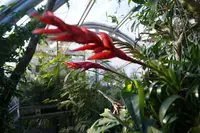
Offset management

Once pups reach about 1/3–1/2 the size of the mother and show their own small root nubs, detach them with a clean, sharp knife and pot individually to maintain a compact, long‑lived clump.

Airflow and spacing

Position the plant so the rosette is not crowded by nearby foliage, allowing gentle air movement around the leaves to reduce fungal issues and keep the leaf axils dry between waterings.

Support during bloom

If the flower spike leans, insert a slim, smooth stake close to the base and tie the inflorescence loosely with soft ties so the rosette is not damaged while the bloom is displayed.

Salt and chemical avoidance

Use filtered, rain, or distilled water in hard‑water areas and avoid leaf‑shine products so salts and residues do not accumulate in the leaf axils, which is an important part of Vriesea 'Astrid' plant care.

Common Pests and Diseases

Bromeliad scale

This pest attaches to leaves and the rosette as small brown, tan, or white bumps and feeds on plant sap, often causing yellowing and a sticky residue. Symptoms include slowed growth and patches of weakening tissue along the leaf blades.

Solution

Physically remove visible scale with a cotton swab dipped in isopropyl alcohol, then rinse the foliage and central cup with lukewarm water. For persistent infestations, use an insecticidal soap or horticultural oil labeled for indoor bromeliads, repeating at 7–10 day intervals and isolating the plant from others during treatment.

Mealybugs

These insects appear as white, cottony clusters in leaf axils, around the central cup, and on roots, where they suck sap and weaken the plant. Symptoms include distorted new growth, honeydew, and sooty mold on leaf surfaces.

Solution

Flush the central cup and leaf bases with a strong but gentle stream of lukewarm water, then dab remaining clusters with a cotton swab dipped in isopropyl alcohol. Follow up with insecticidal soap applications, ensuring thorough coverage of leaf bases and undersides, and repeat weekly until no new mealybugs are seen as part of consistent Vriesea 'Astrid' care.

Bacterial leaf spot

This disease causes water-soaked, translucent spots that may enlarge, turn brown, and develop a yellow halo, often starting near the leaf base or in crowded rosettes. Symptoms include soft, collapsing tissue in humid, poorly ventilated conditions.

Solution

Remove and discard affected leaves, cutting back into healthy tissue with a sterile blade and keeping the central cup free of standing water for several days. Improve air circulation, avoid wetting the foliage during watering, and disinfect tools and pots; in severe cases, discard heavily affected plants to protect nearby bromeliads.

Phytophthora crown rot

This disease attacks the base of the rosette and central cup when water remains stagnant, leading to a soft, mushy crown with a sour odor and rapid plant collapse. Symptoms include leaf bases pulling away easily and browning from the center outward while the potting mix may still look relatively normal.

Solution

At first signs, discard severely affected plants, as recovery is rare once the crown is soft. For prevention, use a fast-draining bromeliad mix, never let the pot sit in water, periodically empty and refresh the central cup, and limit overhead watering in cool or low-light conditions.

Nematode leaf pitting

These microscopic worms feed inside the leaf tissue, producing sunken, oval pits or streaks that follow the length of the leaves, sometimes giving a speckled or dimpled appearance. Symptoms include cosmetic damage that can become entry points for secondary infections under high humidity.

Solution

Remove and discard the most damaged leaves and avoid reusing the potting mix or tools without thorough cleaning. Grow plants in a well-draining, coarse mix, avoid overwatering, and obtain new stock from reputable, nematode-free sources to reduce recurrence when you grow Vriesea 'Astrid' indoors.

Interesting Facts

Rosette water reservoir

The stiff leaf rosette forms a central cup that naturally holds rainwater, a typical bromeliad adaptation that in cultivation is often filled with clean water instead of relying only on potting mix moisture.

Hybrid of tank bromeliads

This cultivar comes from hybridization within the Vriesea group of tank-forming bromeliads, combining compact size and patterned foliage that makes it suitable for Bromeliad indoor care rather than for landscape use in most climates.

Flower spike behavior

Its colorful, flattened flower spike can remain visually attractive for several weeks, and after flowering the main rosette slowly declines while new side pups develop at the base to continue the plant’s life cycle.

FAQs about Bromeliad

Brown tips or edges usually come from low humidity, fluoride or salts in tap water, or past underwatering. Use filtered or rainwater, flush the pot occasionally, and trim only the dead tissue with clean scissors.

Grow Healthy Plants with Botan Care

Keep your plants happy and healthy with plant identification, disease detection, and easy care guidance.

Botan plant care app — identify plants on mobile

Explore More Plants