Tillandsia seleriana Care

Tillandsia seleriana

About Tillandsia seleriana

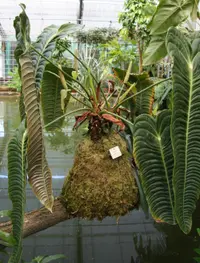
Tillandsia seleriana is an epiphytic air plant from Mexico and Central America that grows attached to trees or rocks rather than in soil. It has a distinctive bulbous base with thick, curling, silver-green leaves covered in fine scales that help it absorb moisture and nutrients from the air.

The plant grows slowly and stays compact, which makes it suitable for small displays and mounted arrangements. It produces a long-lasting flower spike with colorful bracts when mature, then gradually forms offsets.

Its tolerance of bright, indirect light, good air movement, and brief drying between waterings makes it relatively straightforward to care for Tillandsia seleriana in typical indoor conditions.

Main Plant Requirements

Care Difficulty

Moderate Care

Light Preference

Bright Indirect Light

Water Requirements

Low Water

Temperature Preference

Tropical / Frost Sensitive

Hardiness Zone

11–12

Soil Texture

Rocky, Sandy, Organic-rich

Soil pH

Acidic (5.5–6.5), Slightly acidic (6.5–7.0)

Soil Drainage

Well-drained

Fertilization

Light (every 4–6 weeks)

Get Personalized Care Plan

Scan your plant to receive care tips personalized for your specific plant

Available on iOS and Android

How to Care for the Tillandsia seleriana

This epiphytic air plant prefers bright, indirect light that mimics high, open tree canopies.

  • Provide 6–8 hours of bright, filtered light each day, such as near an east-facing window or under shade cloth outdoors.
  • Allow gentle morning sun but protect Tillandsia seleriana from strong midday and afternoon sun, which can scorch trichomes and cause leaf browning.
  • In winter, move the plant closer to the light source or use a grow light if days are very short, keeping it out of direct, hot beams.

This species absorbs moisture through its leaves, so watering focuses on thorough wetting and complete drying.

  • Soak or heavily mist until all surfaces are wet, then allow the plant to dry fully within 2–4 hours; frequency is often 2–4 times per week, depending on humidity and airflow.
  • Increase watering in warm, dry, or windy conditions and reduce to once weekly in cool, humid weather, always ensuring strong air circulation.
  • Signs of underwatering include leaf curling and crispy tips, while soft, dark, or mushy bases indicate overwatering and poor drying, which require longer dry periods.

This air plant prefers warm, frost-free conditions with good airflow.

  • Aim for 65–85°F (18–29°C) for active growth, as this range supports stable metabolism and recovery after watering.
  • Protect the plant from temperatures below 45°F (7°C); sustained exposure near freezing or any frost can cause tissue damage and rot.
  • In hot spells above 90°F (32°C), give extra shade and more frequent misting while still allowing rapid drying, and avoid placing it against heat-reflective surfaces.

This epiphytic air plant prefers moderate ambient humidity but adapts to many homes.

  • Aim for 40–60% humidity; brief drops lower than this are tolerated if air circulation is strong.
  • Crisping leaf tips, rolling or curling leaves, and slow growth indicate humidity stress or dehydration.
  • Increase humidity by grouping plants, placing them near (not on) a humidifier, and misting lightly between thorough soakings.

This species does not use soil in the usual way and should be mounted rather than potted in a conventional mix.

  • Tillandsia seleriana thrives when attached to cork bark, driftwood, or a mesh surface that keeps the base dry and exposed to air.
  • If a medium is used for display, choose very coarse materials such as large orchid bark, lava rock, or chunky charcoal with wide air gaps.
  • Avoid peat-based mixes, fine potting media, or anything that stays wet, as this fills air spaces and promotes base and leaf rot.
  • A thin, dry layer of sphagnum around the base can be used only as a stabilizer, never packed tightly or kept constantly moist.

This plant can be displayed in containers, but the vessel is mainly a support and must never hold water around the base.

  • Use open-sided containers or shallow bowls that allow full air flow around all sides, keeping the plant resting above any surface moisture.
  • Stabilize the bulbous base with cholla wood, pebbles, or wire so the plant cannot wobble and trap moisture where leaves join.
  • Choose heavier or wider containers for tall specimens to prevent tipping, especially when the foliage becomes top-heavy after flowering.

This air plant benefits from light, periodic feeding rather than heavy fertilization.

  • Use a balanced, water-soluble epiphyte or orchid fertilizer at 1/4–1/2 strength, avoiding urea-based products.
  • Feed Tillandsia seleriana every 3–4 weeks during spring and summer when growth is most active.
  • Mist or soak the plant in fertilized water, then let it dry completely within 4 hours to prevent rot.
  • In fall and winter, reduce feeding to once every 6–8 weeks or pause if light and growth are very low.

Pruning needs are minimal and mainly focused on cleanliness and directing offsets.

  • Best time for light pruning is after flowering or during active growth in spring and summer.
  • Gently remove dead or dried leaves by pulling downward or trimming with small, sharp, disinfected scissors.
  • Cut spent flower spikes at the base once they fade to keep the plant tidy and encourage offset growth.
  • Thin out badly crowded or damaged offsets only if airflow is restricted, preserving the natural rosette shape of Tillandsia seleriana.

This species is epiphytic, so management focuses on remounting or repositioning rather than true repotting.

  • Remount when the plant outgrows its support, leans excessively, or when ties or glue restrict natural growth.
  • Best season for any transplanting or remounting is spring to early summer, when conditions are warm and bright.
  • Typical frequency is every 2–4 years, or sooner if the mount deteriorates or airflow around the base becomes poor.
  • To reduce stress, soak the plant in room-temperature water for 20–30 minutes before and after remounting, keeping roots and base undamaged.

Propagation focuses mainly on offsets produced after flowering, while seed is slower and less common for home growers.

  • Allow offsets of Tillandsia seleriana to reach at least 1/3–1/2 the size of the parent before separating.
  • Best season for division is spring or early summer, when warmth and longer days support recovery.
  • Gently twist or cut pups away at the base using a sterile blade, keeping each offset’s base intact.
  • Provide bright, indirect light, 60–80°F temperatures, and good air circulation; mist lightly until pups establish firm attachment.

This air plant is sensitive to frost and needs protection in regions with cold winters.

  • Move outdoor plants indoors before temperatures drop below 45°F, choosing a bright, draft-free location.
  • Avoid exposure to freezing or near-freezing air, which can damage leaf tissue and central growth.
  • Reduce soaking in winter; use lighter misting and ensure the plant dries fully within a few hours in cool conditions.

Care Tips

Optimize mounting

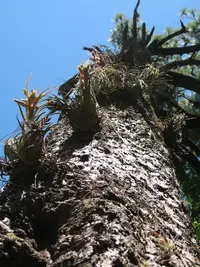
Use a breathable, rot-resistant mount such as cork bark or hardwood and fix the base with plastic-coated wire or nylon fishing line, leaving the leaf bases exposed so water cannot collect and cause rot.

Enhance airflow

Place the plant where there is gentle, constant air movement from a ceiling or oscillating fan, and rotate its position every 1–2 weeks so all sides dry evenly after misting or soaking.

Rinse after blooming

Once the inflorescence fades, gently rinse the plant under lukewarm water to remove spent flower parts and nectar residues that can attract pests, then dry it upside down for 1–2 hours.

Drying angle control

After each watering, set the plant at a slight downward angle or suspend it upside down for at least 30–60 minutes so water drains from the leaf bases and trichome-covered surface effectively.

Seasonal light shift

In summer move the plant slightly farther from intense windows and closer again in winter, adjusting mounting height or location 1–2 times a year to maintain bright light without heat stress when growing Tillandsia seleriana.

Common Pests and Diseases

Scale insects

This pest feeds on leaf surfaces and leaf bases, sucking sap and weakening the plant over time. Symptoms include small, rounded, tan to brown bumps that feel hard or waxy and may cluster in the leaf folds of the bulbous base.

Solution

Physically remove insects with a cotton swab dipped in isopropyl alcohol, then rinse the plant thoroughly with room‑temperature water and let it dry completely with strong airflow. Repeat inspections weekly and, if needed, use a dilute insecticidal soap spray, always rinsing after 15–20 minutes to avoid residue buildup on the trichomes.

Mealybugs

These insects hide in the tight leaf bases and crevices, leaving cottony white clumps and sticky honeydew that can attract sooty mold. Affected plants may show distorted new growth or slowed development.

Solution

Isolate the plant, then treat visible clusters with a cotton swab dipped in isopropyl alcohol, carefully working into the leaf axils. Follow with a thorough rinse and improved air circulation, and repeat spot treatments every 5–7 days until no new mealybugs appear, which is essential for effective Tillandsia seleriana care instructions.

Spider mites

These pests are favored by warm, dry indoor air and smooth interior leaf surfaces, causing fine stippling, dull color, and very thin webbing deep in the rosette. Symptoms include reduced vigor and a dusty look to the leaves.

Solution

Rinse the plant under a firm but gentle stream of water, directing flow into the base and between leaves to dislodge mites and eggs, then allow it to dry quickly in bright, airy conditions. For persistent infestations, apply a mild insecticidal soap or horticultural oil spray, followed by careful rinsing and maintenance of slightly higher ambient humidity with good airflow, not stagnant moisture.

Bacterial soft rot

This disease develops in trapped water inside the bulbous base, leading to soft, water‑soaked, foul‑smelling tissue at the leaf bases. Symptoms include rapid collapse of inner leaves and dark, mushy spots near the core.

Solution

Remove and discard all affected, mushy tissue with sterile tools and isolate the plant from others. Allow the plant to dry completely in a warm, airy, shaded spot, then adjust watering by fully soaking only in the morning, shaking out excess water, and ensuring the base dries within 2–3 hours to prevent recurrence.

Leaf spot fungus

This disease appears as small, dark, sometimes slightly sunken spots on the outer leaves, often developing after extended periods of surface moisture and low airflow. Symptoms include slow expansion and coalescing of spots that can cause localized leaf dieback.

Solution

Trim and discard heavily spotted leaves or sections, using sterile scissors, and keep the plant in a brighter, well‑ventilated location. Reduce misting, allow leaves to dry quickly after watering, and if spots continue to spread, use a low‑residue fungicide formulated for ornamental plants, applied lightly and followed by good drying conditions.

Interesting Facts

Bulb-like tank form

This species has a distinctly swollen, almost spherical base that acts as a tank, trapping leaf litter and moisture in the wild and providing a microhabitat for tiny invertebrates.

Thick, corky trichomes

The leaves are densely covered with large, corky trichomes (specialized scale-like hairs) that give the plant a fuzzy, gray surface and allow it to absorb water and nutrients very efficiently from mist and dew.

Rock-dwelling epiphyte

In its native range in southern Mexico, this plant often grows both as an epiphyte on trees and as a lithophyte on exposed rocks, showing high tolerance to intense light and strong air movement in open, dry habitats.

Botan icon

Did you know?

This species was named in honor of the German plant collector Hans Seler, who collected it in Mexico; its highly distinctive, bulbous silhouette makes it one of the most easily recognizable species in the genus and a frequent subject in specialist collections focusing on Tillandsia seleriana care.

FAQs about Tillandsia seleriana

This species usually blooms only once when fully mature, then slowly declines while pups develop. Lack of bloom is often due to immaturity, stress from low airflow, or irregular hydration rather than lighting alone.

Grow Healthy Plants with Botan Care

Keep your plants happy and healthy with plant identification, disease detection, and easy care guidance.

Botan plant care app — identify plants on mobile

Explore More Plants