Pinch Young Stems
Pinch out the soft tips of young shoots once or twice early in the season to encourage a denser, more branched plant with more flowering stems.

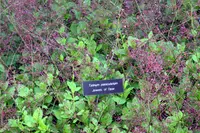
Fame flower, Talinum paniculatum, is a small, sun-loving perennial often grown as an annual. It forms low, fleshy rosettes of leaves and produces airy stems with tiny pink flowers and decorative seed pods. This gives the plant a light, delicate look that suits borders, rock gardens, and containers. Talinum paniculatum is native to tropical and subtropical regions of the Americas and has naturalized in many warm climates. It is generally easy to grow, as it tolerates heat, short dry spells, and relatively poor, well-drained soil. Those traits make it suitable for beginners who want to learn how to care for Fame Flower without complex requirements.

Care Difficulty
Easy Care

Light Preference
Full Sun

Water Requirements
Low Water

Temperature Preference
Tropical / Frost Sensitive

Hardiness Zone
8–11

Soil Texture
Sandy, Loamy, Rocky

Soil pH
Acidic (5.5–6.5), Slightly acidic (6.5–7.0)

Soil Drainage
Well-drained

Fertilization
Minimal (feed rarely)
Scan your plant to receive care tips personalized for your specific plant
Available on iOS and Android
Talinum paniculatum prefers bright, warm conditions with plenty of direct sun for strongest growth and flowering.
This drought-tolerant perennial prefers drying out between waterings rather than consistently moist soil.
This heat-loving species grows best in warm conditions and is sensitive to cold and frost.
Humidity is rarely critical for Talinum paniculatum, which thrives in typical indoor and outdoor air.
Talinum paniculatum prefers loose, fast-draining, relatively lean soil that mimics sandy or rocky ground.
This species adapts well to container growing when drainage and root space are managed carefully.
Talinum paniculatum benefits from light, balanced feeding but grows acceptably in lean soil.
Talinum paniculatum responds well to light pruning that maintains shape and flowering performance.
This species is often grown in beds, so transplanting seedlings or young plants is more common than repotting large specimens.
Talinum paniculatum is most often propagated by seed, which germinates reliably in warm conditions.
This warm-season perennial behaves as a tender plant in cold regions and may die back where winters are harsh.

Plant Health Check
Not sure what's wrong with your plant? Check your plant's health inside the app.
This species develops thickened, carrot-like roots that are edible and locally consumed as a minor vegetable in parts of tropical America and Asia, although it is not a major food crop.
Its small black seeds can remain viable in the soil for years, allowing new plants to appear long after the original individuals have been removed, which helps explain its tendency to self-sow in warm climates.
Native to seasonally dry regions from Mexico to Brazil, this plant uses its succulent leaves and stems to store water, which supports flowering even during hot, relatively dry periods in cultivation and in the wild.

In some regions of Brazil, this species has become so common in disturbed urban and roadside habitats that it is considered a characteristic element of ruderal flora, illustrating how a once largely wild plant has adapted extremely well to human-altered environments.
This species grows relatively quickly in warm conditions, often reaching near-mature size within a single growing season. Growth slows in cooler weather or poor soil, so consistent warmth and light, well-drained substrate help maintain vigor.
Keep your plants happy and healthy with plant identification, disease detection, and easy care guidance.