Root flare check
When planting or potting, locate the root flare where the trunk widens and keep it just above the soil surface to reduce risk of collar rot and improve long-term stability.

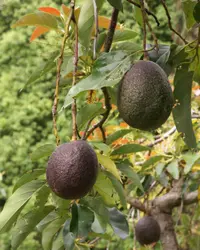
Avocado, Persea americana, is an evergreen fruit tree native to Central America and Mexico. It is now widely grown in warm regions and also kept as a container plant indoors. Young trees have upright growth with smooth, green bark and large, leathery leaves that create a dense canopy. Mature outdoor trees can become tall and spreading, while indoor plants usually stay much smaller. The species prefers bright light, moderate moisture, and well-drained soil, which helps explain how to care for Avocado in home conditions. Its growth can be moderately demanding, mainly due to light and temperature needs rather than complex care routines.

Care Difficulty
Moderate Care

Light Preference
Full Sun

Water Requirements
Moderate Water

Temperature Preference
Tropical / Frost Sensitive

Hardiness Zone
9–11

Soil Texture
Sandy, Loamy, Organic-rich

Soil pH
Acidic (5.5–6.5), Slightly acidic (6.5–7.0)

Soil Drainage
Moist but well-drained

Fertilization
Light (every 4–6 weeks)
Scan your plant to receive care tips personalized for your specific plant
Available on iOS and Android
This species needs abundant light for strong growth and flowering.
Watering should support deep roots while avoiding saturated soil.
Temperature strongly influences growth, flowering, and fruit set in this species.
This species prefers moderately humid air but usually adapts to typical household conditions.
Persea americana requires loose, well-drained soil that stays evenly moist but never waterlogged.
This species can be grown in containers, especially while young or in cooler climates.
Healthy Persea americana growth benefits from light, consistent nutrition during the warm growing season.
Thoughtful pruning helps Persea americana maintain a strong structure and manageable size.
Container-grown Persea americana and young trees benefit from timely transplanting to support root development.
Persea americana is commonly started from seed for rootstocks and by grafting for named fruiting varieties.
Persea americana is frost sensitive and needs protection in regions with cold winters.

Plant Health Check
Not sure what's wrong with your plant? Check your plant's health inside the app.
Avocado fruits evolved in the presence of large extinct mammals such as giant ground sloths and gomphotheres, which likely swallowed the fruits whole and dispersed the large seeds over long distances.
Unlike most fleshy fruits, Persea americana accumulates mainly fats rather than sugars in its pulp, with a high content of monounsaturated fatty acids that make it more similar to an oil crop than a typical fruit.
Many avocado cultivars display a reproductive system called protogynous dichogamy, where each flower first functions as female and later as male on a precise daily schedule, encouraging cross-pollination between trees with complementary flowering types.

Modern commercial avocado production is dominated by a single cultivar, Persea americana 'Hass', which originated from one seedling in California in the 1920s and became the global standard due to its favorable fruit quality and shipping durability.
Brown leaf tips or edges usually result from irregular watering, salt buildup from fertilizer, or low humidity. Check soil moisture, flush the pot periodically, and avoid overfertilizing. Sudden dark patches can indicate cold damage or strong sun exposure.
Keep your plants happy and healthy with plant identification, disease detection, and easy care guidance.